

 Online Reporter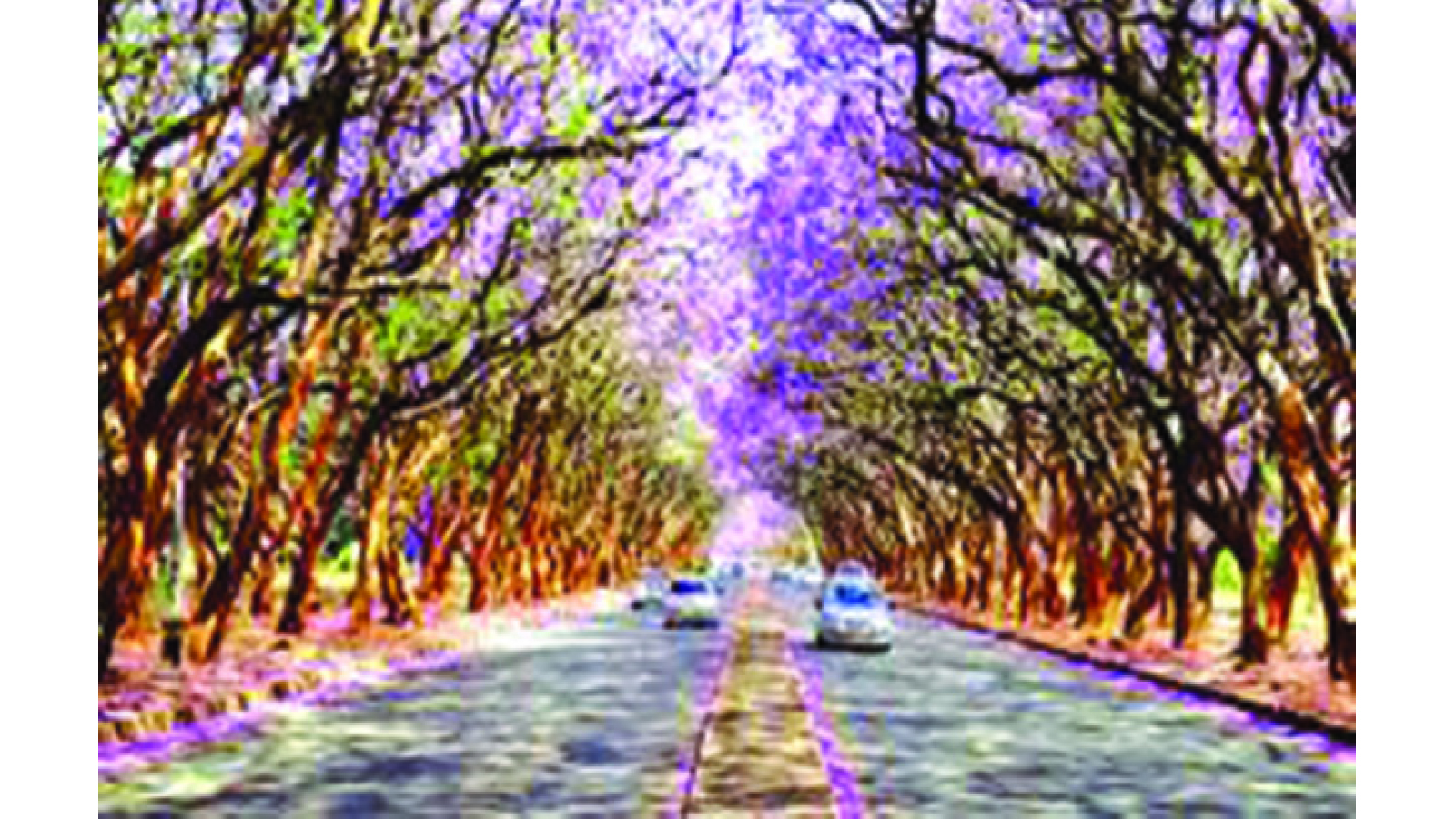
Caroline Washaya-Moyo-Correspondent
It is that time of year again when you feel the changes in weather and witness the subsequent colourful plumage of plants.
Spring is the transitional season between the cold and rainy seasons.
With it comes hot weather, new tree leaves, and flowers that bring a defining fragrance.
Days are longer than nights.
In Harare, home to the largest population of jacaranda trees, people admire the purple flowers and walk on pavements tinged purple by fallen jacaranda blossoms.
Africa Unity Square in the Central Business District and Leopold Takawira, stretching from Parirenyatwa Group of Hospitals to Avondale, look different.
The jacaranda tree flourishes in warm temperatures with well-drained soils.
This explains why Zimbabwe, especially Harare, was identified as a suitable place to grow this invasive plant, introduced to Africa from South America, particularly Brazil and Argentina.
Today, Harare City Council continues to promote the planting of these exotic trees, which come in purple, white, and pink.
Mr Chigumbu Dambukayi, an Environmental Conservation Superintendent, states that at the peak of industrialisation, when carbon emissions were at unprecedented levels, jacarandas were planted to counter air pollution.
Additionally, colonial powers used jacarandas to map the areas they conquered or to remind them of the mineral wealth underground.
The planting of these trees also increased property values. He added that the tree requires a lot of water when under five years old; thereafter, little water is needed.
The jacaranda has thrived in regions 1, 2, and 3 of Zimbabwe. The canopy size is indicative of how far the roots have spread, growing to a diameter of 30 metres.
Contrary to popular belief, jacarandas are not “rain trees.” The tipuana tipu, or rain tree, produces droplets during the hot season from October to mid-November and can be found at Hillside Park.
The droplets people observe are a result of small insects whose skin is sensitive to the sun. They hibernate during winter and emerge in spring when the environment is conducive for survival.
To survive, these tiny insects suck water from the ends of branches in groups. The water serves as both food and a habitat, as they have sensitive skin with minimal coverage. The excess water drops from the branches.
Upon close examination, the white watery substance reveals tiny insects at work.
While jacaranda trees are appreciated for their aesthetic value in Harare, their presence is also associated with sinus allergies when in full bloom, potential damage to infrastructure when branches fall, and the leaves and flowers that drop at the end of spring.
Mr Pambukayi stresses that jacarandas may fall when the heart or roots of the tree rot, causing them to break in strong winds and resulting in damage to property.
Some of these trees are as old as 100 years, especially those along Julius Nyerere Avenue.
Unfortunately, some of the trees in Harare have their lives cut short by individuals who use them as makeshift toilets, particularly men. It is common knowledge that salts migrate from areas of high to low concentration, and urea can kill trees.
To re-green Harare, every tree that is cut must be replaced. Residents can receive assistance and trees to plant from Harare City Council’s tree nursery, which currently has 15 000 trees.
The City Council maintains a database of individuals committed to re-greening their environment. Because jacarandas grow quickly, it is recommended that tobacco farmers plant them as an option for curing tobacco.
Harare City Council intends to plant indigenous and exotic trees at all entry points to the city, serving as a reminder to visitors that they are entering Harare.
The Government of Zimbabwe launched Tree Planting Day in 1980 as part of efforts to promote environmental conservation and reforestation. It is commemorated annually on the first Saturday of December.




This platform is very informative. I’m quite happy to be on it