admin
admin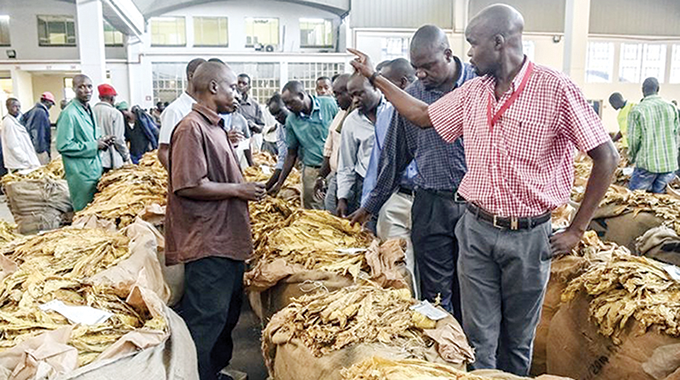
Obert Chifamba
The body language and common narrative of harrowing experiences appear well-choreographed, yet desperation backed by a strong sense of deprivation has since conditioned tobacco farmers to act the same, think the same and talk the same language.
They are an utterly disgruntled lot!
This aptly summed up the sad and untold story of the tobacco farmers at the country’s three tobacco auction floors — Boka Tobacco Auction Floor, Premier Tobacco Floors and Tobacco Sales Floors recently.
A media team accompanied the Parliamentary Portfolio Committee on Lands, Agriculture, Water, Climate and Rural Resettlement that was on a familiarisation tour of the auction floors recently.
Incidentally, the tour was occasioned by a growing chorus of distress calls from the farmers who now believe that everyone else, except themselves, is out to get them — their all-weather saviour, Government, included.
The farmers seem to believe that Government is not doing enough to protect them from marauding merchants, service providers and banks that all want a piece of their hard earned money.
The farmers’ growing desperation said it all.
They would all churn out heartrending narratives of how they had been shortchanged, beginning with the transporter charging them between RGTS$32 and RTGS$35 to ferry a bale to the floors, then the merchants colluding to erect impregnable price ceilings and banks failing to clearly tell them what is happening to their foreign currency quota.
This is the part where they feel Government is not doing enough to accord them the decency they deserve as major earners of foreign currency for the country.
The list of their grievances is just endless. At the floors, merchants are puzzlingly downgrading their tobacco quality to leave it fetching atrocious prices ranging from as little as $0,10 to somewhere just above $1 for the lucky ones.
The farmers categorically describe this as daylight robbery, arguing that their tobacco quality had vastly improved over the years they have been toiling to produce the golden leaf unabated by the poor prices.
The highest price on the day of the tour was $1,64, yet from a layman’s point of view, the tobacco seemed of good quality and was supposed to fetch better prices.
Most of the farmers were not conversant with the new payment system being used this season, while the ever-changing currency exchange rates have also left them at the mercy of unscrupulous money-changers and various service providers that have descended on the floors like vultures picking on remnants of a dead animal.
The farmers confessed that the new payment system made it very difficult for them to remain in business, as most of them ended up giving up on their earnings, especially given that the Nostro account does not enable them to handle hard currency, but to get a supplier or service provider for an invoice, which they then take to the Reserve Bank of Zimbabwe (RBZ) for the payment to be effected after which they get a receipt.
They queried why the RBZ would preside over the way they wanted to use their money, which they feel is a way of disempowering them economically, which incidentally bolsters their claims that they are generating foreign currency for others and not for their own good.
Rewind to that time when many communal and resettled farmers started growing tobacco, then take stock of the number of satellite dishes that were bought and installed, the number of water engines and pumps, the numerous motor bikes and second hand cars that they bought and the various improvements they did to their homesteads, and you will understand where they are coming from.
With the situation prevailing at the floors, very few of the farmers will manage to register meaningful changes in their socio-economic lives, as most of them will be left wallowing in debt.
It is, however, crucial for the farmers to know what exactly is happening in their line of trade.
The Tobacco Industry and Marketing Board (TIMB) and owners of the tobacco auction floors may need to educate them, especially on what the current payment system entails, so that they make informed planning decisions.
One other thing is that the system was introduced just a few days before the opening of the marketing season, which did not give the farmers enough time to familiarise with it, hence the high levels of anxiety too.
While they are still grappling to understand how the payment system is working, the farmers are also trying to come to terms with the rising inflation rates that are fast eroding their incomes from the auction floors.
Banks are depositing the money into their Ecocash accounts, which on its own is another problem as numerous self-styled Ecocash agents have suddenly sprouted and have since raised their retention percentages, which is leaving the farmers with very little to take home.
There has been very little, if any, activity involving farmers buying inputs for next season, as most them are even failing to raise enough to go and pay hired labour back at their farms, which paints a very bleak future of the industry given that preparations should start immediately after marketing their crop.
Of course, runaway input prices have also not helped the situation, for instance, a five-gramme packet of seed costs US$25 or RTGS$75, while fertilizer prices are ranging from US$33 to US$100 or RTGS$130, which the farmers concede are just too much to enable them to remain in business.
The reality on the ground seems to suggest that most farmers may be forced to slash their hectarages if they manage to grow tobacco next season while some may not even dare.
One farmer at Boka Tobacco Auction Floors asked if it would not make sense switching to maize from tobacco next season since the new producer prices were quite attractive, arguing that there would be no foreign currency hassle to go through, but just the RTGS$, which are more easily accessible than the US$.
That showed the level of confusion the farmers are currently going through at a time when they should be busy preparing for the forthcoming season.
For now, it seems happiness will remain just an occasional episode in the general drama of pain for tobacco farmers if nothing drastic is done to address their situation.


 Online Reporter