admin
admin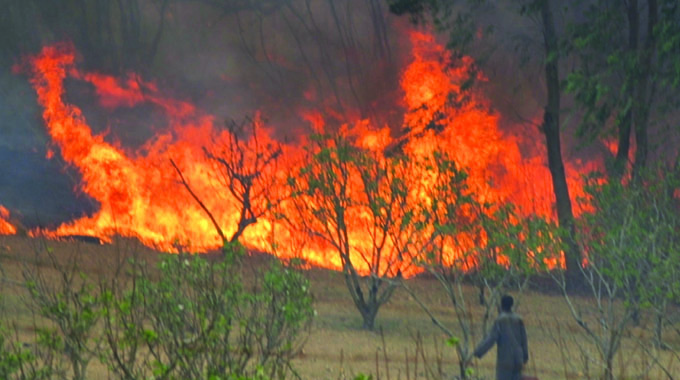
Obert Chifamba
Agri-Insight
IT is no rocket science that since ancient times, humans have known about fire and what it is capable of doing — both good and ugly.
They have feared it, welcomed its warmth and harnessed its power and have on numerous occasions times deployed it to execute various missions inspired by different motives.
And while fire has always been associated with supporting life, it is the recent use to which it is being put that has gotten the entire country apprehensive and scurrying to find ways of taming that madness.
Since the turn of the millennium, the countryside is virtually being incinerated with every fire season that comes.
This is the period stretching from July 1 to October 31 although on the ground the fires have been starting earlier than July in recent years.
Millions of hectares of land have every year been consumed by these veld fires generating anxious moments for all concerned stakeholders each time the fire season approaches.
Just recently, senate took time to deliberate on the catastrophic nature of the fires and sought to find ways of containing them.
What made the consensus of the day was the need to mete out stiffer penalties, possibly in the region of 15 years in jail for veld fire offenders.
And the fact that all senators in attendance, regardless of their different political affiliations sang the same song speaks volumes on the gravity of the matter at hand and the need to find urgent ways of containing the scourge.
Essentially, the senators were in agreement that the current Level 8 penalty in which an offender is either made to pay an amount of about $3 600 or imprisonment for a period not exceeding a year or even both is not enough to deter would-be offenders from committing the same offences.
Though coming a bit belatedly after millions of valuable agricultural land, property, infrastructure and even human lives, to name just a few, have been obliterated by the rampant veld fires over the years, senate’s overtures may mark the turning point in the fight to control the rampaging infernos if they are converted into actions with demonstrable results.
It is the trail of destruction that the fires have left in their wake that must guide the eventual decision on the nature of punishment to mete out on offenders.
People who deliberately or recklessly start fires must in essence be treated as saboteurs of the economy as their actions destroy a lot of things whose value is in most cases irreplaceable.
In 2011, for instance, the fires destroyed 1 320 325ha of valuable land and claimed five human lives while the following year saw 16 people getting killed with 713 770ha of land getting annihilated too.
Fast forward to the year 2020 in which 298 veld fire incidences that destroyed 165 352ha of land were reported yet it was generally characterised with low rains that did not do much to nurture vegetation that would later be used as fuel by the fires versus a very wet 2021 with tonnes and tonnes of biomass, thanks to the abundant rains.
It is critical for all stakeholders to be proactive this year and put in place measures to contain a possible veld fire holocaust given the reality that the lavish rains that fell across the country left huge biomass deposits and other forms of vegetation, which are most likely going to make it very easy for fires to run rampant once started.
The Environmental Management Agency (EMA) rates the national fire dangers at 89 percent high this year.
Of course this national outlook is further split into two leaving us with the first 24 percent of the country sitting in the extremely high category and this covers regions such as the Mashonaland provinces that have lots of grass and other forms of vegetation.
There is the high risk category, which takes up 65 percent and includes the Matabeleland, Masvingo and parts of Manicaland provinces, which normally do not receive high rainfall amounts but have this year received substantial quantities to support the growth of grass and other forms of vegetation.
There is a high probability that pastures will also be among the worst hit if nothing is done to nip the veld fire problem in the bud before it even surfaces this year.
EMA estimates that the country is losing over one million hectares of valuable land yearly, which means that besides the valuable agricultural land that is being lost there are many other important sectors of the economy that are being affected.
The tourism sector, for instance, is losing the valuable scenic vegetation and fauna that tourists normally want to see as they travel to tourism hotspots like Kariba, Victoria Falls and the Eastern Highlands to identify just a few.
Critical infrastructure such as electricity poles and buildings are also getting scorched in the process while the timber and citrus industries also being among the hardest hit with entire plantations being roasted to ghosts of their original statuses.
The hydrological cycle has also taken the brunt of the veld fires with scientists placing the fires in the list of agents fuelling global warming and depriving the world of the much needed rainfall.
While the collaboration between EMA, the Forestry Commission, courts, some Government departments and in some cases traditional leaders has had its fair share of success, it is still crucial to broaden the basket of stakeholders involved in the fight against veld fires to include the generality of Zimbabweans from which the culprits that start the fires come from.
The first important step is to seriously revive awareness programmes on the dangers of veld fires and deploy more resources for the cause.
It may even be necessary to give incentives to citizens for exposing culprits they would have seen starting the fires.
This will of course require them to have valid evidence, which is not difficult in this day and age in which there has been an influx of smart phones that have enabled citizens to record videos of events as they unfold. On the one hand, citizens must also do whatever it takes to protect their property from veld fires. Farmers, for example, must construct fireguards around their farms to ensure their crops are safe.
Fireguards must be nine metres wide and should go right round the farm or protected property.
Farmers can also cut grass in their pastures and bale it as hay and give their animals in the course of the dry season when there will be less vegetation for grazing and browsing.
By cutting and baling the grass, they will be addressing two issues at once — depriving fires of dry matter to use as fuel and securing dry season feeds for their livestock!



 Online Reporter