Chronicle Editor
Senior Business Writer
RETAILER OK Zimbabwe has hinted at expanding market presence and optimising operational efficiencies while commending the Government’s fiscal and monetary measures.
In its trading update for the first quarter, which ended June 30, the retail outlet said the domestic economy has remained on a growth trajectory.
With a growth path, the firm is positioning itself to seize opportunities from increased consumer spending.
“The fiscal and monetary measures being implemented by the Government are highly commendable.
The Group remains committed to delivering value to its shareholders by focusing on executing fair pricing, expanding market presence and optimising operational efficiencies while prioritising customer satisfaction for long-term sustainability,” reads part of the update.
In June, the International Monetary Fund (IMF) affirmed the ZiG stabilisation effect on the economy noting that if the macro-stabilisation is sustained, the cumulative inflation for the remainder of the year is projected at about seven percent.
In the period under review, volumes increased by 20,2 percent compared to the same period in the prior year.
Pricing stability during this period contributed positively to volume recovery, as customers responded favourably to the Group’s commitment to fair pricing practices.
“The growth was mainly driven by improvement in the performance of the OK Grand Challenge promotion, which marked the inaugural participation of the Group’s OK Mart stores.
“The success of this promotion was further bolstered by the ongoing support from our key partner suppliers, who played a crucial role in its execution.”
Revenue increased by 2,2 percent compared to the same period in the prior year.
US dollar collections, however, dropped significantly from FY2024 last quarter and FY2025 first quarter as most consumers were now using ZiG.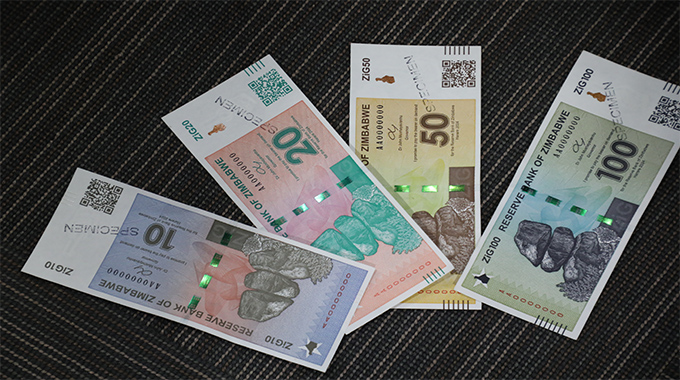
“Despite the significant increase in volumes, sales values increased marginally as a result of the growth in contribution of bulk product sales that carry a lower unit price. This resulted in an increase in basket size of 28 percent against a customer count decline of 6,8 percent.”
Since the introduction of ZiG, prices have relatively declined in ZiG, as reflected by inflation. The ZiG month-on-month inflation slightly declined into negative territory for the second time since the inception of the structured currency in April. Month-on-month inflation decreased to -0,1 percent last month from 0,0 percent in June, shedding 0,1 percentage points.
In his 2024 mid-term budget presentation on July 25, Finance, Economic Development and Investment Promotion Minister, Professor Mthuli Ncube, announced some policy measures to strengthen demand for the local currency.
The US dollar year-on-year inflation for July declined to 3,6 percent, shedding 0,2 percentage points from the rate of 3,8 percent in June. However, the positive inflation rate means that US dollar prices last month were still higher compared to the same period in 2023.
Among the key policy decisions to promote the use of ZiG was the requirement that corporates whose revenue exceeds 50 per cent in foreign currency pay their corporate tax on a 50:50 basis.
Companies with revenue exceeding 50 percent in local currency can pay their corporate tax proportionally in the currency of trade.



 Sidumisile Mabena