


 admin
admin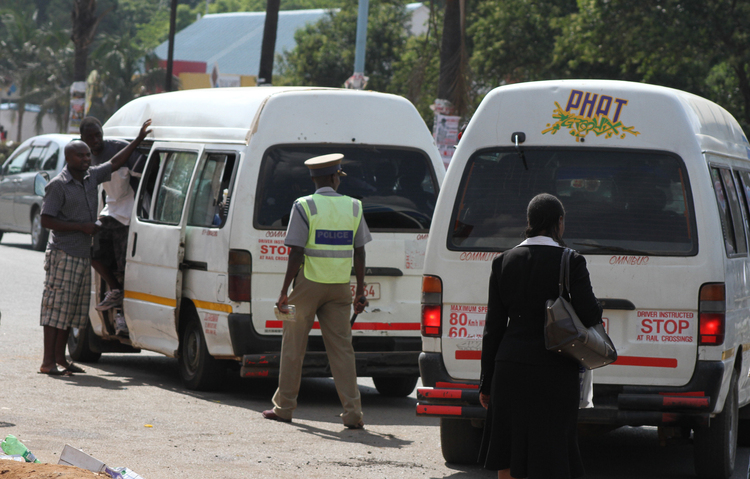
A bedraggled kombi, so old one would think its components were being held together by rust, drove to an illegal pick up point along Simon Mazorodze Road in Harare at full speed.
In it was a dirty conductor donning tattered apparel.
He clung on the squeaky door rooting for passengers while the vehicle was still in motion.
“Glen Norah, Glen Norah yese kusvika Spaceman, first stop Masimbi, Glen Norah B Flats, Chitubu, Roma, Kundayi, US dollar rako pakufamba,” shouted the conductor as he pulled his falling trousers with a missing zip back into position while allowing commuters into the kombi.
Smoke billowed inside the kombi as if the exhaust pipe was connected under the seats, but that did not stop commuters from boarding to make the trip home after a hard day’s work.
As the conductor was loading the vehicle, his equally youthful driver kept revving the rattling engine to keep it running.
At one interval the driver coughed and let out a loop of mucus that landed on a nearby vendor’s bananas.
“Sorry mum, but next time do not come too close to the road,” he shouted before taking off at high speed to avoid police officers who were closing in on him.
The area where the banned kombi was loading passengers was littered with windscreen fragments, showing possible mishaps after “contact” between kombi crews and police officers.
Welcome to the illegal loading zone popularly known as “paZBC” because of the nearby Zimbabwe Broadcasting Corporation’s Mbare studios along Simon Mazorodze Road in Harare.
Banned kombis are operating in broad daylight at this place. The area now resembles Timbuktu, a city in central Mali near the Niger River; formerly famous for its gold trade, because that is where the money is today.
Driving through the area is now a nightmare as traders of various shapes and sizes selling a motley of wares, fruits and vegetables have invaded the place.
They take advantage of commuters seeking transport to Highfield, Budiriro, Glen Norah, Glen View, Waterfalls, Hopley, Southlea Park, South View Park, Kuwadzana and Chitungwiza.
It is not unusual to go to the illegal transit point and find people roasting meat, maize cobs and selling roasted mealies by the roadside.
It gets worse.
Kombi crews, lorry drivers and pick-up trucks that load from the area are now even driving against the flow of traffic in their escapades.
“No one dies before the day they are supposed to die. If you come here with a shut mind you will be run over. You see my brother, I have a family to feed and I cannot be afraid of breaking the law at the expense of my family,” one kombi conductor told this writer straight in the face. Hapana yekutamba blaz. Tinotamba iri kurira. This is a case of survival. We bought these kombis to survive, but now that they are not being allowed to operate, we just do what has to be done to put food on the table for the children,” quipped another.
If you thought the country had kissed goodbye to foul-mouthed kombi conductors who hurled expletives anywhere and everywhere with reckless abandon, then you are in for a rude shock.
The boys are back in town.
But how do they make their way through the capital’s policed roads?
“Hainetse mudhara. Whenever you load a kombi you must always ensure you have US$1 or US$2 to pay policemen at checkpoints. All you have to do is pay in advance and when you come with a load of passengers, you just drive through. Inenge yakarongwa kare tsoro yacho,” quipped one driver plying the Highfield-Mbare route.
“At times if the police are not entertaining us, we simply ask our passengers to meet us on the other side of the checkpoint so that we pass through with an empty vehicle.”
The kombi crews said the fact that they had more flexible working times drove passengers to them. And having their windshields shattered by police officers enforcing the lockdown regulations, they said, was part of the game.
“It is a cat and mouse affair. If you ask those who went to war, they will tell you that a good number of people lost their lives there. The same applies here because while some vehicles will be impounded, some will remain on the roads. Kuhondo kwaifiwa wani nhai mudhara,” said one driver while helping himself to a soft drink at the illegal pick up point.
These places have also brought back the challenge of pickpockets as from time-to-time the place will be littered with lost IDs (national and work) and all manner of wallets.
Inotambika mughetto.


 Online Reporter