admin
admin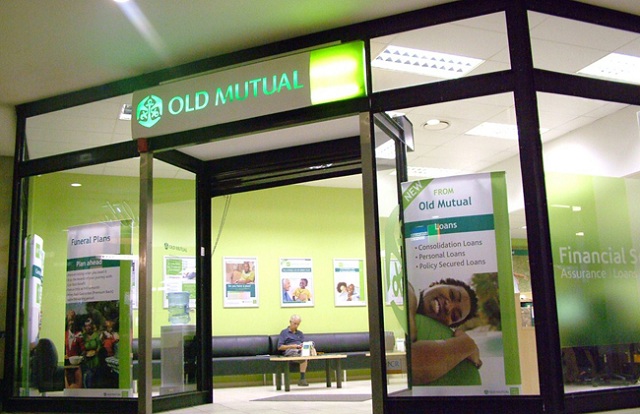

Dumisani Nsingo, Senior Business Reporter
THE country’s largest integrated financial group, Old Mutual will channel $5 million towards the construction of a hydro power station in the Eastern Highlands of the country, an official said.
Old Mutual group chief executive officer, Mr Jonas Mushosho said the power station was expected to play a part in reducing the power deficit that the country has been experiencing over the years.
There are several other projects being pursued by independent power producers across the country, but most of the projects have taken far too long to complete amid acute funding constraints.
“We have also set up some fund to support infrastructural development, currently we are looking at constructing a hydro power station in the Eastern Highlands in Kupinga where work has already started. This expected hydro-power station will cost us $5 million and will provide 1,6 megawatts into the national grid and is due to be commissioned in early 2017,” said Mr Mushosho.
While Zimbabwe faces suffocating power deficits, it has vast energy sources at its disposal to raise the generation capacity, which only needs to be tapped, but capital is the biggest problem.
The increase in capacity has to be done at an affordable price and these include coal (thermal power stations), coal bed methane (thermal power stations), hydro-power and solar energy.
Mr Mushosho said the company’s property portfolio remains the only investment which has over the years managed to meet expectations and efforts are being made to accommodate Small to Medium Enterprises.
“There are always developments in our property portfolio but going into the future considering that the economy has largely informalised we want to focus on the provision of space for small players in the informal sector as part of our financial inclusion strategy to see how we can accommodate small players either into existing buildings by alterations or changing use or actually doing completely new developments that respond to the needs of the informal sector,” Mr Mushosho said.
Meanwhile, the company, which is the the principal funder of the Distressed Industries and Marginalised Areas Fund (Dimaf), has expressed willingness to continue funding local industry adding that it was satisfied by the impact the money has had in reviving some companies.
Mr Mushosho said the Dimaf facility, which is being managed by CABS had seen $30 million being disbursed towards the retooling of struggling firms.
Dimaf was a concept established in 2010 by Government in conjunction with Old Mutual in order to support ailing entities mostly those that were failing to replace strategic equipment and to access working capital which had been wiped out by hyperinflation.
“When we dollarised (the country’s economy) there was need to revive the economy and in order to revive it, it was necessary for us to support companies that still demonstrated viable business models but had limitation arising out of capital constraints. So together with Government we established Dimaf in order to support these companies with loans at reasonable rates,” he said.
Mr Mushosho said at the initial stage of the first phase of Dimaf, both Old Mutual and Government released $10 million each and to date $30 million had been disbursed through the funding’s revolving nature of arrangement.
The first phase of Dimaf was supposed to see the disbursement of $40 million towards reviving of struggling companies.
However, Government has struggled to meet its side of the funding resulting in the funding facility failing to meet its obligations.
“I think it has been able to help quite a number of companies and has played a significant role in contributing to this whole process of reviving our economy in spite of the challenges that we currently face. So we hope that is something that we can continue to collaborate with Government to see how best we can support our industries and companies,” said Mr Mushosho.
He said Old Mutual remains committed in funding the proposed Dimaf II.
However, captains of industries are of the view that there is need to set up a new “business rescue plan” as previous initiatives including Dimaf were too little to revive struggling companies.
There was also the Zimbabwe Economic Trade Revival Facility (Zetref). Zetref was launched in 2012 and had $70 million contributed by Government and the African Export-Import Bank.
Confederation of Zimbabwe Industries president, Mr Busisa Moyo was quoted in the local Press recently as having said most companies were given 10 percent of their requirements through business rescue funds such as Dimaf.
He said some companies received $300 000 when they required $3 million.
“It became bad money as it was not sufficient, although Zetref was better, but the interest charges were 36 percent. It did work for a few companies which were strong but for ailing companies, it never did as it left them in a worse position,” Mr Moyo said.
He said if the rescue fund was established, there was a need for research and consultations, and the price of the money had to be at least 10 percent. He said the tenure had to be three to five years for working capital requirements and five to 10 years for retooling.


 Online Reporter