Chronicle Editor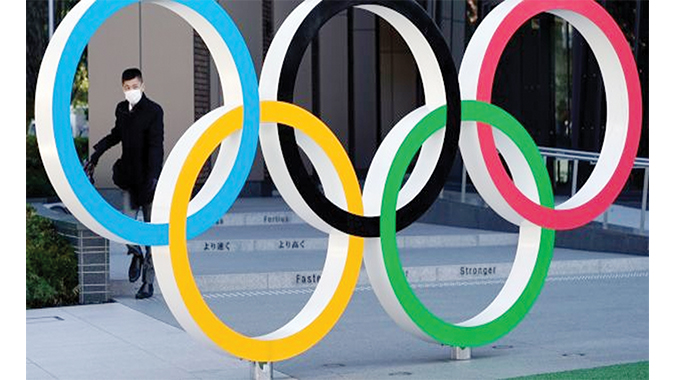
Dingilizwe Ntuli, Sports Editor
COVID-19 has had a ravaging impact on every facet of life, forcing people to adapt to the ‘new normal’.
Everyday life has been significantly altered by the pandemic and the rapid transmission of the virus, especially the newer Delta variant, has resulted in over four million deaths worldwide and more than 2 700 deaths and rising in Zimbabwe.
Economies have been severely affected, jobs lost due to business closures, schools closed, social lives curtailed and sports either played in empty stadia, before restricted crowds or banned outright.
People are unable to actively participate in regular individual or group physical activity outside their homes, as gyms, pools, parks and playgrounds were forced to close.
It was sad watching the official opening ceremony of the Tokyo Olympic Games in Japan yesterday afternoon, as thousands of athletes marched into the Olympic Stadium resplendent in various attires waving to folded bucket seats in the 60 000-seater venue.
Although the athletes tried to make it a lively event by waving animatedly, perhaps for TV cameras, nothing can replace the cheering, screaming, whistling and booing from real people like in previous Olympic events.
It was a sombre event that’s likely to affect performances, as the spirit of competition is also enhanced by the encouragement from fans.
The Olympics are about bringing people together through sport. Although athletes are the main characters in any given sport, the importance and role of spectators cannot be diminished.
Yes, athletes are now probably used to performing in empty venues, but it is first and foremost spectators that make heroes out of sportspersons and soon “fanless” competitions will eventually take a toll on sport in general.
It’s a pity that while large competitions such as the Olympics are driven by commercial interests through television rights, it’s the less funded sport in struggling economies that have suffered for the past 17 months when stadia fan bans were first effected to safeguard the health of athletes and others involved.
The Covid-19 pandemic has been particularly severe and cruel to Zimbabwean sport, both organised and social.
From marathons to football tournaments, athletics championships to basketball games, netball and more, athletes have had to bear the brunt of inactivity, as fans can just turn to watching sport on television to quench their thirst for entertainment.
While the banning of sport in Zimbabwe has been largely a source of frustration for fans, it means no income for athletes that have chosen to pursue sport as a professional career path.
Hardest hit are footballers and marathon runners. Most local football teams have no sponsorship and are struggling to raise money to pay their players.
A number of marathon runners have also been handicapped, as no road race has been held in the country since the CBZ Marathon in February last year.
There’re runners that were known to compete in almost all local marathons and were almost always guaranteed of finishing among the prize winners, but with that source of income dry, they’ve been forced into alternatives to survive.
Zimbabwe had quite a sizeable number of road races that paid well to keep prize winners financially afloat for the whole year.
These marathons include the Old Mutual sponsored Harare Marathon, West Gate Half Marathon, Nkulumane Half Marathon and Vumba Half Marathon, CBZ Marathon, Lake Harvest Half Marathon in Kariba, Tanganda Marathon, JM Busha Marathon, PPC Matopos Ultra Marathon and the Econet Victoria Falls Marathon, among the major road races.
None of these marathons will be held for a second year running, as their usual scheduled months have gone by.
Although emphasis has, and rightly so, been on athletes, the banning of sports has also had a huge bearing on the physical activeness of citizens under such conditions.
When people tend to be less physically active, they have longer screen time, and undesirable diets, resulting in weight gain and loss of physical fitness.
The World Health Organisation recommends at least 150 minutes of moderate-intensity or 75 minutes of vigorous-intensity physical activity per week.
There are unquantified benefits of such periodic exercise and there are concerns, therefore, that lack of regular sporting or exercise routines may result in challenges to the immune system and physical health in the context of the Covid-19 pandemic.
However, the biggest uncertainty the Covid-19 pandemic poses is not just that some sports won’t survive, but that future sports stars will be lost, further drying the pool the country draws athletes for the Olympic Games.
Zimbabwe sent just five athletes to the Tokyo Olympics, two swimmers, one rower, one golfer and a sprinter, because the bulk of targeted athletes failed to achieve qualifying times as a result of the lockdown inactivity.
It’s concerning that not a single locally-based athlete qualified for the Olympics and if the pandemic continues for another year,
Zimbabwe’s Olympic movement will continue limping, with the country forced to rely solely on athletes based abroad for the Games.
Both athletes and fans are therefore hanging their hopes on an urgent solution to the Covid-19 crisis, although prevailing trends show that the pandemic is not disappearing anytime soon.



 Online Reporter