peter
peterIf it is true that every country has its national question it follows that a continent such as Africa has its continental question. A continental question would be shaped out of the complex intersection of the national questions of the African continent.
Definitionally, a national question is the challenge to national political and social being that a nation state must surmount for it to achieve stability and sustainability.
During and after the colonial era, for instance, African countries faced questions of nation building where governments had to work hard to group people of diverse races and ethnicities under one national identity and state administration. Some of the people that had to be unified and reconciled under one flag were former political rivals.
This challenge, in Africa, was summarised under the overarching project of nation-building. Most African countries inherited from colonialism strong states and weak nations and some had strong nations and weak states. In the main, African countries had the challenge of ethnic divisions. In that way, identity politics threatened national being and posed the challenge of the urgent need for nation-building and unification.
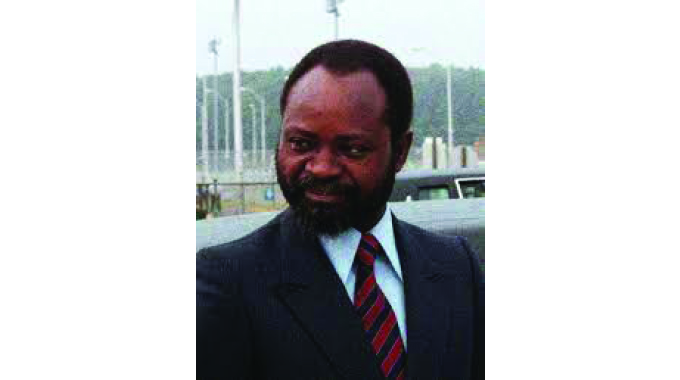
It was under such a challenge that the late Mozambican president Samora Machel coined the aphorism that, “for the nation to live the tribe must die,” meaning that tribal political identities should be suppressed in order for national identity to bloom.
Today I concern myself, in this article, with what might come up as the African continental question that intersects the national questions of different countries of the continent. The national question of any country is never a singular question but a multiplicity of questions that define the political and social dilemmas of a specific country. As such, the African continental question will also be understood in terms of a multiplicity of challenges that threaten the being of the continent and delay its political and social progress.
My observation is that the African continental question falls under the broad categories of power, knowledge and being. Africa is positioned powerlessly amongst the continents of the world. African histories and languages, which is knowledges, are presently not legitimated in the world system. As a result, being an African and black, as an identity in the world, comes with some lightness. The African is the troubled and also probably troubling child of the world. The world has an African problem or, otherwise, Africa has a world problem.
Colonial borders
Colonial borders continue to divide Africans and keep them away and apart from each other. Achille Mbembe once remarked that Africa is closed to itself and open to other continents, politically and economically. Colonial borders maintain national and ethnic divisions that have kept Africans away from each other and allowed nationalism and xenophobia to remain toxic political passions in the continent.

The vaunted political ideology of Pan-Africanism has not been allowed to overcome colonial and national divisions that dog the continent.
Pan-Africanism remains a beautiful slogan that has not been translated into a policy in the continent and that has kept Africa backward and vulnerable to the enduring imperialism and coloniality of the present world system and its political and economic orders.
African fragility
The Covid-19 global pandemic and the war in Europe have gone very far to expose the fragility of Africa in the global geopolitical landscape that is, in many ways, tilted against Africa. The problems that threaten human life on earth are presently the ecological crisis characterised by rapid climate change, social inequalities punctuated by deepening poverty of the majority, the refugee crisis created by growing numbers of stateless and nation-less populations, and disease. These problems are not showing signs of abetting.
These global problems are felt more in Africa by Africans compared to other people and parts of the world. Most of these are problems of the world that originated elsewhere but end up African problems that are domestic to Africa. World problems have systemic and structural tendency to end up as African problems and crises from which the world has to rescue Africa.
It is in that way that the world system itself is a problem for Africa and tends to problematise Africa in one way or another.
The African continental question
The African continental question is specifically a question of coloniality of power, coloniality of knowledge and colonial of being. Africa has been disempowered economically and politically over the centuries. African languages, histories and knowledges have been delegitimised and marginalised as myths and superstitions.
As such, Africans as bodies and an identity group are stigmatised in the world as people who are a problem and not people that have a problem. Africans, because of their precarious position in the world exist as consumers of other people’s goods and services, knowledges and cultures, and are not producers of their own.
Ignorance remains a durable African problem where Africans themselves do not recognise each other and are not recognised by others as thinkers, inventors and knowledge producers.
A combination of coloniality of power, knowledge and being keeps Africa in systemic and structural captivity and bondage where, even with its abundance of resources, the continent remains the poorest part of the world. The paradox of Africa is a paradox of coloniality where the wealth of the continent has not translated to the well-being of the people of the continent.
The African continental question is a question of coloniality that needs to be solved through decoloniality and decolonisation that must be founded on African unity and the minimisation or removal of colonial borders, geographic and political ones.
By political borders I refer to policy prescriptions and psychological lines and prejudices that restrict African mental freedom. The racial and ethnic lines and prejudice that keep Africans divided are some psychological borders that continue to divide Africans.
Cetshwayo Zindabazezwe Mabhena writes from Sol Plaatje University in Kimberley, Northern Cape, in South Africa. Contact: [email protected].


 Online Reporter