

 admin
admin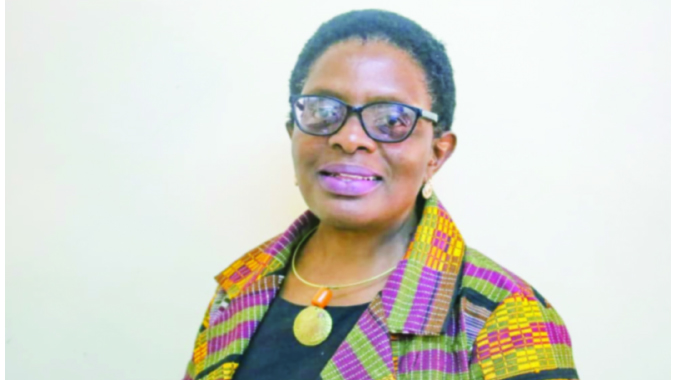
Sifelani Tsiko, Innovations Editor
Promoting the One Health approach that unites human, animal and environmental health could help achieve better public health outcomes in the country’s rural areas.
In some rural areas, the majority of women, children and farmers have no easy access to healthcare systems due to limited resources and other factors.
University of Zimbabwe ecologist and co-leader of the Zimbabwe One Health Advisory Committee, Professor Prisca Mugabe said: “One Health approaches can help address environmental and health inequities in a holistic manner in our rural areas.
“This happens by promoting better access for women in healthcare centres and fostering a sound management of natural resources and ecosystems.”
Her remarks come at a time when Capacitating One Health in Eastern and Southern Africa (COHESA) has embarked on a project to upgrade a biodigester system to help pregnant women access clean cooking energy at new maternity waiting homes at St Lukes Hospital in Lupane, about 200km west of Bulawayo.
Prof Mugabe said the upgrade would help more than 80 women to access clean cooking energy and prevent respiratory ailments associated with indoor cooking fires.
“We are working closely with our partner, Lupane State University, to upgrade the biodigester here at St Lukes Hospital so that pregnant women can access clean cooking energy.
“It is important to address the issue of one health in Zimbabwe. This concept tackles issues related to human health, animal health, and the health of the environment,” she said.
The COHESA project financed by the European Union (EU) aims to effectively protect the health of people, animals, plants and the shared environment.
Zimbabwe is among 12 African countries that are benefiting from a Euros 9,3 million (US$10 million) COHESA project.
The project is being implemented with the support of the International Livestock Research Institute (ILRI), CIRAD – a French agricultural research and cooperation organisation, and the International Service for the Acquisition of Agri-biotech Applications (ISAAA).
“We are so excited about the support we are getting from COHESA and Lupane State University,” said St Lukes Hospital administrator, Mrs Geraldine Jongwe.
“The old system had collapsed and we are optimistic that the upgrade will help us a lot for our pregnant women to access clean cooking energy.”
St Lukes Hospital serves hundreds of people from the entire Matabeleland North province.
Most rural women face numerous challenges when it comes to accessing healthcare services.
There are few ambulances and it can take several hours before they can respond through bad roads.
The provision of maternity waiting homes can help reduce maternal mortality by improving access to skilled birth attendance and emergency specialised care for women in rural areas
Tackling the issue of clean cooking energy also addresses the issue of human health as well as the environment – One Health concept made simple.
Clean cooking energy from biogas helps limits respiratory problems that often affect women in rural areas who use firewood.
Biogas also provides a sustainable energy source from animal waste that is widely available in rural areas.
This is a great example of how better international and local cross-sector cooperation on a One Health approach can make a huge difference in the livelihoods of rural women.
St Lukes Hospital serves between 250 and 300 pregnant women drawn from the entire Matabeleland North province.
The new four block maternity waiting home will help the hospital expand its healthcare services.
The provision of biogas will help ease the burden of looking for firewood for pregnant women.
Lupane State University is the implementing partner for the upgrading of the 50 cubic metre biogas digester.
The old system had collapsed and was decommissioned after experiencing gas leakages due to an old and outdated system.
“I am so happy about the support we are getting from Lupane State University and COHESA because it will lessen the burden that our pregnant women experience when it comes to accessing clean cooking energy sources,” said Mr Rodger Dube of Daluka village in Ward 19 of Lupane District.
“Apart from the biogas project, COHESA is assisting us on how we can stop plastic pollution through recycling it into other beneficial products.”
He said plastic pollution was a growing problem in rural areas and support for recycling could help address waste management problems among rural communities.
Said Mrs Deborah Mlandu of Mafinyela village in Lupane district: “This biogas project is going to help pregnant women a lot.
“Firewood is a huge problem here and biogas use is going to provide a huge relief for our pregnant women.
“It will take away a huge burden from their shoulders.”
Rural households are now increasingly grappling with garbage particularly plastic pollution which has serious health implications for livestock, human and environmental health.
Apart from the Lupane project, COHESA is also working closely with the Chinhoyi University of Technology to promote the use of biogas in Guruve district for domestic purposes.
In addition, COHESA and CUT are also working closely to explore ways to use biogas in the curing of tobacco, a major driver of deforestation in this district.
“Everyone in Guruve should look at waste and see real value,” said Prof Kudakwashe Chitindingu of the Chinhoyi University of Technology lead implementer.
“With the support of COHESA we are going to install biogas digesters at Chifamba High School as pilot project to promote sustainable energy sources.
“In addition to this we are also exploring ways to see how we can use biogas for the curing of tobacco with the support of engineers at CUT.”
A nine cubic metre digester will be installed at Chifamba High School to improve access to clean cooking and heating energy for the 60 boarding pupils and 37 teachers at the school.
The school runs a piggery project and has sources of cattle waste that can easily be used to run the biodigester.
Prof Chitindingu said a recycling project will be established at the school to promote the recycling of plastic waste.
“Rural areas must not be left behind when it comes to the adoption of renewable energy sources as well as the promotion of recycling to manage waste in rural areas,” he said.
“Instead of burning the waste, why not use it in a way that reduces our carbon footprint print.”
Through these projects in Lupane and Guruve, COHESA will collect, distribute and publicise reliable scientific information on the links between human, animal and environmental health to assist public officials make appropriate decisions to address future crises.
In part, Prof Mugabe said, the COHESA initiative was a response to the Covid-19 health crisis which highlighted the close links between human, animal and environmental health, in a context of increased human-livestock-wildlife contacts and ecosystems degradation.
At present, she said experts on human health, environment and animal health were working in a disjointed manner to address the emergence and spread of zoonotic diseases, which are transmitted through interactions between animals, humans and their shared environments.
“It is clear that there are gaps in the way one health issues are coordinated.
“We need a coordinated approach on all of our one health activities.
“At present the activities are disjointed and we need to speak one language on this,” she said.



 Online Reporter