admin
admin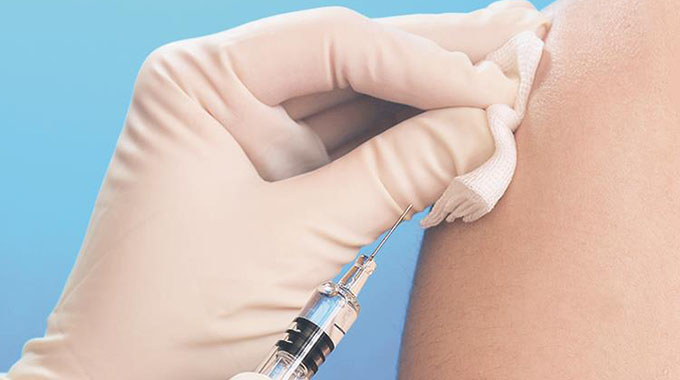
Roselyne Sachiti Health & Society Editor
Last year, on February 23, I got my first Sinopharm Covid -19 jab a day after the country rolled out the Covid-19 national vaccination programme.
Being frontliners, journalists were among the first to be given priority to get vaccinated against Covid-19.
With myths and misconceptions around Covid-19 vaccines, being among the first to get the jab was a huge test as most people were scared.
Those scared and hesitant to get vaccinated against Covid-19 patiently waited to see how our bodies would respond to the jab.
To some, what happened to us after taking the jab would inform their decisions on whether to vaccinate against Covid-19 or not.
Despite correct and accurate information on Covid-19 vaccines being given out by the Ministry of Health and Child Care and other development partners through various media that includes newspapers, radio, television, social media etc, some people remained hesitant.
Even with loads of correct information, fake news also competed for people’s attention making the rounds and seemed to conflict scientifically proven information. This left some people in a dilemma to vaccinate or not.
There were many myths that researchers rushed the development of the Covid-19 vaccine, and as such its effectiveness and safety could not be trusted. Others said getting the vaccine would give those who have taken it Covid-19.
According to information some people got on social media, different vaccines were being developed for Africa to encourage depopulation. Another group said they read “somewhere” that the Covid-19 vaccine enters one’s cells and changes DNA and also causes infertility. They took the unverified information hook, line and sinker.
Others said they read on social media that those who took the vaccine would die a few months after taking it.
People said a lot of discouraging things. Getting jabbed was a bit scary, despite all the literature I had read around vaccines and Covid-19.
Queuing to get the jab on February 23, 2020, my colleagues Vimbai Nyamhanza, Daniel Nemukuyu, Isdore Guvamombe, John Manzongo and Kudakwashe Mugari and I watched the nurse at Wilkins Infectious Diseases Hospital attend to those who had come before us.
The queue was quite short, the process flawless and information given by the health officials adequate.
In a few minutes each of us had been vaccinated and given our vaccination cards and next date for a second jab.
Having been jabbed, it came naturally to upload my WhatsApp status “Yaay, happy I got my first Covid-19 jab today!”
The questions started coming from friends and relatives, and from some work colleagues who were hesitant to go.
“Are you not scared? How does it feel? Are you now speaking Chinese since you got the Sinopharm vaccine? Do your eyes look the same, are the eyelids and epicanthal folds still the same or they have turned Chinese?”
The most shocking was, “Are you still able to go to the toilet. I read somewhere that the vaccine affects bowl movement?” The second day after vaccination more questions came: “Are you not afraid of dying, did you experience any nightmares? I heard those who take the Covid-19 vaccine will die after a few months? Are you eating properly? What are you feeling, are you still normal?”
I told them I was okay, but weeks later the questions still came frequently, I got tired of responding and ended up ignoring some. I never experienced any side effects after the jab and continued with my everyday activities and also encouraging others to go for vaccination.
I was also lucky not to get infected by Covid-19 during the peak infection periods in the second and third waves.
The jab and other non- pharmaceutical prevention methods like properly wearing a clean face mask, sanitising, washing hands with clean water and soap, social distancing among others I religiously stuck to and still follow have helped. One year on, my five colleagues and I, and the over four million other Zimbabweans who were vaccinated against Covid-19 are still going strong and more confident. I had my second and third jabs and am not dead as some had thought. Yet, some people I know, even the educated, are still scared of getting the jab despite seeing millions other people who have taken them around the globe still going strong.
In Zimbabwe, a total of 4 337 829 had received their first Covid-19 dose with 3 370 827 receiving their second dose and a total of 103 483 got the third dose as at February 21 2022.
Vaccine misinformation, misconceptions, hesitancy and fake news have also been a major barrier to uptake across the globe, but particularly on the African continent. False messaging and conspiracy theories discouraging the public from getting vaccinated are spreading rampantly on social and mobile media platforms like WhatsApp have been pointed out as one of the causes.
According to the World Health Organisation (WHO), vaccine hesitancy refers to delay in acceptance or refusal of vaccines despite availability of vaccine services.
In a paper titled; “Vaccine Hesitancy: what it means and what we need to know in order to tackle it”, WHO Programme Manager Vaccine-preventable Diseases and Immunisation VPI/DCE, Robb Butler, says it is influenced by factors such as complacency, convenience and confidence.
Another paper “Vaccine hesitancy: More than a pandemic” by Edward Chen, a first-year Immunology MMSc student at Harvard Medical School points out that there are varied reasons for vaccine hesitancy.
“The WHO working group has cited the degree of trust in vaccines, healthcare systems, and policy makers (confidence), a perception of low risks from disease (complacency, which paradoxically arises because effective vaccines lead to low disease risk in the first place), and access challenges (convenience) as reasons for vaccine hesitancy.”
According to Chen, a survey conducted by Carnegie Mellon University and the University of Maryland in a collaboration with Facebook collected 18 million responses and found that 70 percent of vaccine-hesitant adults are worried about potential side effects of Covid-19 vaccines.
“Surveys from the Centres for Disease Control and Prevention (CDC) have identified other factors beyond safety, such as reliance on a “wait and see” approach, a lack of trust in the government, and concerns about the speed at which Covid-19 vaccines were developed,” Chen wrote.
In a paper by Eve Dube et al, published in Human Vaccines & Immunotherapeutics Volume 9, 2013 – Issue 8, titled “Vaccine Hesitancy”, studies examining determinants of vaccination decision-making have resulted in several proposed models of acceptance and resistance, most focusing on parental decision-making. Dube et al say the differences between these various models illustrate the difficulty of categorising attitudes about vaccination.
“Because these models are often rooted in individual studies and because of the complex interaction of different social, cultural, political and personal factors in vaccine decision, it is hard to have a clear picture of the range of possible attitudes about vaccination,” the authors say.
They further point out that vaccine-hesitant individuals may refuse some vaccines, but agree to others; they may delay vaccines or accept vaccines according to the recommended schedule, but be unsure in doing so.
“It is hard to have a clear picture of vaccine hesitancy at the population level because hesitancy is not directly related to vaccine uptake (as vaccine-hesitant individuals may accept all recommended vaccines in a timely manner, but still have significant doubts in doing so).”
In addition, hesitancy can vary according to the vaccine involved (one can be hesitant regarding the flu vaccine but accept with confidence all other vaccines), with newer vaccines usually engendering more hesitancy,” they further explain.
The authors also say studies have shown that individuals who delayed or refused vaccines are significantly more likely to have looked for vaccine information on the internet.
Writing for Africa Portal, Adaeze Aroh, Bola Asaolu and Chioma T. Okafor say Covid-19 vaccine hesitancy is an emerging and complex issue, with few proven strategies to address it.
“The WHO suggests that a comprehensive approach targeting multiple facets of social interaction is more likely to dispel Covid-19 myths and address vaccine hesitancy. Based on this suggestion, we recommend community-based approaches guided by the Social-Ecological Model (SEM) to reduce vaccine hesitancy. The SEM is an ideal framework to guide the recommendations for reducing vaccine hesitancy as it attributes the outcomes of health behaviour to multiple factors within and external to an individual. It uses a multi-level approach to target multiple factors that influence behaviours responsible for vaccine hesitancy,” the authors say.
On February 22, Zimbabwe marked the first year anniversary of administering the Covid-19 vaccines that include Sinopharm, Sinovac, Sputinik V, Covaxin.



 Online Reporter