Online Reporter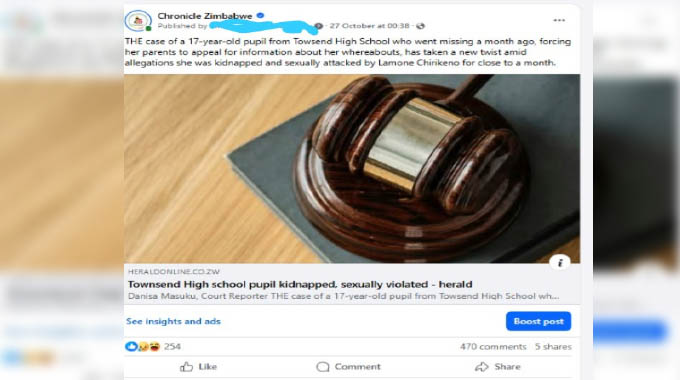
Bongani Ndlovu, Chronicle Writer
A CHRONICLE Facebook post about the alleged kidnapping and sexual abuse of a schoolgirl has sparked a heated online debate, exposing deep divisions in how Zimbabweans perceive gender, morality and justice.
The post, which detailed the arrest of a man accused of abducting and living with a teenage girl, drew hundreds of comments that quickly revealed polarised views. While some users sympathised with the accused, others strongly defended the rights of the child and the enforcement of sexual offence laws. A smaller group expressed confusion or moral reflection on the story.
Almost half of the commenters appeared to defend the man, portraying him as a victim of manipulation or unfair laws.
One user, Owen Njanji, said: “There goes another attack on a man… Another potential victim of the justice system that is today tilted to favour women…”
Others claimed the girl may have “enjoyed staying with the man” or been “coached” to make allegations — sentiments reflecting a persistent culture of victim-blaming and misunderstanding of child protection laws.
This “blame-the-girl” narrative, which accounted for about 43 percent of all comments analysed, underscores how patriarchal attitudes continue to shape online conversations about sexual offences involving minors.
In contrast, around a quarter of the commenters took a firm stance in support of the law and the protection of children. Users such as Faith Nyathi and Majelita Fidler reminded readers that, regardless of perceived consent, any sexual relationship with a person under 18 constitutes rape under Zimbabwean law.
Another user, Mbekezeli M Nyathi, wrote in IsiNdebele: “Umntwana o below 18 ngeke azicabangele nguwe omqilileyo,” meaning a child below 18 cannot make such decisions; it is the adult who is at fault. This group emphasised moral responsibility, urging men to “stay away from minors” and calling for stronger law enforcement and public education about consent and accountability.
Several commenters questioned inconsistencies in the case, particularly the element of kidnapping.
“How could she be staying with her kidnapper?” asked one reader, while another queried how charges of “sex with a minor” and “kidnapping” could coexist.
These reactions reveal public confusion about how sexual offence cases are investigated and prosecuted, and point to the need for clearer civic education on legal definitions of coercion, consent and age of responsibility.
Others used the debate to reflect on broader moral and cultural change. Some blamed “modern parenting,” the way young people dress, or what they called the erosion of traditional values.
Others expressed concern that children today are “exposed to sexualisation too early.”
Writing in IsiNdebele, one reader pleaded: “Hlukanani labantwana madoda uyalimala” — men, stay away from these children, you will get hurt.
The Chronicle’s analysis of the comments found that 43 percent defended the man or blamed the girl, 24 percent supported child protection and legal enforcement, 12 percent were neutral or analytical, and the remainder reflected moral or cultural commentary.
The Criminal Law (Codification and Reform) Act clearly states that any sexual activity with a person under 18 is illegal, regardless of purported consent. Yet, as the debate shows, many still conflate morality, culture and legality, often to the detriment of minors’ rights and safety.
While social media has become a platform for free expression, it also exposes entrenched biases and misinformation. What remains clear from this debate is that child protection is non-negotiable — a minor cannot consent to a sexual relationship with an adult.



 Bongani Ndlovu