Online Reporter
Clarkson Mambo
“Until the lion learns how to write, every story will glorify the hunter.”
This famous African saying, which stresses the importance of being able to tell your own story, summarises the sentiment of southern African communication experts on why the region must always be first in telling its own story.
Exactly 45 years ago, the founding fathers of the Southern African Development Community (SADC), then known as the Southern African Development Coordination Conference (SADCC), came together to establish a regional organisation.
At its inception in April 1980, the organisation was established to champion national political liberation across southern Africa and to reduce economic dependence on apartheid-era South Africa.
Through strategic coordination and efficient utilisation of each country’s unique strengths and resources, the organisation sought to foster regional self-sufficiency and cooperation, laying the foundation for sustainable development and political autonomy in the region.
In 1992, SADCC transformed to SADC, with a refined mandate focused on promoting sustainable development, fostering economic growth, reducing poverty and improving the quality of life for the peoples of southern Africa.
Its membership has grown from the initial nine countries to 16, while the population has grown from around 60 million in 1980 to about 400 million at present, and gross domestic product has expanded from US$20 billion to more than US$800 billion.
The stories of how the region has transitioned, the successes recorded and challenges faced as well as opportunities for deepening regional integration are unlimited, but largely remain unknown by the region’s citizens.
To ensure greater public understanding and engagement, regional communication experts met in Johannesburg, South Africa from April 15-16 to validate the draft SADC Communication, Awareness and Visibility Strategy 2025-2030.
The experts emphasised that SADC member states must actively and consistently communicate the organisation’s mission, achievements and ongoing initiatives, enabling both citizens and external stakeholders to recognise, appreciate and support efforts aimed at advancing regional development and integration.
“SADC is relevant, and the region is better off with the bloc than without it. We need more, and more stories in various channels in our countries and beyond, showcasing SADC’s impact on regional development and successes across different sectors in fostering economic growth, regional integration, and sustainable development,” said Ms Barbara Lopi, the head of Communication and Public Relations at the SADC Secretariat.
The strategy aims to strengthen SADC’s strategic communication capacity, fostering greater awareness, understanding and visibility of the organisation’s mission and initiatives.
By engaging SADC citizens and member state officials, the strategy seeks to stimulate sustained interest and active participation, ultimately supporting the realisation of the Regional Indicative Strategic Development Plan (RISDP) 2020-2030 and the SADC Vision 2050.
The RISDP 2020-2030 and SADC Vision 2050 are the two blueprints guiding the region’s development and integration.
Among other things, the strategy aims to adapt to the shifting media exposure patterns and audience engagement habits, ensuring relevance in a rapidly evolving communication landscape shaped by technological advancements such as artificial intelligence and diverse stakeholder expectations.
By embracing innovation and responsiveness, the strategy seeks to enhance outreach, engagement and visibility across multiple platforms.
The new strategy signals the region’s “renewed commitment to enhancing the visibility and communication capacity of SADC, ensuring it resonates with our citizenry and engages them actively in our regional agenda,” said Lawerence Masera from Zimbabwe, representing the chairperson of the SADC Council of Ministers.
By actively implementing the strategy, SADC aims to reshape public perception, shifting from an image of an “elitist” organisation primarily serving member state leadership to one that actively prioritises the interests of citizens, the experts said.
To enhance awareness and visibility of SADC Day celebrated annually on August 17 to commemorate the signing of the SADC Declaration and Treaty, a proposal was put forward during the meeting to officially recognise the day as a public holiday across all the 16 member states.
This initiative aims to strengthen regional identity and foster greater citizen engagement in SADC affairs.
The proposal also envisions country-specific programmes and activities, ensuring that each member state celebrates the occasion through events that highlight SADC’s achievements, vision and ongoing regional integration efforts.
Dr Tabani Moyo, the regional director of the Media Institute of Southern Africa, cautioned that the lack of effective communication regarding the successes of the regional organisation was contributing to a declining sense of Pan-Africanism among citizens in the region.
He emphasised that clear, consistent, and impactful messaging is essential to fostering regional unity, identity and collective progress, ensuring that communities remain actively engaged in the vision and achievements of the organisation.
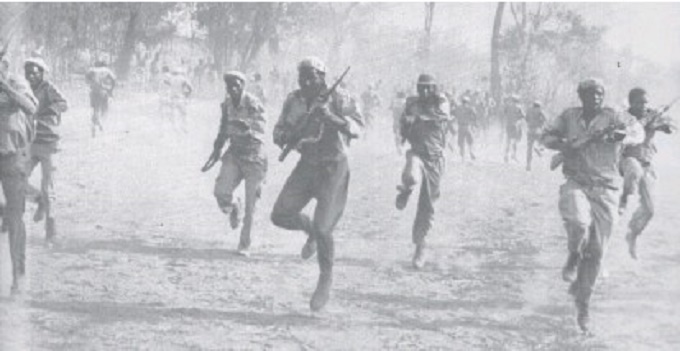
Going down memory lane, Dr Moyo said there was unquestionable regional solidarity when different countries such as Mozambique and Tanzania hosted liberation movements from other countries in the region that were fighting for their independence.
“Nowadays, you hear people from a country that is providing support to the SADC Mission in the Democratic Republic of Congo questioning why their soldiers are being involved as if what is happening elsewhere in the region does not affect them as well,” he said.
Clear and effective communication by the SADC Secretariat and member state leadership plays a vital role in promoting a deeper understanding of the benefits of regional integration. By consistently engaging citizens on the shared vision and objectives of SADC, leadership can enhance public awareness of the benefits of belonging to a unified regional community.
Strengthening this connection ensures that citizens recognise SADC as more than an institution – it is a collective “family” working towards economic development, stability and prosperity for all.
“If SADC does not tell its own story, someone else will,” Dr Moyo said.
As part of initiatives to tell its story, the SADC Secretariat has launched editions of the SADC Success Stories initiative that highlight major institutional, socio-economic and peace and security achievements and milestones.
Some of the major milestones relating to deepening integration include the signing of more than 30 protocols across strategic areas which laid a strong legal, institutional and strategic foundation for advancing regional cooperation.
On economic integration, for example, the region launched the SADC Real Time Gross Settlement System multi-currency platform, which went live in October 2018 to facilitate faster and more effective payment for transactions in the region.
In 2008, the SADC Free Trade Area (FTA) was launched. By attaining the status of the FTA, consumers in the region are now getting better products at lower prices due to increased production, while producers are benefiting from a tariff-free trade for all goods originating within the region.
In the energy sector, SADC facilitated the establishment of the Southern African Power Pool in 1995, where regional power utilities are afforded the platform to sell and buy surplus electricity from each other, thereby helping some countries to meet their growing demand for energy.
With respect to political stability, the region has largely succeeded in consolidating peace and security through various initiatives. This is despite challenges being faced in a few countries.
It was through the then SADCC, with support from other countries, speaking with one voice against apartheid in South Africa that culminated in the independence of Namibia (1990) and South Africa (1994).
While the list of achievements and milestones is long, citizens of the region largely remain unaware due to limited communication and awareness. — sardc.net