Online Reporter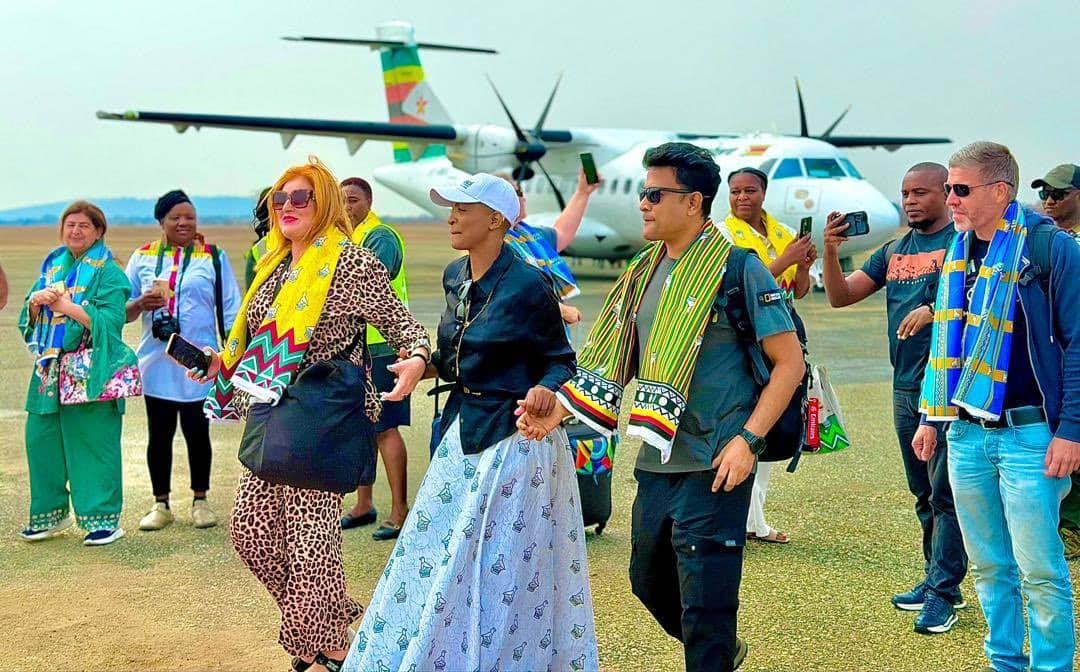
Nqobile Bhebhe [email protected]
ZIMBABWE’S tourism growth story is increasingly being shaped by what happens beyond the attractions themselves: how easily visitors can reach destinations, the cost of travel, whether airports can accommodate larger aircraft and whether supporting infrastructure is strong enough to attract fresh investment.
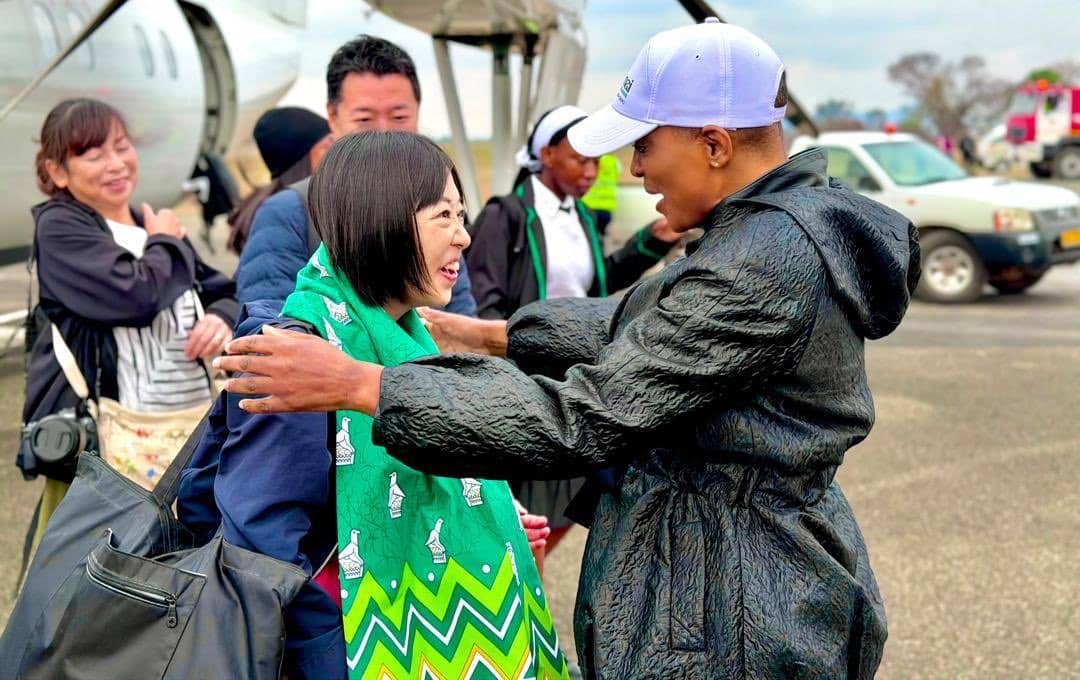
That reality came into sharp focus at the recently held 19th edition of the Sanganai/Hlanganani/Dzimbahwe World Tourism Expo in Masvingo, where aviation connectivity, destination infrastructure and investment emerged as critical pillars for turning rising visitor numbers into sustainable economic growth.
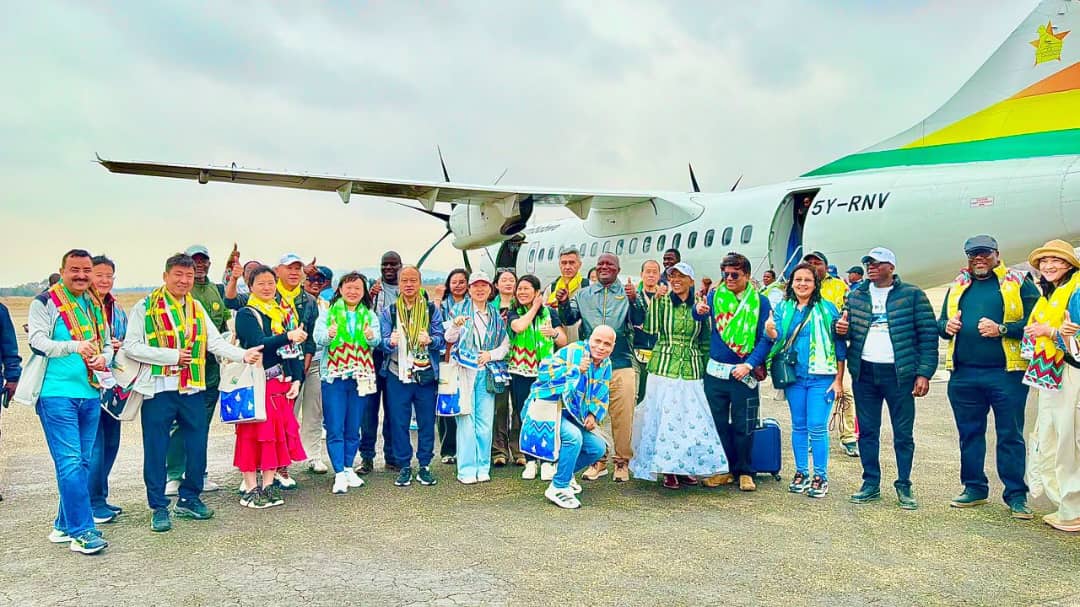
President Mnangagwa has now placed the issue firmly on the national tourism agenda, calling for the sector’s momentum to translate into infrastructure development, investment and new tourism products, while Government pursues an Open Skies strategy to make Zimbabwe more accessible.
“The momentum generated by this event must translate into lasting tourism infrastructure, investment, product development and ultimately an improvement in the quality of life for our people,” he told delegates at the official opening of the tourism expo.
“On its part, my Government stands ready to guarantee a conducive environment, necessary for the sector to flourish. Barriers that inhibit the development of new tourism products must be removed and travel procedures simplified, as we pursue an open sky strategy.
“I call upon the private sector, development partners, communities and all players across the tourism value chain to complement these ongoing efforts.”
The message is particularly significant for an industry seeking to move from recovery to sustained growth.
Zimbabwe recorded 1,78 million international tourist arrivals in 2025, a sharp increase from approximately 380 820 in 2021, while tourism investment has also gathered momentum.
However, rising arrivals alone will not necessarily translate into increased investment and longer visitor stays if travellers continue to face expensive flights, limited route options and poor access to destinations beyond the country’s main tourism gateways.
That is why aviation is increasingly being viewed as economic infrastructure rather than merely a transport service.
Tourism and Hospitality Industry Minister Barbara Rwodzi put it bluntly:
“Connectivity is central to our tourism growth strategy. We cannot grow tourism without growing connectivity,” she said in a speech read on her behalf by Deputy Minister Tongai Mnangagwa.
“Fastjet has become an important strategic partner in improving access to Zimbabwe, with its network connecting Harare, Victoria Falls and Bulawayo, while providing regional links to Johannesburg and other destinations in South Africa.”
Government’s connectivity drive is being reinforced by airlines responding to growing demand.
During the expo, Fastjet announced it would retain its Airbus A320 aircraft during the peak December travel period, a move widely welcomed as a major boost to tourism and a sign of growing confidence in Zimbabwe as a tourism and business destination.
The airline introduced the Airbus A320 on the Harare-Johannesburg and Victoria Falls-Johannesburg routes in August.
Its decision to extend the aircraft’s deployment reflects sustained demand from both business and leisure travellers while increasing capacity on key regional routes.
For Zimbabwe’s tourism economy, the significance of an additional aircraft extends well beyond the airport terminal.
Every additional visitor creates potential demand for hotel rooms, restaurants, tour operators, transport services, attractions, retail outlets and community-based tourism products.
Fastjet Zimbabwe Corporate Affairs Manager Mr Nunurai Ndawana said aviation played a much broader economic role.
“Aviation is a catalyst for economic development,” Mr Ndawana said, adding that improved flight options supported the movement of business travellers and strengthened trade links between Zimbabwe and regional markets.
He said Fastjet remained committed to improving connectivity and supporting the growth of Zimbabwe’s tourism industry through expanded air services. Fastjet Zimbabwe Chief Commercial
Officer Ms Vivian Ruwuya said the airline was responding to changing travel patterns and growing demand.
“We are always looking at providing our customers with flexible flight times to better suit their travel needs,” Ms Ruwuya pointed out in relation to Fastjet’s expanded Johannesburg-Harare services.
She said increased demand from business travellers had prompted the airline to introduce additional capacity, giving passengers greater flexibility while making it easier to spend a full business day in Harare.
Against this backdrop, Zimbabwe’s Open Skies policy assumes even greater importance.
The policy is not simply about allowing more aircraft into Zimbabwe. It is about creating a competitive aviation environment capable of supporting additional routes, greater frequencies and increased airline participation.
Industry players argue that improved air access can reduce the barriers associated with travelling to Zimbabwe, widen the potential visitor market and make tourism destinations more attractive to investors.
For investors considering hotels, lodges, conference facilities, attractions, restaurants or transport businesses, connectivity remains a key part of the commercial equation.
A destination that is easy and affordable to reach presents a stronger investment proposition than one where travellers face limited flight options and high transport costs.
Open Skies can become a critical enabler of Government’s broader tourism investment strategy by linking international and regional markets to Zimbabwe’s tourism products.
The policy also supports efforts to spread tourism beyond established gateways such as Harare and Victoria Falls and unlock the potential of destinations including Masvingo and Kariba.
Kariba perhaps provides the clearest illustration of the relationship between aviation infrastructure and tourism investment.
At the Tourism Investment Forum during the expo, Kariba Business Indaba chairperson Mr Cephas Shoniwa raised concerns over the high cost of flying to the resort town and the short runway at Kariba Airport, saying the constraints were discouraging major commercial carriers and tourists.
The challenge is particularly significant for a destination with substantial tourism potential, where road travel can be lengthy and air access remains limited.
Finance, Economic Development and Investment Promotion Minister Professor Mthuli Ncube said Government was responding to the concerns.
“I will approach the relevant authorities like CAAZ and the Airports Company of Zimbabwe with that genuine concern, and we will definitely look at revising that cost of air travel,” he said.
A one-way flight from Harare to Kariba currently averages US$240 and takes less than 45 minutes, with only limited scheduled commercial services available.
On the infrastructure bottleneck, Prof Ncube said Government is fully aware of the runway challenge and is seized with the matter.
“We are in the process of courting private contractors to rehabilitate the runway, and thank you very much for your valuable contribution,” he said.
Rehabilitating the runway and improving the affordability of air travel to Kariba could have effects far beyond aviation.
More reliable and affordable access could boost hotel occupancy, stimulate new accommodation projects, increase demand for tourism activities and excursions, and encourage investors to develop new products.
Prof Ncube captured the changing nature of the sector.
“Tourism is no longer simply about hotels, game drives and sightseeing. Tourism today is technology, infrastructure, real estate, aviation, finance, entertainment, culture and creativity. It is therefore one of the most powerful platforms through which we can drive inclusive economic growth,” said Prof Ncube.
He said Zimbabwe recorded 792 000 domestic and international tourist arrivals during the first half of 2026, while tourism receipts increased by six percent, from US$508 million in the same period last year to US$537 million.
The tourism sector attracted more than US$1 billion during the NDS1 2021-2025 period, with investment reaching US$194,5 million in 2025 and approximately US$132 million during the first half of 2026.
For Government, however, the next phase is about converting interest into productive assets.
Prof Ncube said the true measure of the investment drive would not be speeches delivered or business cards exchanged, but projects financed, businesses established and jobs created.
“Let us move from potential to projects, from projects to investment, from investment to businesses, and from businesses to jobs and sustainable economic growth,” he said.
The connectivity agenda is also being supported by measures aimed at reducing operating costs within the tourism industry.
Under Statutory Instrument 27 of 2026, Government scrapped the US$600 annual Commercial Boat Permit, reduced Houseboat Permit fees by 50 percent and continued road rehabilitation projects aimed at improving access to tourism destinations.
Minister Rwodzi said the strong tourism figures demonstrated the sector’s potential for further growth if barriers to travel were reduced and connectivity continued to improve.
She praised Fastjet for maintaining additional capacity and reaffirmed Government’s commitment to working with airlines and other industry stakeholders to expand routes and strengthen Zimbabwe’s position as a competitive tourism destination.
“Zimbabwe is open, Zimbabwe is accessible, and Zimbabwe is growing. We look forward to more aircraft, additional routes, increased visitor arrivals and greater investment in Zimbabwe’s tourism sector.”
For Zimbabwe, the next tourism frontier may not simply be finding more attractions to market, but ensuring visitors can reach those attractions efficiently and affordably.
The success of Sanganai in Masvingo has demonstrated the strength of demand for Zimbabwe’s tourism offering.
The challenge now is to build the aviation, road and tourism infrastructure needed to convert that demand into sustained investment, longer stays, new businesses and jobs.