

 admin
admin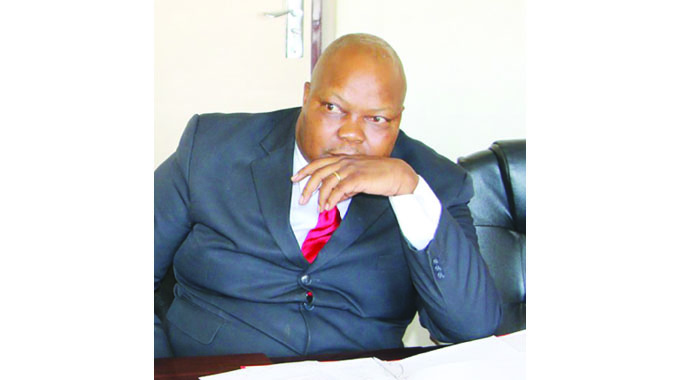
Pride Mkono
Zimbabwean civic society and opposition political parties, especially the Movement for Democratic Change led by Morgan Tsvangirai (MDC-T), have had close and warm ties dating back to the formation of the MDC in 1999. It can actually be argued that the MDC itself was a product of civic society organisations in their multiplicity as trade unions, students’ unions and social movements as well as coalitions.
This piece will look at how the relationships evolved, their effects on the performance of the civic society, how they are crumbling and what is the best way forward for civics in light of recent developments in the main opposition, the MDC-T.
In 1999 the MDC was formed as an opposition to the Zimbabwe African National Union Patriotic Front (Zanu-PF) rule. It was as a by-product of an All People’s Convention which brought together various civic society formations in the form of constitutional change lobby groups, students, workers, churches and various other social movements.
Soon after the formation of the MDC the Zanu-PF Government called for a national referendum on a constitution that had been produced by a Presidential Constitution Commission led by the now Chief Justice, Godfrey Chidyausiku. Civic society organisations led by the National Constitutional Assembly (NCA) immediately joined forces with the MDC in opposing the draft constitution.
This was a crucial marriage of convenience which civic society should however have terminated after the referendum of 2000.
This was not to be and the relationship grew and soon civic society was in bed with the opposition.
Civic society became the breeding ground of opposition leaders as well as recruitment points for new members of the opposition; how sweet the relationship was when it lasted!
However, with the coming of the Government of National Unity (GNU) in 2009, the relationship soon became that of a horse and a rider, the MDC riding on the civic society issues and the civic society carrying the MDC issues.
This is evident in the divisions that rocked civic society in the period of the GNU when it split into the infamous “take charge” and “take part camps”, each representing views to either take part in the COPAC process or to oppose it.
It is needless to say that the civic society organisations had long agreed through the People’s Charter that they would not participate in a process driven by politicians.
But with the MDC in Government and a lot of donor funds on the table, most organisations defied principle and went for the dollar!
Within the GNU set-up, the MDC obtained key ministerial portfolios such as labour, health, finance and education, and commanded control in all urban councils.
Civic society organisations failed to confront the MDC on delivery issues, which is their key mandate after all, and that duty was left to a few trade unions such as the Progressive Teachers Union of Zimbabwe (PTUZ) and the Zimbabwe National Students Union (Zinasu) to speak against the lack of service delivery and failure of the MDC in Government.
The response of the MDC was cold and stoic: “we eat what we kill”. In all this the majority of civics were dead silent.
In the meanwhile, Zanu-PF was mobilising the masses on the ground.
Policies such as the indigenisation and economic empowerment, which also incorporates the Kurera Ukondla Youth Fund, benefited thousands of youths in the urban areas while the stabilisation of the economy due to dollarisation increased tobacco output from an estimated 90 000 growers in resettled areas, thus expanding and strengthening Zanu-PF support.
At regional level, the civics carried the burden of uncoordinated and often trivial MDC issues around key reforms and thus opportunities for reforms were missed as regional leaders increasingly became fed up with the MDC and civic society’s cry-baby character.
In the eyes of some regional players, the duplicity of civics was clear as they chose to say less about service delivery in MDC-controlled ministries while they demanded accountability from Zanu-PF ministries.
The result was that some key regional players saw civics as being used to pursue foreign agendas as alleged by Zanu-PF.
Now, given the July 31 electoral outcome and the subsequent events engulfing the opposition, the time for civics to terminate the incestuous marriage they entered is long overdue.
Pride Mkono is former presdient of the Zimbabwe National Students Union.


 Bongani Ndlovu
 Online Reporter