Vusumuzi Dube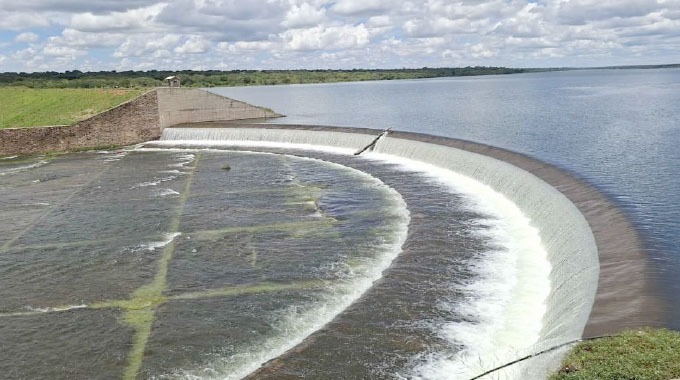
Raymond Jaravaza / Sikhumbuzo Moyo, Sunday News Reporters
IMPROVED dam inflows across the Matabeleland region have sparked optimism among farmers, raising hopes of a bumper harvest and a boost to national food security as the rainy season continues to deliver.
Latest figures from the Zimbabwe National Water Authority (Zinwa) show that the country’s major dams are averaging 89,1 percent capacity, marking a positive outlook for water availability and irrigation-driven agriculture.
In Matabeleland South Province, Mtshabezi Dam spilled last week for the first time in nine years, while Bubi-Lupane Dam in Matabeleland North has also started spilling.
Several other dams in the region — including Antelope, Ingwizi, Silalabuhwa, Tuli Makwe, Mangwe, Zhovhe, Shashani, Maleme and Mbembeswane — have surpassed the 100 percent mark. At the Bubi-Lupane Irrigation Scheme in Lupane, farmers say the improved water situation has renewed confidence in winter wheat production.
The scheme, commissioned in 2021 by President Mnangagwa, supports 90 smallholder farmers, most of them women.
In commissioning the irrigation scheme, the President also launched the Agricultural and Rural Development Authority (Arda) Vision 2030 accelerator model programme meant to stimulate rural industrialisation through agricultural development in line with Vision 2030, which is anchored on driving the country’s economy into upper-middle income status.
Bubi-Lupane Irrigation Scheme, one of the Government’s flagship projects in Matabeleland North Province
Scheme chairperson Mrs Sinikiwe Moyo (53) said water shortages last year limited production.
“Last year, we planted only 80 hectares of winter wheat because of water challenges. With the dam now spilling, we expect to increase hectarage this season, subject to Zinwa’s assessment,” she said.
The scheme, run in partnership with Arda, has transformed livelihoods by shifting farmers from subsistence to commercial production, contributing to the country’s strategic grain reserves.
Similar optimism is being felt at Redwood Irrigation Scheme in Umguza District, where persistent rains have filled a local reservoir that supplements boreholes used for irrigation.
Vice-chairperson Mr Mbuso Nxumalo said abundant water would allow farmers to maximise production of wheat, maize, potatoes and butternuts.
“This year will be good for us because our local dam is full and the water table is higher, which improves borehole supply,” he said.
Livestock farmers have also welcomed the improved inflows. Mr Methuseli Nkiwane, a cattle farmer in Matabeleland South, said full dams mean better pastures and fewer losses during the dry season.
“It has been years since Mtshabezi spilled. This gives us hope that our cattle will survive the dry months without costly supplementary feeding,” he said.
Nationally, dams now at full capacity include Tugwi-Mukosi and Lake Mutirikwi (Masvingo), Zhovhe and Silalabuhwa (Matabeleland South), Masembura (Mashonaland Central), and Seke and Harava in Harare and Chitungwiza.
The improved dam inflows come against the backdrop of sustained Government investment in water harvesting, irrigation development and climate-proofed agriculture under the National Development Strategy 2 (NDS2) and the ongoing Second Republic agricultural reforms.
Over the past five years, the Government has prioritised the rehabilitation and expansion of irrigation schemes in drought-prone regions such as Matabeleland through programmes implemented by ARDA, ZINWA and the Ministry of Lands, Agriculture, Fisheries, Water and Rural Development.
Flagship interventions include the construction and upgrading of major dams, installation of centre pivots, rehabilitation of boreholes and provision of mechanisation and inputs under initiatives such as Pfumvudza/Intwasa, the Winter Wheat Programme and the National Irrigation Development Programme.
Irrigation schemes such as Bubi-Lupane and Redwood are among projects revived or expanded through Treasury funding and Presidential input schemes, enabling smallholder farmers to produce strategic crops like wheat and maize throughout the year and contribute to the Strategic Grain Reserve.
The Government has also stepped up dam safety monitoring and water resources management through ZINWA to ensure efficient utilisation of available water while mitigating flood risks, particularly as climate change increases the frequency of extreme weather events.
These interventions form part of a broader drive to achieve national food self-sufficiency, reduce reliance on imports and build resilience in semi-arid regions that have historically borne the brunt of recurrent droughts.
Meanwhile, Civil Protection Unit (CPU) chief director Mr Nathan Nkomo said authorities remain on high alert over smaller dams outside ZINWA’s control.
He noted that some dams in resettlement areas may spill without warning.
“These dams are mostly in the resettlement areas and with rains continuing, some may spill, with the communities being taken by surprise. We urge those communities with such dams to be constantly checking the dam levels and take necessary steps if the dams spill or are about to spill,” he said.
ZINWA said it will continue monitoring dam levels to guide water resource management and safeguard communities.
Ends


 Online Reporter