

 admin
admin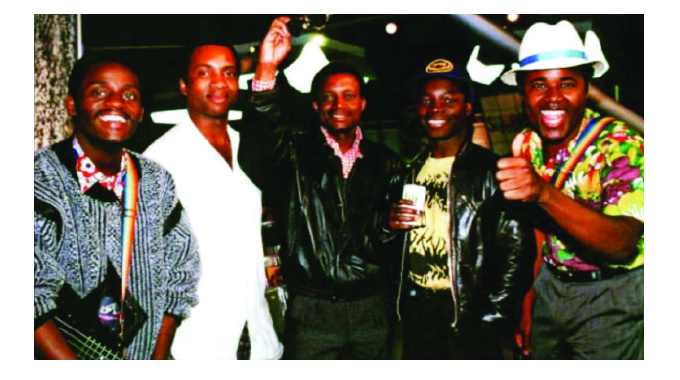
Clive Mono Mukundu Herald Correspondent
A few months ago, I started a programme on my social media accounts which I call “Ask Mono”. In this programme, I receive questions concerning Zimbabwean musicians.
I then dissect the artiste of the day’s music. At the end of every video, I do what I call “Reverse Engineered Plagiarism’,” or “Composite plagiarism.” That’s when I create my own original instrumental in the artiste’s genre.
Recently, I received numerous requests for me to feature The Bhundu Boys story on the series. As usual I did some research so as to beef up what I already knew about them.
That is when I discovered some very interesting music industry lessons. I believe the younger generation can benefit a lot.
Lesson 1: Sounding Zimbabwean sells
I have been ridiculed many times when I encouraged young artistes to sound Zimbabwean.
Throughout my touring around the world as a member of Oliver Mtukudzi’s Black Spirits, as well as a member of Chiwoniso Maraire’s touring band, one major lesson I got is that the international community values two things — originality and authenticity.
I will define originality as sounding like yourself, and authenticity as sounding like where you come from.
The music industry in Zimbabwe was born around the 1930s.
From that time up to today, we have had artistes who imitate foreign artistes with the hope that they will be noticed and breakthrough internationally.
It is a theory that has been around, a theory that is as old as the Zimbabwe music industry itself.
All theories, just like excuses, sound good. But all theories need to be tested, and one way to test a theory is to look back into history.
We have had Rock and Roll groups, Funk groups, American Jazz artistes, Blues artistes etc, but it is only those that decided to sound Zimbabwean that broke through internationally.
The likes of Oliver Mtukudzi, Thomas Mapfumo, Stella Chiweshe, Chiwoniso Maraire, Bhundu Boys, and of late Mokoomba.
Lesson 2:
I had a serious debate with one artiste who I work with. This was when he said he wanted to include Nigerian elements in his music so that he becomes international.
This is one mistake The Bhundu Boys made too.
After realising international success through music that was 100 percent Zimbabwean, they thought they would become bigger if they diluted the music with Caribbean and western elements.
The problem is that the Zimbabwean element of the music was drowned, as a result the music lost its appeal and the record label dropped them.
So, my argument has always been that Zimbabwe is also part of the international community, therefore our music is international too, just play it with excellence.
It is also complete as it is, there is no need to dilute it.
Lesson 3: Language is an instrument.
Oliver Mtukudzi, Thomas Mapfumo and of late Mokoomba gained international recognition using local languages. This is the same with Salif Keita of Mali and many other international artistes.
This is because every language contributes to the way melodies are structured. That’s why a song will sound different when translated into another language.
As a result, language is an instrument in itself. There are certain elements that your language contributes to your music. This does not mean that we should do away with singing in English, but the point is, no need to abandon our language too.
Lesson 4: Globalisation does not mean you have to lose your originality.
It seems it is only us Zimbabweans who believe that being in a global village means you have to lose your uniqueness.
Most young artistes today use that excuse for abandoning their Zimbabweaness.
In his book, The Gutenberg Galaxy, Canadian media theorist Marshall McLuhan defines the term global village as the phenomena of increased global connectivity brought about by the spread of media technology.
This does not mean we all have to copy one country and act and sound like them. It does not mean that we have to throw away our language.
Being in a global village does not mean we must lose our uniqueness.
Appeal to the media.
Lastly, I would like to point out that the biggest influencer for the takeover of foreign genres in Zimbabwe has always been the media.
Giving airplay and coverage to foreign music results in a psychological effect called The Mere Exposure Effect.
This is a psychological phenomenon by which people love things they hear or see often.
So, the reason why we always have artistes who hate who they are, who hate being Zimbabwean is because our media give too much coverage to foreign music.
There are radio stations dedicated to promoting foreign music, or foreign sounding artistes. It’s usually done with reasons that they want to target the northern suburb folk, who never listen to local radio or watch local TV.
This is why nations around the world enact airplay laws, so as to safeguard their artistes.
According to Margaret Kyle and Dandan Niuy, on an article titled “Cultural Quotas,” quota regulations were introduced around the world in response to the increased reach of “Anglo-Saxon” content.
In our case, the list includes content from Nigeria and South Africa.
In my view, playing music on air is a serious national interest issue, therefore we should be promoting our music on national radio stations.
Those who love foreign music can simply play it in their cars, or at home. But national radios should promote local music, so that our artistes are not discouraged.
In conclusion, the biggest lesson we can learn from The Bhundu Boys story is that it pays to be original.
Ever since the digital age, we have only managed to have one big international breakthrough from youngsters, which is Mokoomba.
This is because the majority of their age mates are busy trying to sound Nigerian, South African, American or Jamaican.
You were born an original, don’t die a copy.



 Online Reporter