peter
peter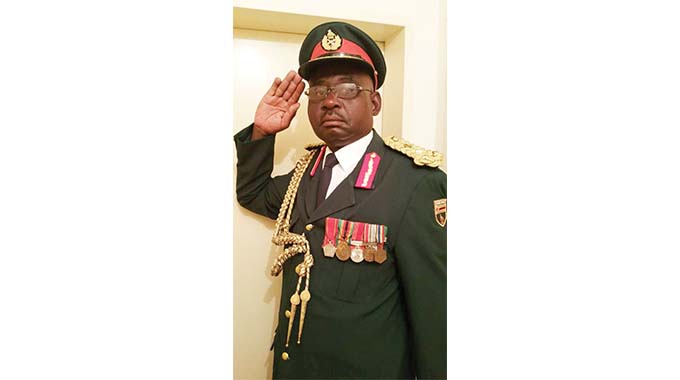
WE continue our interview with former liberation fighter Brigadier-General (Rtd) Levi Mayihlome aka Cde Lizwe Ndebele as he was called during the armed struggle. Big-Gen (Rtd) Mayihlome now Member of Parliament for Umzingwane in Matabeleland South Province and the Zanu-PF candidate in the same area in the forthcoming elections slated for 23 August served as an intelligence officer during the armed struggle.
Before joining the armed struggle in June 1977 he had been a firebrand youth leader in Bulawayo working alongside now national hero Cde Misheck Velaphi Ncube. Today Brig-Gen (Rtd) Mayihlome tells our Assistant Editor Mkhululi Sibanda (MS) about his initial training in intelligence in Zambia before he was sent for further training in the Soviet Union.
Below are excerpts from the interview. Read on…..
MS: Last time you were telling us about your stint at Nampundwe. May we resume our conversation from there. How long were you at Nampundwe?
Brig-Gen Mayihlome: I stayed in Nampundwe for a long time, around 12 months. Because it was known that I had been active in the party for a long time I met a lot of guerillas who knew me and my involvement in politics back home.I had no blemish so together with a few other guys we were assigned to help in the background checking of newly arrivals so as to maintain a record as well as reducing chances of infiltration by the enemy and on reflection now, as a way of collecting information on enemy activities.I worked with people like Ben Matiwaza (Brig-Gen), Stanford Thebe who used to play the role of Sihle in the famous Ndebele drama in the 1980s, Sakhelene Zinini which featured on the ZBC Radio 2, Negion Majahana Moyo and Promise Ncube, Max Matema, among others. We did that work after being screened ourselves by the security. Those in the security were Tafara Ncube, Cde Cecil Ndanga and Cde Poso among others some of whom did not stay for a long time. Cde Poso was the head of security.So we were a team of background checkers and biography writers. Besides the afore-mentioned were Jeckonia Moyo, Cde Tshawe, Cde Pius, Cde Mapeni, Cde Isaac Khumalo, Cde Wallace, Cde Nelson, Cde Thebe, Cde Phathakahle Dube, (Emmarsdale), Cde Trevor, Cde Cawula (Adonis), Cde Nebard Madida, Cde Patrick Ncube and Cde Brown F Bafana). Being in one of the several choirs, Nampundwe, our group composed and recorded the song, “Around the corner, ZPRA is coming…….” among the several songs.
MS: So in your background checking and writing, did you pick out Rhodesian agents or those you suspected to be having ulterior motives?
Brig-Gen (Rtd) Mayihlome: Yes we were picking them but at times not to say this guy is guilty and has really been sent by the Rhodesians.
MS: Then how were you able to find out?
Brig-Gen (Rtd) Mayihlome: By double checking one’s story, what he had told us. The guy would be caught out for example if he will tell us that he was doing A,B, C, D in Bulawayo in the party structures when in actual fact he was never in the structures. A story that was not consistent made us suspicious, why would one lie. In some instances the fellow would lie about the events that made him to come to Zambia to join the armed struggle. If one’s story was not adding up we would hand over that suspect to the senior comrades for further screening and he will be dealt with.
MS: Dealt with him, what do you mean?
Brig-Gen (Rtd) Mayihlome: There was punishment like you are punished in the camp, in camp custody designed to keep such people. Maybe one would serve three or six months during which he would be undergoing rehabilitation. However, those with serious cases were taken to Lusaka to be in the hands of the Zambian government.
MS: What about executions of those with serious cases, were you not doing that?
Brig-Gen (Rtd) Mayihlome: We never witnessed any but only heard one or two such stories which we didn’t know whether true or false before we arrived in Zambia. These were stories usually from some disgruntled guerillas within the ranks that some commanders were responsible for, but I cannot mention names. But to be honest with you I never saw that. You know there were tensions if one went to a particular camp for instance there were those who will try to influence people in a negative way.
MS: Why so?
Brig-Gen Mayihlome: I am not sure, but you see whenever you are leading guerillas they are always suspicious of anything, they don’t take things at face value. Unlike regular forces when given an order to them it’s an order. However, guerrillas are not like that. Guerillas always question things, they would say why is Commander Mangena staying at the rear, why is he not at the front where there is action. But in proper military situations commanders should stay back so that they think critically, and strategise as well as deploy troops. They should get information, intelligence about the situation and when only it is necessary they would then visit the front to assess the situation, otherwise if you deploy the most senior Commanders at the front and you lose them in battle then you leave huge vacuums in terms of strategy and battle plans. If at the rear or not in the frontline, the commanders are able to assess the whole theatre of operations, see the big picture and influence things, unlike when they are involved in firefights, they wouldn’t get time for all that. So there were those arguments flying around. I also believe that some of us did not understand Cde Mangena because he was a tough commander, who needed results and discipline. A person who is tough is always misunderstood. In fact, Cde Mangena was far ahead of our times, hence his philosophy and approach to war was misunderstood. As more and more units were trained in conventional war, most of the suspicions about commanders disappeared. Also, there were some hardened guerillas who had trained earlier on, they were now seasoned and might have felt that they could be commanders as well. Some could have been taking advantage of the fact that they had been there around the same time as Cde Mangena or had worked with him before he was appointed commander. Soon after leaving Nampundwe we heard of an incident when a team of commanders from the ZPRA Headquarters led by a very senior Commander were ambushed by recruits who were only armed with one AK and several sticks. Those recruits had been influenced by some guerillas within the ranks. The blame was later on shifted to some senior officers of what later on became the National Order and Security (NSO), which I later became part of.
MS: What really happened during that Nampundwe incident, did the HQ officers succumb to the untrained recruits?
Brig-Gen (Rtd) Mayihlome: When one says ‘halt, hands up and put your arms down ’ to a military trained person, the response is to give in if uncertain, and besides, it wouldn’t be the best of plans to start a firefight with friendly forces. So that’s what happened, they surrendered to a few gurrillas and several recruits who were only armed with one AK and sticks. It was a prank, and in a very bad state. We were told of that chaos after we had already left Nampundwe and were in Membweshi for specialised training before going to the Soviet Union, which I would come to you about it later on. You know ZAPU used to select groups not only for various military skills, but in many fields in such as architecture, agriculture, air pilots, aircraft engineers and technicians, train drivers, civil and mechanical engineering, medicine, veterinary science, teaching, border guarding, customs and immigration, police, intelligence and security, you name it. So I was one of those who was put in a group of people who had the potential to be trained in specialised skills and that is when I met some comrades I was eventually trained with. So finally our group was trimmed to 40 and we were selected again. We did some more rigorous training at Nampundwe while some other recruits were preparing to go for the normal guerilla and regular army training. We were doing security training at Nampundwe being taken through our paces in physical fitness, political doctrine by senior officers under Cde Sam Madondo (Savania Mawire) who is now late. We did that for three months before we were moved to Mwembeshi where we were doing the longer version of ‘meeting Umdala’ (Joshua Nkomo) training, which was a very rigorous drill and exercises. Cde Madondo, who was from Murewa in Mashonaland East Province was a notoriously tough but friendly instructor, very strict, one of the guys who had been trained in the Soviet Union in security. He wanted to make sure that in case you were captured you would survive. This training was not a punishment, no. It was meant to harden us so that even under the most difficult circumstances you would still survive or withhold information. So we were taken through another three months of tough training at Mwembeshi. We were doing long marches, patrol, intelligence and that is when we had people like King Madida, Jabulani Tshawe who was in our group. Jeckoniah Moyo and others who had just come from the Soviet Union also became part of our instructors. So they would take us through various intelligence courses, some would take us in sabotage, some in engineering, judo, topography, political doctrine, obstacle crossing, basic military skills, and so on. We also did rigorous physical exercises and patrols while armed. We were a group of 40 and we were given the responsibility to carry weapons, doing patrols within the vicinity.
MS: Do you remember some of the comrades you did intelligence training with?
Brig-Gen (Rtd) Mayihlome: In my group I would remember the 20 as the other 20 was in the group yabo Cde Macloud Tshawe (former Zanu-PF chairman for Bulawayo Province). Yes Cde Jabulani, (uMacleod Tshawe). This was because of the 40 we were split into two groups of 20 each. Eventually we were separated as the other group yabo Tshawe went to specialize in intelligence in Moscow while ours was to specialise in frontier border guards, a form of intelligence that covers immigration, customs and intelligence gathering itself. I was chosen as the head of my group deputized by Liwinile Tshuma (Henry Matjaka) who is now late. I recall the likes of Makepesi, Onias Ncube, Promise Jele (Isaiah Ncube), Foreman Mbambo aka Nigeon Majahana Moyo, another Onias Kiliwane Ncube, Saxton Mahlangu, Brezhnev (Mhlomeli Mguni), Mabhunu Maphosa, Kim Mguni, William Mhlaba, Thomas Ndlovu, Methu and others. We went to Ukraine and that was in 1978 where we met a lot of other military groups including our colleagues from ZPRA. Others were from the Umkhonto weSizwe of South Africa, Cape Verde, Palestine and Mozambique. That was a military camp for a number of nationalist forces. Our group was unique.
MS: How? May you please elaborate on that?
Brig-Gen (Rtd) Mayihlome: We were the only group from security that was there. We were a bit misunderstood. People in Zambia did not know how we ended up being there and that was because we were not coming from Mulungushi, we were not coming from Angola. That is because all other groups that ended up there had either been to Angola, Mlungushi in Zambia and the main camp in Mwembeshi for military training. However, us we emerged from a secret service camp, an NSO camp at Mwembeshi. We had come from an intelligence camp. Our brief had been that we should not disclose why we were there and what we were going to specialise in. We were supposed to say we had come to the Soviet Union to train in the regular military tactics or heavy weapons like everyone else but with a bit of intelligence, security training. After lessons we were not allowed to take our books, that is our notes home, that is where we were staying. We were supposed to leave them where we were having our lessons. Such a situation created a serious conflict with other ZPRA comrades who were there.
MS: What were they saying?
Brig-Gen (Rtd) Mayihlome: They thought Nikita Mangena was training a private army which he was sending secretly to the Soviet Union. That created some friction, particularly with me as the head of the group. One of the comrades, who later became a friend, failed to stomach that, but I would rather not mention names. When we got to Simferopol we found several other ZPRA groups there. Like several other groups from ZPRA and other liberation movements they were to specialise in various command specialities ranging from armoured/tank commanders courses, artillery, engineering, communications, infantry etc. One time we were at the parade waiting for the centre commander to inspect the parade of trainees and this comrade snatched a book from one of us. What used to happen was that each morning there was a student or recruit who would collect the books to give to us. Then there was the comrade, he just snatched the book so that he could see what we were really doing, what we were in the Soviet Union for. The Soviets noticed that and when we got into classes they asked what happened. We explained to them that it was a colleague from our ZPRA group and that he wanted to know what we were studying. We had tried to caution the Cde but he refused. He said ‘look at these guys, ngabantu bakaTsotsi.’ Tsosti he was referring to Cde Mangena. Mangena’s detractors referred to him as uTsotsi as they thought he was up to some mischief against the political leadership. Such behaviour had a bad influence on other ZPRAs there as they also started questioning why we were so secretive about what we were doing in the Soviet Union. While it might appear the Cde and others were mischievous, but looked at from another angle, they were correct by being vigilant because we all had to protect our cause, and be each other’s guard during the war. Later on in the ZNA and later life we used to laugh about the Simferopol incident with the Cde and others that we were all serving and training for similar cause but with different specialities.
To be concluded next week.


 Online Reporter