Online Reporter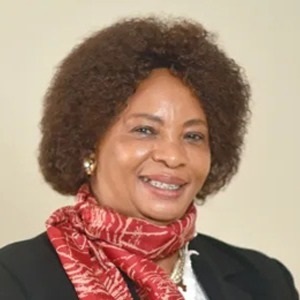
RELATIONS between ZANU PF’s Chitepo School of Ideology and Tanzania’s Mwalimu Julius Nyerere School of Leadership (MJNSL) were solidified last week by the signing of a memorandum of understanding (MoU) on key areas of cooperation. On the sidelines of a two-day workshop held in Harare, MJNSL principal PROFESSOR MARCELLINA MVULA CHIJORIGA sat down with Zimpapers Politics Hub’s GIBSON NYIKADZINO. Below are the excerpts of the interview.
**********************
Q: What have been the key exchanges or central themes that emerged from the workshop and how are they likely to benefit the two institutions and the people in general?
A: We have made progress in each of the areas we deliberated on; in particular, the signing of an MoU between the two schools. The MJNSL is an apex institution, but basically, we want to have a working memorandum between us and the Chitepo School of Ideology. We have a number of areas which we are working on. One of them was part of the agenda, which was the research agenda.
The key message in the research agenda is to put the narrative of our history, the narrative about where we are and where we are going into perspective so that our people can follow. But we also need to put the research practices that should be relevant to our parties and to our governments. So, that research agenda has been approved, and that is a research agenda which is also part of the memorandum of understanding.
Q: What are the key stakeholders or constituencies that you are targeting?
A: We had a training needs assessment meant to understand the particular needs we need to address and from that, we have identified four categories of stakeholders. The first category is the party, party cadres and party institutions.
We also have the government and public institutions. We have the private sector and non-governmental organisations (NGOs). From this, we have agreed again through that same partnership that we will look at what the needs are and we will be able to prepare training programmes that are relevant, focused and reflect the actual needs of our people in a specific era.
We, as Africans, but also we as particular nations like Zimbabwe, have specific issues and even challenges that we have gone through. We need to address those challenges informed by research undertaken in the mentioned constituencies.
Q: What is the transformation that the research agenda is set to bring to these schools in their respective countries?
A: Ultimately, our goal is to transform our schools into think tanks.
As ideological institutions, the party schools in each of our countries have a role to play in supporting our parties and governments in policy decision-making. Whenever there is a policy issue — whether related to the party, the government or broader socio-economic and political matters — we aim to provide the necessary support.
We addressed the importance of fostering a stronger working relationship to elevate the quality of our training programmes. To achieve this, we must focus on cultivating a dedicated cadre of trainers — qualified educators drawn from a wide range of academic disciplines. By investing in comprehensive train-the-trainer initiatives, we can equip these experts with advanced instructional skills, ensuring they are well-prepared to deliver high-quality, impactful training. This approach will not only enhance the effectiveness of our programmes but also create a sustainable system for continuous knowledge transfer and capacity building.
Q: Can you give us some examples of such programmes?
A: For instance, we are launching a modular-based post-graduate diploma in strategic leadership management at the MJNSL. This programme has already been successfully implemented in Tanzania and China, and we will now collaborate with Remnant University of China to further expand it. In fact, this partnership is already in place. Additionally, the Global Leadership School — established through Remnant University — will bring together ideological experts from Zimbabwe’s Chitepo School of Ideology, along with representatives from the six liberation movements, all of whom will participate in this programme.
Q: How are you refining the leadership models of Julius Nyerere’s collectivism and Chairman Herbert Chitepo’s progressive socialism so that they speak to the cadre you want to mould at the community or institutional levels?
A: Maybe there is something that I did not mention which you have to highlight. Allow me to highlight a fundamental principle that defines our mission — one that I may not have emphasised enough. Our school’s motto, Leadership for Inclusivity and Impact, encapsulates our core belief: the leaders we cultivate, in partnership with our allied institutions, must be deeply people-centric.
Development is not an abstract concept — it is what people demand, what they deserve and what they judge their leaders by.
That is why our focus is on fostering leaders who prioritise people-driven development. Whether they graduate from the Chitepo School of Ideology, the MJNSL, or any of our partner institutions, they must be equipped to meet the needs and aspirations of the people they serve. This is not just idealism — it is political reality. Any party that delivers tangible, meaningful progress for its citizens will earn their trust, retain power and secure re-election.
Leadership that listens, acts and delivers is leadership that endures.
And these are the elements that Nyerere talked about.
I know you talked about socialism, but here we are saying if it is socialism, it should be characterised by our environments, our African context. We must also emphasise the importance of independence and sovereignty.
Recent developments in the United States under President Donald Trump have reinforced this message: self-reliance and autonomy are essential.
These principles align with the same vision championed by our former leaders in their tireless efforts.


 Online Reporter