admin
admin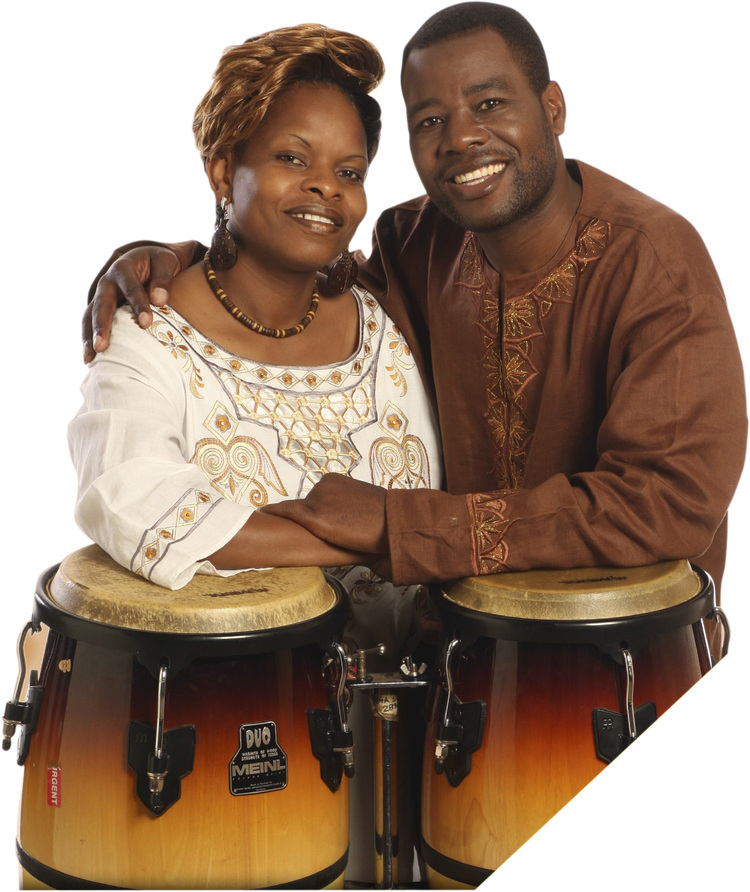
 She is a celebrated gospel artiste who ministers through music. Mai Olivia Charamba (OC) has also brought a unique quality on stage, and she speaks here with Tendai Manzvanzvike (TM) following her recent tour of Australia with her husband, Pastor Charles Charamba.
TM: How would you sum up your contribution to preaching of the gospel through music?
OC: I think it all comes back to the feedback that we get from people. They tell us that they are convinced that our music is making a positive and massive contribution to society.
Be it in soul winning, restoration or that broken marriages are being strengthened by our music, when some people see me together with Baba Charamba, they feel inspired.
Besides preaching salvation, our music is bringing “hunhu/ubuntu” – good moral values in our people. It is also raising the Zimbabwean flag and Africa as a whole since you hear Mai Charamba concentrating more on Africa – “Africa paBethseda”, “Africa restore your identity”.
It is music that is not only talking to the nation of Zimbabwe but to Africa as a whole especially the restoration of identity. We need to restore our values and identity and also know where we are coming from.
TM: When you say feedback, are you talking about the sales or what?
OC: Yes, sales used to be a very reliable form of feedback in days gone-by. It was not easy for a woman musician to sell more than 120 000 copies in a single year, but God granted me such a privilege more than once in my career.
Though it is now difficult to gather statistics on album sales due to piracy, some professional organisations, which carried out research on music consumption, told us that one in every three Zimbabwean households have a Charambas CD. This could probably be due to the fact that we strive to compose Christian music that cuts across all divides.
You hear bar patrons saying they are restrained from untoward behaviour – “inotidzora”. And, when we have live shows, you will find that it’s not only the Christians that are there.
Some people will feel like they have attended a Church service and as we sing, they sing along and you can actually tell that the person is moved. So, this kind of feedback shows us that the music is being effective, not only to Christians but to everyone.
The music that I sing does not overlook our social fabric.
TM: How do you define values?
OC: We are a people who respect each other. We respect our elders and authority. If one listens to a song like “Pasi Idandaro”, they will notice that I am discouraging people from looking down on each other as we are all going to die and leave these worldly possessions. In “Tsitsi, Nyasha Nomutsa”, from our recent collaboration with my husband, we encourage everyone to honour the people who raised them. This includes the community.
In the two songs that I have sung about Africa, I have passionately discouraged naivety, short-sightedness, laziness, and over and above this, the inferiority complex. We are not sub-humans. Jehovah God views us in the same light as other races.
I would like to see a Zimbabwean or African who cares, is responsible for his/her mistakes, one who is assertive and confident in everything they do. I itch to see an African who can define himself or herself without being apologetic to anyone about it, men and women who have a winning attitude.
Let’s have an African who stands like Simon of Cyrene, an African who assisted Jesus in bearing the cross. I also desire to see a God-fearing Africa that does not populate Hell when this life ends, but one that goes to be with Jesus.
Values can never be outmoded by anything. We need to intervene and give direction to our children so that they do not lose touch with those values.
TM: How will you send out this message through music and technology?
OC: Unlike piracy, technology on its own is not necessarily a challenge. Technology is rather a useful facility in communicating if used responsibly and objectively. We already have a Facebook page, “The Charambas”, where we interact with people of different backgrounds on various subjects.
The positive aspects of technology must be embraced. We used to record brief inspirational messages on videotapes in the past, but we are going to use platforms like Youtube to do that now. Our music is already making inroads into these global platforms such as iTunes.
Technology can be handy in taking the gospel forward. We can use it in integrating society as opposed to disintegrating it. Our values can even further be preserved.
TM: You travel a lot. How about the children, how do you balance?
OC: We don’t have much worry in reality. The biggest factor is that our children understand our mission and schedule. It’s during some long-distance tours that our children get to miss us but we always try to make those outings as brief as possible for the sake of our family.
TM: Do you want them to follow in your footsteps?
OC: It is important for them to understand our ministry and calling. We want our children to understand the music ministry but we won’t bar them from following career paths of their choices.
We are nurturing them musically, in case they decide to take up that profession in the future.
TM: A lot of young women enter gospel music, produce one album and then disappear. Why is that so?
OC: Perhaps it has to do with a lot of things that include giftedness: giftedness in both composing and articulation of the composition. I also think many are talented but fail to get enough support from spouses and guardians.
There is also a question of lacking endurance. The showbizz space is quite a contested one and one has to be resolute in order to last the distance. God’s grace also needs to be supplicated for.
TM: Are you mentoring young women?
OC: Yes I am, though at an informal level. I hope there will be enough resources for us to establish a set-up that offers formal mentorship. There are many aspects like grooming and motherhood on which I share knowledge with youngsters.
TM: You were also in Australia recently. How were you received?
OC: We were touring for the second year running and the reception was overwhelming and humbling. We had three shows: Sydney, Melbourne and Perth.
TM: Final remarks . . .
OC: To working women or upcoming artistes, I encourage them to remain focused. You need to be yourself. Let’s maintain hunhu/ubuntu as Zimbabweans and Africans. Let’s be proud of who we are in all aspects of our lives.
I know that new technologies are trying to rob part of who we are, but let us make that extra effort to maintain our identity. Technology should enhance, and not destroy, our values as a people.
And, let us not take our relationship with God for granted. It’s not foolishness or poverty to have a relationship with Jesus. It’s not being backward. He adds value to your life. It pays, it does not cost to have Jesus in your life.



 Online Reporter