malvernmugadzikwa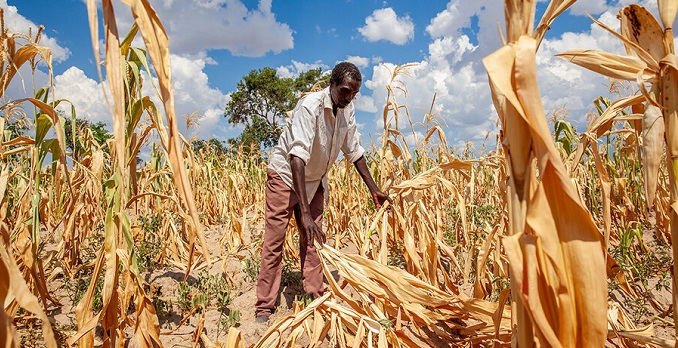
Hamond Motsi
MAY 25 this year marked 61 years since the founding of the Organisation of African Unity, which later morphed into the African Union (AU) in 2002.
At its formation, African leaders from the then-32 “decolonised states” convened in Addis Ababa, Ethiopia, at the invitation of Emperor Haile Selassie.
The primary objective of this gathering was to establish an Afrocentric framework and visionary pathway for post-colonial Africa, which was going to be the foundation of political recovery and socio-economic development.
Among those in attendance was President Kwame Nkrumah of Ghana, who emphasised the importance of achieving political independence as the first step, with the rest following thereafter.
Regrettably, the rest has not followed, and Africa continues to grapple with the scars of colonisation, as well as new wounds that emerged post-independence.
In 2013, the AU, under the leadership of the then-AU Commission chairperson Dr Nkosazana Dlamini-Zuma, established a new framework known as Agenda 2063.
It was viewed as a rehash of the discussions held 61 years previously in Addis Ababa.
The main objective of Agenda 2063 was to ensure that Africa would not lose the next 50 years. It outlined a plan of action for the continent to become a middle-income economy by 2063.
To achieve this goal, several pillars in which the plan was anchored were formulated, one of which focused on ending food insecurity on the continent.
Missing the bus
Let us examine how Africa missed the bus on agriculture and food security. From 1950 to 1970, the Green Revolution, a pivotal agricultural revolution, took place and served as the foundation for modernisation and technological advancement in agriculture worldwide.
This revolution was intended to address the growing global population during the mid-20th century and offered a solution to the problem of food insecurity.
Unfortunately, this revolution did not reach the African continent, and if it did, it was weak and ineffective.
During this time, several African countries were still under colonial rule, and those that gained independence in the late 1950s (such as Ghana and Sudan) and early 1960s were still grappling with insurgency and civil wars, which were allegedly orchestrated by former colonisers.
As a result, while other regions were making strides in agriculture, Africa was at a standstill.
On the other hand, for countries that were still under colonial rule, there was progress in implementing agricultural technologies in countries such as Zimbabwe, South Africa and Namibia.
However, the benefits of these technologies were enjoyed by the colonial governments, rather than the local native populations.
Moreover, during the 1970s and the 1980s, when most African countries had gained independence, another geopolitical hegemony in the form of Structural Adjustment Programmes (SAPs) was introduced.
These programmes involved the International Monetary Fund and World Bank providing loans to developing countries, and certain policies were imposed on African countries that devastated their economies, particularly in the agriculture, food security, health and education sectors.
Emerging challenges
Africa is now confronted with a variety of emerging challenges, many of which are attributable to geopolitical instability, which in turn impedes the continent’s agricultural development and hampers its ability to achieve food security.
Recently, the Covid-19 pandemic and the Russia-Ukraine conflict have emerged as significant global issues that have disrupted the world’s socio-economic landscape, thereby exacerbating Africa’s susceptibility to food insecurity.
As anticipated, food insecurity, poverty and hunger have been worsened by these challenges.
African nations rely heavily on grain imports, including wheat, barley and sunflower, from both Russia and Ukraine.
Climate change has placed significant strain on agricultural systems, as evidenced by the extraordinary conditions experienced during the last cropping season in the Southern Africa region, which was marked by an El Niño-induced drought.
In response to the severe impact on their crop yields, countries in the region, including Malawi, Zambia, Mozambique and Zimbabwe, were forced to declare state of disasters, as is the case with Zimbabwe.
Low fertiliser application in smallholder agriculture is a significant concern in Africa, as it often results in lower yields. For instance, the typical application rate for maize production is around 10 kilogrammes (kg) to 20kg per hectare, which is significantly lower than the global target of at least 100kg/ha. As a result, average yields among communal farmers tend to be between 0,8 tonnes (t) and 1,5t per hectare, much lower than the global average
Considering these factors and their implication on agricultural development in Africa, food insecurity continues.
Typically, Africa imports more food than it exports, amounting to approximately US$80 billion annually.
By the year 2050, as populations grow, this figure is expected to rise to US$150 billion.
These numbers are of great concern, given the reliance of the African population on agriculture, particularly in rural areas.
Africa’s vision for agriculture
In the Agenda 2063 blueprint, the agriculture pillar is under the Comprehensive African Agricultural Development Programme (CAADP).
This framework is mandated to eradicate hunger and poverty through promoting agriculture-centric economic growth and increasing national budgets for agriculture.
CAADP requires African governments to allocate at least 10 percent of their national budgets to agriculture and rural development, and to achieve annual agricultural growth rates of at least 6 percent.
The programme targets reducing poverty and malnutrition, enhancing productivity and farm incomes, as well as improving the sustainability of agricultural practices and natural resource use. CAADP prioritises African ownership and leadership in setting and driving the agricultural agenda. However, the success of CAADP and Agenda 2063 will only be realised with action on the ground.
Way forward
Nevertheless, it is essential to also look from a glass-half-full perspective and acknowledge the positive developments that are happening across the continent in the agriculture sector.
These positive developments can serve as a catalyst for motivation and can lay the groundwork for replication in areas where the continent is lagging behind in this sector.
To start with, Zimbabwe has achieved remarkable success in tobacco production, as it is one of the top producers in the world, contributing nearly US$1 billion to the country’s export earnings.
Similarly, Malawi, Tanzania and Zambia have made considerable progress in the tobacco sector.
South Africa has demonstrated significant growth in the production of grains, citrus fruits and wool, with Zambia also showing promising results in grain production.
In Kenya, tea production has been on a growth trajectory, while Ghana and Cote d’Ivoire rely heavily on cocoa production as a key component of their economies.
Thus, it is crucial to understand and comprehend the dynamics that have contributed to the success of these sectors and apply them to other areas to reach the full potential of agriculture on the continent.
Finally, the recognition of agriculture and food security as a fundamental pillar of Agenda 2063 underscores the significance of this sector to the continent.
Throughout human history, food security has been a cornerstone of civilisational development, and if Africa is to achieve the objectives of Agenda 2063, it must prioritise the agriculture pillar first.
President Nkrumah posited that Africa should attain political independence first; the next priority to be attained was supposed to be food security.
Hamond Motsi is a PhD student in the Faculty of Agrisciences at Stellenbosch University, South Africa. He is interested in writing about sustainable agriculture and agricultural development in Africa. He can be contacted on: [email protected]



 Online Reporter