Online Reporter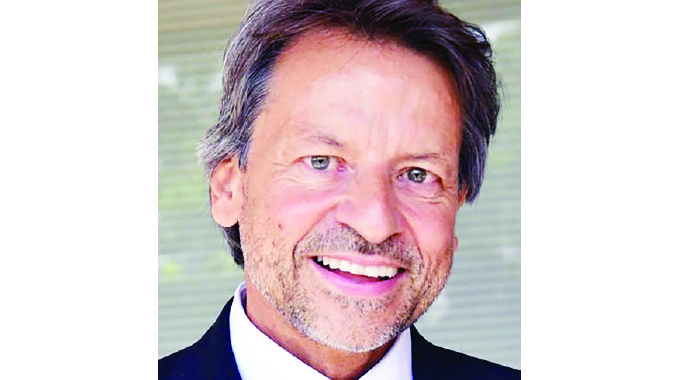
Richard Muponde
Zimpapers Politics Hub
EU Ambassador Jobst von Kirchmann’s three-year tenure in Harare has transformed relations between Zimbabwe and Brussels from decades of mistrust to a thriving partnership, with trade surging to US$880 million annually and investment up 90 percent.
His bridge-building diplomacy aligned with President Mnangagwa’s re-engagement policy and managed to open new opportunities in trade, energy, agriculture and governance, laying a solid foundation for deeper cooperation.
The farewell of Amb Kirchmann at State House last week marked the end of the transformative three-year diplomatic mission that saw relations between Harare and Brussels thaw to their warmest level in more than two decades.
His tenure coincided with President Mnangagwa’s Second Republic re-engagement policy, anchored on the mantra “Zimbabwe is open for business, enemy to none and friend to all”, a stark contrast to the strained ties of the First Republic with a pragmatic, results-driven partnership.
When Amb Kirchmann arrived in Harare in 2022, he inherited a relationship weighed down by two decades of mistrust, sanctions and political estrangement.
The tension was rooted in the early 2000s, when the EU influenced in part by Britain before its Brexit, adopted an isolationist stance following Zimbabwe’s land reform programme. That period was marked by confrontational diplomacy, with previous ambassadors clashing with Harare over governance and sovereignty issues. Brexit, however, gave Brussels greater freedom to recalibrate its Africa policy, allowing Amb Kirchmann to chart a new path.
His approach was grounded in bridge-building and mutual respect.
“As an ambassador, it is important to build bridges . . . a bridge is where people meet from both sides,” he said after his farewell meeting with President Mnangagwa, where the two emerged sharing warm laughter.
This softer, partnership-centred diplomacy resonated with Zimbabwe’s re-engagement thrust and quickly translated into concrete results. Over the past three years, trade between Zimbabwe and the EU has grown by 30 percent, while investment surged by 90 percent. Annual trade volumes have reached about US$880 million, a figure that reflects the increasing integration of Zimbabwe’s economy with the world’s largest trading bloc. Much of this success has been underpinned by the EU–SADC Economic Partnership Agreement, which allows Zimbabwean exports duty-free access to the EU market at a time when global markets face growing tariff barriers.
President Mnangagwa is the current SADC Chair and is set to pass the baton to his counterpart Madagascan President Andry Rajoelina at the 45th SADC Summit scheduled for Antananarivo later this month.
During his tenure, the EU also expanded its cooperation in key sectors such as renewable energy, climate resilience, healthcare, and governance reform. Projects co-funded with the Second Republic have had tangible impacts. In renewable energy, the EU supported rural electrification initiatives, bringing solar-powered mini grids to communities previously without electricity, boosting local enterprises and improving school and clinic operations.
In agriculture, the bloc funded climate-smart farming projects that trained smallholder farmers in drought-resistant crop cultivation, helping to reduce food insecurity in vulnerable regions.
In the health sector, EU assistance strengthened maternal health services and improved access to essential medicines, particularly in rural hospitals and clinics. The bloc also supported governance reforms and capacity-building programmes for public institutions to enhance transparency and accountability.
Amb Kirchmann often credited the Zimbabwean people as the country’s greatest asset.
“Home is not a place; home is the people who make you feel that you belong there. The warmth, the respect, the education, and the friendliness here are absolutely outstanding,” he said.
This human connection underpinned diplomatic trust and ensured that EU-funded programmes were tailored to community needs, fostering local ownership and long-term sustainability.
Global factors also favoured this thaw. The post-Brexit EU sought fresh African partnerships, while global crises such as climate change, the Covid-19 pandemic and geopolitical instability underscored the need for stable, resource-rich partners like Zimbabwe.
Conflicts in Ukraine, Gaza, Sudan and the Sahel, which have caused tens of thousands of deaths, displaced millions, and destabilised commodity markets, further highlighted the importance of diversified alliances.
Against this backdrop, Zimbabwe’s growing relationship with the EU could prove strategically valuable as Harare pursues a rotational seat on the United Nations Security Council. Support from EU member states could bolster Zimbabwe’s candidacy, giving it a platform to influence global debates on economic justice, climate mitigation and conflict resolution.
The ambassador also worked closely with the Government on the arrears clearance and debt resolution process, which he described as a critical step towards unlocking sovereign lending for Zimbabwe.
“From our side, we expressed hope that we can conclude this process, which would lead to opening the door for sovereign lending,” the Ambassador said.
President Mnangagwa also underscored the importance of deepening trade ties, recognising the potential for further growth.
Reflecting on the meeting via X, the President said: “Trade rose by 30 percent, investment by 90 percent. We thank him for strengthening ties and wish him well.” The statistics, alongside the public warmth between the two leaders, underscored how far relations had shifted from hostility to partnership.
As Amb Kirchmann departs, his successor inherits a relationship at its most cordial in decades, with functioning dialogue platforms and strong economic foundations. The challenge will be to sustain the momentum by deepening value-added trade, expanding climate partnerships, supporting debt clearance and collaborating on regional security. The EU’s continued funding of community-based projects will be vital, not only for economic growth but also for building the social trust that underpins diplomatic stability.
President Mnangagwa’s diplomatic doctrine has already shown its ability to attract investment from both traditional Western partners and emerging powers like China, India and Gulf states, positioning Zimbabwe as an increasingly important global investment destination.
His “friend to all” policy has demonstrated that even historically adversarial relationships can be recalibrated through pragmatism, mutual respect, and shared economic goals.
The departure of Amb Kirchmann closes a chapter defined by bridge building, mutual respect and shared economic progress, leaving behind a sturdy foundation on which Zimbabwe and the EU can construct an even more prosperous future.