Online Reporter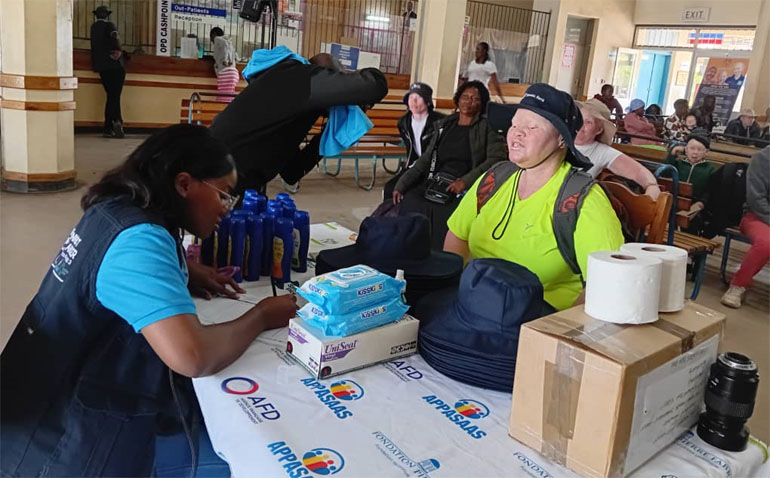
Ngoni Dapira
Correspondent
“MY husband worked as a vendor and spent most of his days outdoors. He developed blisters that gradually worsened until he was diagnosed with cancer. For nearly a year, he was repeatedly turned away from health facilities and told to come back later. By the time he eventually received attention, the wounds had become deep and extensive.
“He was prescribed four cycles of chemotherapy, but when he reported for treatment, the machines were not working. He had to travel to another hospital. Because of financial constraints, he could not consistently access treatment and only managed to complete one cycle. He later died.”
The heart-breaking testimony, delivered by a widow who requested anonymity, was among several accounts shared during the sixth edition of the Derma-Surgical Mobile Clinic Outreach held at Victoria Chitepo Provincial Hospital in Mutare last Saturday.
Running under the theme: ‘Albinism Konnect: Vikela (Prevent) Skin Cancer,’ the outreach was organised by Bulawayo-based non-profit organisation Noble Hands Zimbabwe in partnership with the Global Cleft Foundation, specialist dermatologist, Dr Donald Mutangadura and the Ministry of Health and Child Care, among other stakeholders.
The programme sought to improve access to skin cancer screening, treatment and prevention services for people with albinism (PWA), who remain among the most vulnerable groups to ultraviolet (UV) radiation exposure.
Albinism is a rare genetic condition in which the body produces little or no melanin, the pigment responsible for skin, hair and eye colour.
The lack of melanin leaves people with albinism highly susceptible to sun damage, severe sunburns and skin cancer. Across Africa, skin cancer remains one of the leading causes of death among people with the condition.
Speaking during the outreach, Noble Hands Zimbabwe founder and executive director, Mr Willard Musiyarira, said climate change is increasing health risks for people with albinism, particularly as forecasters warn of a possible super El Niño expected to bring extreme heat conditions.
“With an estimated 70 000 people living with albinism in Zimbabwe, the majority stay in rural areas where they depend on farming and informal trading for survival. These are occupations that require long hours outdoors, exposing them to harmful ultraviolet radiation.
“Climate change is now a human rights issue for persons with albinism. It affects their right to health, education and work. Increased temperatures and prolonged heat waves are worsening their exposure to ultraviolet radiation, placing them at even greater risk of skin cancer,” he said.
Mr Musiyarira said advocacy groups estimate that nearly one in three people with albinism die from skin cancer before the age of 40, making early diagnosis and prevention critical.
For many families, access to sunscreen remains a major challenge.
Ms Kudakwashe Makura of Marange attended the outreach with her two-year-old child for screening.
She said the extreme heat experienced in recent years was affecting her farming activities.
“During the hot periods, I could no longer spend long hours in the fields. By 8am it would already be too hot, forcing me to return home. I would only go back later in the afternoon, but my poor eyesight also limits how long I can work,” she said.
She added that sunscreen lotion, which costs around US$10 per tube and lasts about a month, is often beyond the reach of many people with albinism.
The outreach provided participants with a three-month supply of sunscreen, lip balm and sunhats, offering much-needed protection.
In total, 178 beneficiaries from Nyanga, Chipinge, Buhera, Mutasa and Mutare received free dermatological and surgical services.
Eight major surgical procedures were performed, while mental health support, transport reimbursements and meals were also provided.
Mr Musiyarira said the initiative is helping bridge critical healthcare gaps for people with albinism in resource-constrained settings.
“Management of skin cancer among persons with albinism remains challenging because many patients present at an advanced stage.
“Early diagnosis, early treatment and regular follow-up significantly improve outcomes, and that is the message we are taking to communities across the country,” he said.
He noted that many patients delay seeking treatment because of limited awareness and inadequate knowledge of albinism within primary healthcare facilities.
A grandmother from Buhera, who requested anonymity, recounted how her granddaughter with albinism was turned away from a local clinic after developing sores on her scalp.
“When we arrived, a nurse simply told us they did not know how to treat someone like her and advised us to go elsewhere,” she said.
Such experiences, Mr Musiyarira said, highlight the need for greater training and sensitisation of health workers.
“Access to healthcare for persons with albinism is not only a health issue, but also a human rights issue. Through these outreaches, we are equipping health workers with specialised skills to identify skin cancers early and provide appropriate care at district and community levels,” he said.
Specialist dermatologist, Dr Donald Mutangadura, said skin cancer remains the most common cancer affecting people with albinism.
Drawing on nearly three decades of experience, he said delayed treatment, financial hardships and limited access to specialised services continue to undermine patient outcomes.
“The absence of melanin exposes people with albinism to the harmful effects of ultraviolet radiation, leading to severe sun sensitivity, visual impairment and skin cancers.
“Our goal is to detect cancer early when it can be treated effectively and at a lower cost. Early diagnosis remains the best defence,” said Dr Mutangadura.
Beneficiaries welcomed the outreach and called for similar programmes to be held more frequently.
Mr Charles Mazorodze from Mutasa, said many people with albinism struggle to afford the protective products they need to safeguard their health.
“A lot of people are developing skin cancer simply because they cannot afford sunscreen. These outreach programmes provide lifesaving support and should be expanded,” he said.
The reigning Mr Beauty with Albinism Botswana 2025, Mr Mareko Sekgopr, who attended the event, echoed those sentiments.
He said unemployment, poverty and stigma continue to make sunscreen inaccessible for many people with albinism across the region.
“Many are not economically empowered and cannot consistently buy sunscreen, which can cost between US$15 and US$30 per month. Yet it is an essential requirement for protecting their health,” he said.
Mr Sekgopr praised the Zimbabwean model and expressed hope that similar initiatives could be strengthened in Botswana.
Beyond health concerns, people with albinism continue to face deep-rooted stigma and harmful cultural beliefs in some communities. Misconceptions linking albinism to curses or bad luck often result in discrimination, social exclusion and, in extreme cases, violence.
Against this backdrop, Mr Musiyarira urged Government and development partners to strengthen policy responses by guaranteeing free access to sunscreen, skin cancer screening and treatment services for people with albinism.
“Skin cancer among persons with albinism is largely preventable when detected early. No one should die simply because they cannot access sunscreen, information or timely medical care,” he said.