admin
admin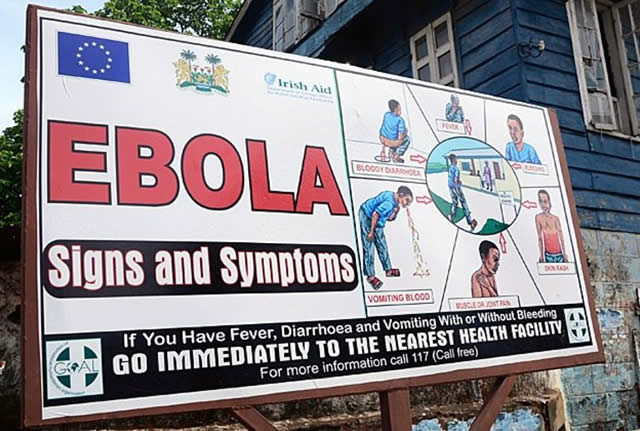
Sifelani Tsiko Senior Writer
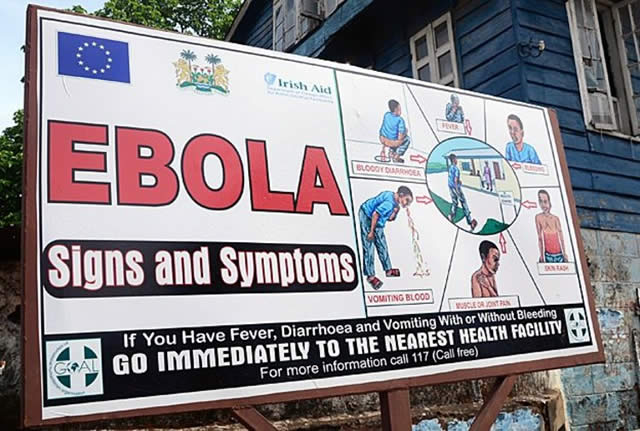
AFRICA’S over-reliance on outside help and marginalisation of indigenous knowledge systems led to a weak and flawed response to the Ebola virus which has killed nearly 5 000 people in West Africa, infection prevention and control experts say.
Professor Shaheen Mehtar of the University of Stellenbosch and chairperson of the Infection Control Network Africa (ICAN) told delegates at the 5th conference in Harare recently that over-reliance on the input and expertise of outsiders who had little or limited understanding of the situation in Africa contributed to the tragic response to the Ebola virus.
“Africa should have paid more attention on local indigenous knowledge systems and used outside help to enhance the capacity of local community public health systems,” she said.
“We have a lot of knowledge as Africans, but we feel intimidated by outsiders. We don’t use our own indigenous knowledge systems to respond to our problems. We use other people’s policies which do not work well for our own circumstances.
“Outsiders know less about Ebola than ourselves. Our communities know the outbreak cycles of the disease, but their knowledge was completely ignored.”
Prof Sade Ogunsola of the Provost College of Medicine at the University of Lagos said lack of community engagement had been the biggest setback in the fight against the Ebola virus disease (EVD).
“It has been a barrier and this has affected the trust and mutual engagement with local communities,” she said. “We have to involve local communities and learn more about the knowledge that they have to effectively respond to the Ebola virus.”
Said Dr Frederick Marais, a researcher at Stellenbosch University: “We must go in an honest and open way, respect local traditions for responding to public health issues in a way that prioritises health safety standards.
“We need to take communities on board. Affected communities are the repositories of unrecognised knowledge and expertise needed to control the Ebola virus.”
The 5th ICAN conference, which opened on Monday and runs until November 7, was jointly organised by the Infection Control Association of Zimbabwe (ICAZ) supported by the International Chemotherapy Society (ISC).
The conference, which drew delegates from across Africa, sought to create a platform for both international and local experts to discuss infection prevention and control issues affecting African countries.
Participants tackled topics ranging from TB infection control, waste management, infection prevention and control paediatric and critical care units as well as the under-investigated issue of antibiotic resistance and management on the African continent.
The Ebola virus has gripped three West African countries — Sierra Leone, Liberia and Guinea, affecting13 042 people with deaths estimated to be 4 818 as at November 2, according to a World Health Organisation update.
African infection prevention and control experts say governments on the continent needed to invest more local healthcare systems to enhance response to the Ebola disease.
They said the tragedy in West Africa was worsened by healthcare systems that were weak and overwhelmed by inadequate investment in infrastructure, health personnel training and failure to effectively empower local communities to deal with the epidemic.


 Online Reporter