Gibson Mhaka [email protected]
THE City of Bulawayo has revealed that decades-old social housing schemes originally built for single male industrial workers have become severely overcrowded family settlements, placing enormous pressure on ageing infrastructure and leaving the local authority struggling to meet growing service delivery demands due to funding constraints.
The situation was laid bare on Saturday when the city hosted the Parliamentary Portfolio Committee on Local Government, Public Works and National Housing, which was on a fact-finding mission to assess informal and dysfunctional settlements as well as Government housing projects in Bulawayo.
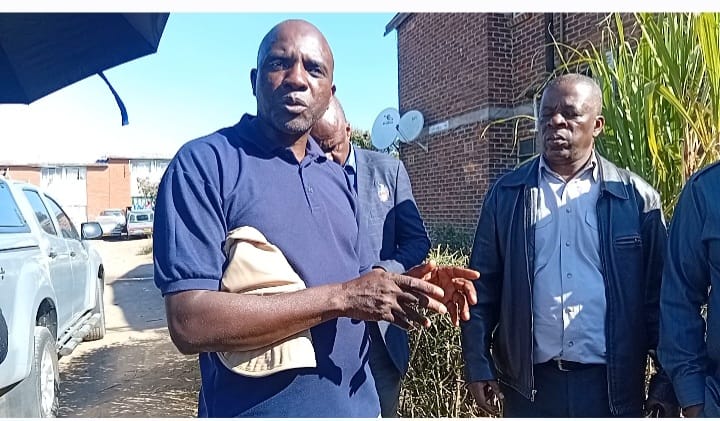
Led by committee chairperson and Mazowe Central legislator Dr Maxmore Njanji, the committee toured Cowdray Park Hlalani Kuhle/Garikai, Richmond Landfill Site informal settlement, Burombo Flats and Iminyela suburb to gain first-hand appreciation of the housing and infrastructure challenges confronting the city.
Municipal officials, including Finance Director Mr Tennyson Mpunzi, representing the Town Clerk, Acting Director of Works Engineer Methusi Dibidi, Director of Health Services Dr Edwin Mzingwane and Housing and Community Services Assistant Director Mr Zakeu Sibanda, briefed legislators on the state of the city’s housing projects and the interventions being undertaken to improve residents’ welfare.
Presenting on the three social housing schemes, Mr Sibanda said Sidojiwe Flats, Burombo Flats and Iminyela were all constructed several decades ago to cater for single workers but had since evolved into densely populated family settlements, creating infrastructure challenges that were never envisaged when the projects were designed.
He said Sidojiwe Flats, constructed in the early 1950s, comprised 159 housing units spread across three blocks and were originally intended to accommodate bachelors employed in Bulawayo’s industries.
However, as residents began bringing their families, congestion increased significantly, prompting the council to embark on a long-term decommissioning programme.
“Sidojiwe was built in the early 1950s for bachelors working in industry.
“Over time they brought their families and the area became congested. Around the early 2000s, council resolved to decommission the flats and secured Public Sector Investment Programme funding to build replacement housing under the Millennium Housing Project,” said Mr Sibanda.
He said the programme saw the construction of 167 housing units at the Millennium Housing Project in Emganwini, allowing some residents to relocate.
However, the exercise stalled before all beneficiaries could be accommodated.
“Some residents were moved, but 63 serviced stands remained undeveloped.
“Before we could complete the programme, Operation Murambatsvina took place and some of the decommissioned flats were reoccupied. That meant the congestion challenges persisted,” he said.
Mr Sibanda said council had resumed construction of additional housing units in Emganwini to facilitate the eventual closure of Sidojiwe Flats.
“We are currently constructing 25 housing units in Emganwini. Our intention is to relocate the remaining residents from Sidojiwe and completely decommission the flats, in line with a council resolution. Unfortunately, progress remains slow because of funding constraints,” he said.
Despite the deteriorating condition of the ageing buildings, Mr Sibanda said council continued carrying out routine maintenance and engaging residents’ committees to promote cleanliness and improve living conditions.
Turning to Burombo Flats, Mr Sibanda said the housing complex, also built in 1954, was facing similar challenges.
“Burombo was also designed for bachelors and has 159 housing units. Today, instead of accommodating about 159 occupants, it is home to nearly 1 000 people.
“This has placed enormous pressure on the sewer and water infrastructure, while vandalism has compounded the situation,” he said.
He said although the council had undertaken several sewer and water rehabilitation works, overcrowding continued to undermine service delivery.
“We have carried out extensive refurbishment of the sewer and water infrastructure and you will see evidence of that.
“However, congestion and vandalism remain major challenges. We have established residents’ committees so that we can engage directly with the communities on issues affecting their welfare,” said Mr Sibanda.
He said council had adopted a phased refurbishment strategy for Burombo Flats, with residents expected to be temporarily relocated to nearby Mashumba Flats while rehabilitation works were undertaken.
“Our plan is to refurbish the flats in stages. We will decommission one block at a time and relocate residents to adjacent accommodation while repairs are carried out.
“The priority is rehabilitating the communal toilets because they are the most critical challenge.
“Most of the materials required for the project have already been procured and are in stock,” he said.
Mr Sibanda said council had also encouraged residents who were financially able to apply for residential stands elsewhere in the city to ease congestion at the flats, although uptake had remained low.
On Iminyela, Mr Sibanda said the suburb had undergone gradual upgrading over the years as council sought to improve living conditions and promote home ownership.
He said the housing units were initially constructed as bachelor accommodation, with communal ablution facilities.
“When the council introduced its home ownership policy, it became necessary for every housing unit to have its own toilet.
“The entire area was planned and surveyed, and the upgrading programme began to convert the original units into improved accommodation with individual toilets,” he said.
Mr Sibanda said more than 400 housing units had so far been upgraded under the programme, although substantial work remained.
“We still have an ongoing project to construct additional toilets and improve the welfare of residents. However, the programme is progressing slowly because of funding limitations.
“The toilets project alone requires more than US$9,5 million, while further investment is needed to upgrade roads, water and sewer infrastructure,” he said.
The parliamentary committee’s nationwide assessment is expected to culminate in recommendations aimed at strengthening Government housing policies, improving urban service delivery and accelerating the regularisation and upgrading of informal and ageing settlements across the country.