
Business Reporter
INVESTORS and growing enterprises are turning towards the Zimbabwe Entrepreneur Exchange (ZEEX) in record numbers, generating an unprecedented wave of market interest that promises to reshape the country’s capital markets.
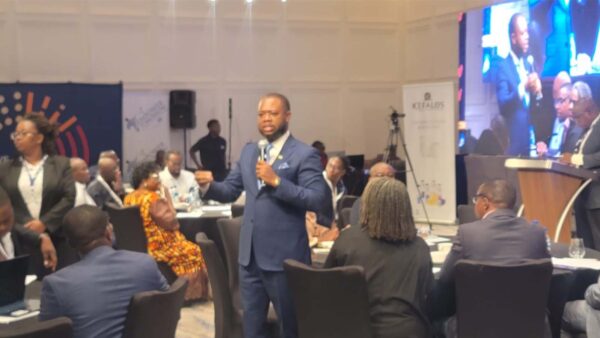
Speaking during the last of the three-day Strategic Intelligence Forum hosted by the Confederation of Zimbabwe Industries (CZI), in partnership with Zimpapers, the Zimbabwe Stock Exchange (ZSE) chief executive officer, Mr Justice Bgoni, revealed that the platform has drawn immediate backing from major financiers and a surprisingly aggressive push from local companies eager to go public.
Addressing an audience of chief executives, board members, entrepreneurs, regulators, development partners and sustainability practitioners, Mr Bgoni emphasised that market appetite has vastly exceeded the bourse’s initial expectations.
Reflecting on past macroeconomic difficulties, Mr Bgoni noted a dramatic pivot in foreign and domestic investor engagement over the past year.
“In 2019, 2020, I used to have horrible meetings with foreign investors… where people would walk out and say, ‘Justice, we’ve never seen anything like this, we’re never coming to Zimbabwe again,’” he recalled. “And for the past 12 months… we have had a lot of meetings with foreign investors who want to come back to Zimbabwe… we are talking about people with serious money behind them.”
This shift in sentiment has created a liquidity surplus for the new platform. Contrary to the typical challenges faced by emerging markets, capital supply is currently outstripping the immediate speed of rollout.
“To be honest with you, at the moment, our challenge is not the money,” Mr Bgoni revealed. “Our challenge at the moment is actually getting the money that we have committed to the platform into the hands of entrepreneurs… The biggest surprise is that there is so much money and commitment around this platform.”
A prominent driver of this interest is ZEEX’s upcoming Invoice Discounting Exchange, which allows suppliers to receive immediate payment by discounting their invoices through competitive bidding among multiple financiers. Mr Bgoni revealed that institutional backers have already committed hundreds of millions of dollars to the feature.
“We have commitments of up to US$200 million,” Mr Bgoni said. “The financier is not financing the small company; they are actually financing the big company if you think of it effectively. That’s why there’s so much interest in this, and that’s why there’s so much money around it.”
The enthusiasm from businesses seeking capital has been equally intense. ZEEX was established to address the fact that small-to-medium enterprises (SMEs)—which account for roughly 60 percent of Zimbabwe’s economy—struggle to secure funding because traditional capital markets historically focused only on large corporate entities.
While ZEEX offers both a private funding window (where companies can raise money without listing) and a public listing option, the demand to go public has caught exchange executives off guard:
Over 30 companies are actively working through the preparation and approval pipeline.
About 70 percent of participating companies want a public listing rather than remaining private.
The exchange expects its first listing approval within days and its debut on the market by late October or early November.
“What has surprised us a lot… is that about 70 percent of them want to list—that’s the part that surprised us,” Mr Bgoni said. “We thought a lot of people would come to just raise money and not list, but people are coming to list.”
To support this surge in demand, ZEEX has widened its network of official sponsors beyond stockbrokers to include certified accountants and legal practitioners, with 15 sponsors already signed up to help entrepreneurs structure deals and attract investors. Strategic MoUs have also been established with asset managers, banks and funds such as the National Venture Financing Fund.
Furthermore, ZEEX will deploy tokenisation technology to enable instant transaction settlements, offering an efficiency advantage over the traditional two-day (T+2) settlement cycles on the main ZSE and VFEX boards.
Summarising the exchange’s role, Mr Bgoni framed ZEEX as a vital catalyst for local enterprise: “If you are looking to raise money and you are an entrepreneur, give us a try,” he said. “You put your business out there, sell it to investors… you get credibility, you can grow, and it helps your governance.”