admin
admin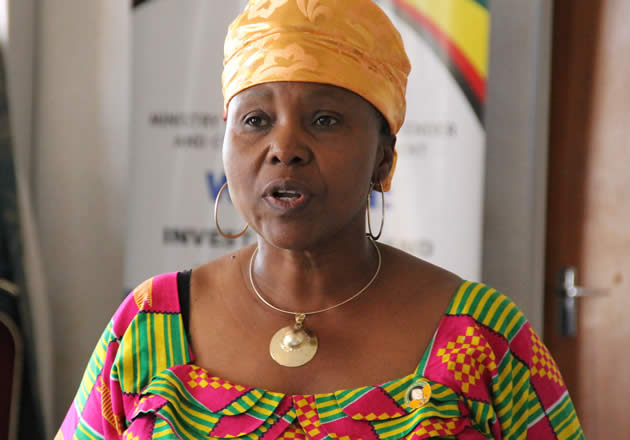
Fungai Lupande Herald Reporter
The ozone layer is recovering owing to the phasing out of production and consumption of ozone-depleting substances by many countries, Minister of Environment, Water and Climate Oppah Muchinguri-Kashiri said yesterday.
Speaking at the 27th meeting of parties to the Montreal Protocol in Dubai, United Arab Emirates, Minister Muchinguri-Kashiri extended Government’s appreciation for the efforts made to ensure the recovery of the ozone hole.
The ozone layer is the highest layer of the earth’s atmosphere containing the highest concentration of ozone molecules that absorb high energy ultraviolet radiation, protecting organisms on earth.
The meeting ran from November 1 to 5.
Addressing delegates at the meeting, Minister Muchinguri-Kashiri congratulated the Ozone Family for the great achievement scored.
“The progress we have collectively made in phasing out the production and consumption of ozone-depleting substances is very evident not only from the data submitted by parties and compiled by the Ozone Secretariat but, most importantly, from the latest findings by the Scientific Assessment Panel (SAP),” said Cde Muchinguri-Kashiri.
“The SAP Report confirms that the ozone hole is recovering and this is as a result of the collaborative efforts by all governments of the world, industry, NGOs and especially the media in addressing this global problem.
“I, therefore, extend my appreciation and congratulations to the Ozone Family for the great achievements we have made so far,” she said.
Cde Muchinguri-Kashiri said the year 2015 marked the phasing out of methyl bromide and methyl chloroform in developing countries.
“This leaves us with hydrochlorofluorocarbons (HCFCs) as the only remaining ozone-depleting substances to be phased out,” she said.
“Phasing out HCFCs will no doubt have a significant contribution to current efforts under the United Nations Framework Convention on Climate Change (UNFCCC) to reduce the impacts of climate change.”
The impacts of climate change are being felt and experienced in most parts of the globe more than ever before, said Minister Muchinguri-Kashiri.
“As we tackle the phasing out of the remaining ozone-depleting substances, I call upon the Montreal Protocol parties to play their complementary role by adopting very low global warming potential alternatives particularly in the refrigeration and air-conditioning sector,” she said.
“If this is not done urgently, the benefits of the recovery of the ozone layer we are witnessing today, will soon be outweighed by the adverse impacts of climate change and other global environmental problems.
“On behalf of African states, I call upon the parties to the Montreal Protocol to agree on best ways to manage hydrofluorocarbons taking into consideration the special needs of developing countries.”
Cde Muchinguri-Kashiri added that Africa did not produce hydrofluorocarbons therefore needed assistance to reduce its consumption.
“We expect the developed countries to take a leading role. The discussions on hydrofluorocarbons management have been going on for too long,” she said.
“The world continues to experience one catastrophe after another as a result of continued build up of these gases into the atmos- phere.”


 Online Reporter