admin
admin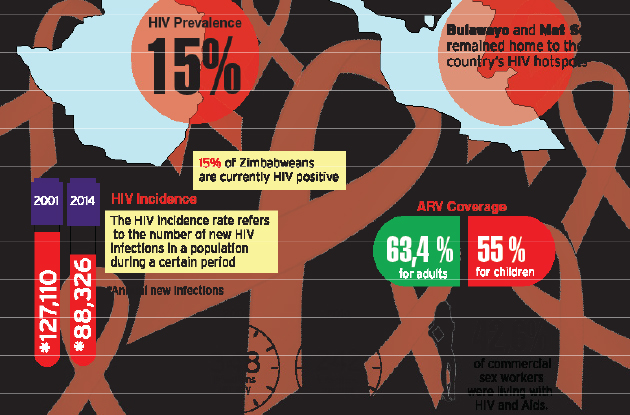

Vaidah Mashangwa
MOST programmes on HIV/Aids prevention, treatment and care are biased towards adult behaviour change and prevention of mother to child transmission yet more than two million children are infected by HIV globally.
Generally, when the subject is being discussed at any level, it mainly centres on adults.
Paediatric anti-retroviral treatment (ART) is a very complex subject and adherence behaviour is influenced by many factors including the characteristics of the family, guardians, caregivers, society, culture, religion and other related factors.
According to UNAids, over two million children under the age of 15 years are living with HIV/Aids in the world and nearly 80 percent of these children live in sub-Saharan Africa.
It is the high levels of ART adherence that are critical for viral suppression and reduced morbidity and mortality rates among HIV infected children.
It must be noted that the child’s development stage be it physical, emotional or cognitive creates dynamic challenges to ART adherence. Infants, for example, depend entirely on their caregivers for ART administration and at this stage medication refusal is very common.
Those already attending school often develop an understanding of their illness and the need for treatment, but they are usually unaware of the gravity of their illness. At times, they are left in a dilemma as they wonder why they take medication every day while other children do not.
During the adolescence stage, infected adolescents have serious problems when it comes to ART adherence. Other priorities such as appearance especially for girls and sexual relationships may take precedence.
Other adolescents are affected by the general stigma and discrimination related to HIV/Aids.
The relationship between the caregiver and the patient has an impact on ART adherence.
There are some children who might be under the care of relatives, step-parents, grandparents and other members of the extended family. Depending on the nature of the relationship, drug intake and their effectiveness may be hindered.
Stunted neuron development is common in HIV infected children. The children may experience delayed development and lack of cognitive skills to fully understand treatment.
In Zimbabwe, it is estimated that less than 50 percent of ART eligible children are getting care and treatment compared to adult ART which stands at 85 percent.
This disparity has been attributed to service delivery, the community, health care facilities and programming levels. Technical problems also affect the effectiveness and efficiency of paediatric ART such as procurement and staff challenges, poor drugs supply, chain management, limited access to key services, such as diagnostic and point of care testing and the verticalisation of most programmes.
While some rural health facilities in Matabeleland North and Matabeleland South provinces offer paediatric ART, some people have to travel to United Bulawayo Hospitals and Mpilo Central Hospital for treatment. The long distances they have to travel may have an impact on ART care and treatment.
In Umguza and Bulilima districts, health care facilities are far apart with an average distance of between five to 35 km, making the health facilities inaccessible to most patients.
Besides the issue of distance, the economic challenges that are faced by most elderly patients and guardians cannot be ignored.
The caregiver becomes emotionally tired as he or she has to administer medicine to younger children physically.
Some parents may be too ill themselves to care of the child and the child ends up receiving treatment from one or more relatives, family friends or government agencies.
This affects the effectiveness of ART adherence as some guardians might be too busy to oversee the ART administration.
Administration of ART can also be highly complex for children who take syrups and change regimes frequently.
A caregiver’s cognitive ability and level of education correlates with ART adherence and administration. Lack of support from family members and relatives may hinder the success of paediatric ART because some care givers are reluctant to disclose the child’s HIV status to anyone.
At school, disclosure is also of particular concern as some parents or caregivers may not want school authorities to know the status of children on paediatric ART.
School nurses and members of staff can be very useful especially if dosing occurs during school hours. However, disclosure at school has also led to stigma and discrimination from the school and peers.
Paediatric ART adherence is more complex when it comes to child-headed homes which are usually run by girls. Such children live in poverty and face food shortages.
Food is important for the proper dosing of a particular drug and orphaned children might skip doses when food is scarce. The money for transportation to a clinic or hospital to pick up ART might be a challenge too for orphaned children.
The children might also be facing accommodation problems and all this affects ART adherence. Some of the girls end up being prostitutes in order to raise money for their upkeep and that of their siblings.
Elderly care givers might also lack knowledge of liquid measurements and doses. They may have problems with their sight to read numbers and even pour the liquids as they spill easily. Other drugs may need refrigeration facilities which are not always available in many households.
As the child grows, there is need to change the dose of the drug and such frequent changes may lead to confusion for both the child and the caregiver, thus jeopardising adherence.
Many cultures have a strong background of the use of traditional medicines. Such cultural norms and beliefs may force the caregiver to abandon ART altogether and use alternative medicines. Sometimes, both treatments are used concurrently and adverse drug reactions are of particular concern.
ART adherence behaviour is therefore more complex among children than in adults and efforts to maximise treatment efficiency must be intensified. Children have higher rates of treatment failure and drug resistance than adults.
Some adolescents engage in sexual relationships that create a public health risk of transmitted resistance. There is therefore need for constant paediatric ART research in order to assist this vulnerable group.
- Vaidah Mashangwa is the provincial development officer in the Ministry of Women Affairs, Gender and Community in Bulawayo. Contacts Cell: 0772 111 592 or e-mail [email protected].



 Online Reporter