Online Reporter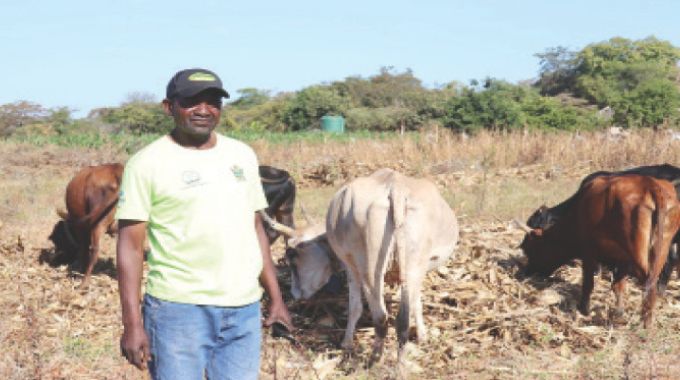
Theseus Mauruki Shambare, [email protected]
THE pain surged through Mr Michael Kashesha’s ankle the moment he slipped and fell while herding cattle.
The 59-year-old tried to stand, but his leg could not carry him. Around him, cattle continued grazing across the dry landscape, unaware that their owner lay helpless on the cold ground deep in the bush. Some slowly drifted into nearby fields and began feeding on neighbours’ crops. Mr Kashesha wanted to shout for help, but a severe cold had weakened his voice. The vast mountainous terrain swallowed every faint attempt to call out. Alone, injured and unable to walk, he reached into his pocket and remembered the smartphone he carried with him. With trembling hands, he opened his WhatsApp application and sent a distress message to his wife, who was watering vegetables at their homestead nearly five kilometres away. Moments later, he shared his live location.
That digital location pin would become his lifeline.
Together with neighbours, his wife, Ms Farai Majasi, tracked the location through her phone until they found him lying in the grazing fields. They lifted him onto an animal-drawn scotch cart and ferried him home before rushing him to Kadoma for medical treatment. Today, Mr Kashesha has fully recovered. But for the veteran livestock trader, the incident became more than just a frightening personal experience.
It became a powerful symbol of how digital technology is quietly reshaping life in rural Zimbabwe.
For years, Mr Kashesha traversed villages on foot and by bicycle searching for cattle sellers across Mhondoro-Ngezi and surrounding communities.
The work was physically demanding, time-consuming and unpredictable. Now, the 59-year-old is increasingly conducting business through WhatsApp, Facebook and TikTok from the comfort of his rural home. Instead of travelling long distances searching for livestock, he posts cattle advertisements on his WhatsApp status and social media platforms, allowing farmers and buyers to contact him directly.
“I used to spend many days walking from village to village looking for cattle and buyers, but now many people simply contact me after seeing my posts online,” said Mr Kashesha during a media tour organised under the Digital Villages Initiative.
His transformation reflects a broader shift unfolding quietly across parts of rural Zimbabwe where smartphones are beginning to change how farmers communicate, trade and make agricultural decisions.
Under the Food and Agriculture Organisation of the United Nations (FAO)’s Digital Villages Initiative titled Fostering Digital Villages Through Innovative Advisory and Profitable Market Services in Africa (FDiVi), thousands of smallholder farmers are being introduced to digital agriculture technologies aimed at improving productivity, market access and rural livelihoods.The programme is being implemented in Mhondoro-Ngezi District in Mashonaland West Province and Bikita District in Masvingo Province.So far, close to 4 000 small-scale farmers have undergone digital agriculture literacy training under the initiative, with participants receiving certificates in Digital Agriculture Transformation.
Beyond basic smartphone use, farmers are being taught how to use Artificial Intelligence-powered platforms to identify crop diseases, assess livestock health and connect directly with markets using digital tools.For many communal farmers, the transformation is redefining what a mobile phone means in rural life.
What was once viewed largely as a communication or entertainment gadget is increasingly becoming a veterinary assistant, extension officer, marketplace and emergency response tool.In many parts of Africa, development experts say digital transformation is becoming central to reducing rural poverty and improving food security.
The FAO has previously noted that digital technologies have the potential to improve agricultural productivity, strengthen market participation and increase resilience among smallholder farmers by connecting them to information and services that were previously inaccessible.
In remote rural communities where physical extension services often struggle to reach every farmer consistently, smartphones are beginning to close information gaps that have existed for decades.
Addressing farmers during the Village Twinning and Review Meeting held recently in Mhondoro-Ngezi to assess the impact of the project on local communities, Food Security Monitoring and Digital Agriculture Specialist under the FDiVi programme Mr Dowsen Sango said digitalisation can help farmers move away from traditional guesswork towards informed decision-making.
“We want you to move agriculture from traditional guesswork to informed decision-making powered by technology.
“We are happy that you are now able to take pictures of diseased crops or sick animals using your phones and receive instant feedback and recommendations through AI-supported platforms,” he said.
Mr Sango said digital platforms were also helping farmers identify reliable suppliers, compare prices and secure markets before production. “Digital agriculture is not only about production, but also profitability. We are happy you are now managing to link directly with input suppliers, transporters and buyers through online platforms and social media groups. “This allows you to compare prices, identify reliable suppliers and produce for ready markets,” he said.
Across rural Zimbabwe, one of the biggest challenges facing communal farmers has long been exploitation by middlemen who often dictate prices due to farmers’ limited access to market information.
But digital connectivity is beginning to shift that balance. Research across Africa increasingly shows that access to digital technologies improves farmers’ bargaining power, market participation and price transparency while reducing transaction costs.
A 2023 study by researchers from the International Food Policy Research Institute (IFPRI), including Xinshen Diao and Adam Kennedy, found that digital platforms were helping smallholder farmers access markets more efficiently and negotiate better prices through improved information flows. Similar findings have also been highlighted by the FAO and the Technical Centre for Agricultural and Rural Cooperation (CTA), which noted that mobile-based agricultural platforms are increasingly reducing information asymmetry between rural farmers and buyers across Africa.
For farmers like Mr Kashesha, social media is now creating direct links between rural producers and potential buyers in ways that were previously unimaginable. Instead of relying solely on physical livestock markets or word-of-mouth communication, cattle sellers can now advertise animals through WhatsApp groups, Facebook pages and TikTok videos.Potential buyers can assess livestock remotely before travelling. In some cases, livestock deals are now negotiated almost entirely online before buyers even travel.
Mr Kashesha said digital tools were saving both time and money.
“Sometimes people send me pictures of cattle first before I even travel. “Others see my posts and contact me directly. It has reduced unnecessary movement,” he said. The initiative is also helping bridge Zimbabwe’s long-standing rural-urban digital divide.
According to the 2022 population census, more than 61 percent of Zimbabwe’s population lives in rural areas, where internet access and digital infrastructure remain limited compared to urban centres.Yet communities are increasingly showing willingness to invest in connectivity.
Under the Digital Villages Initiative, farmers have formed Internal Savings and Lending Associations to mobilise funds for purchasing smartphones and satellite linked Starlink internet kits.
The programme has also established Digital Hubs in Mhondoro-Ngezi and Bikita using existing infrastructure such as Agritex Ward Information Centres and ZimPost District Information Centres.These hubs provide free internet access, computers and digital literacy training for rural communities.Mhondoro-Ngezi District Agricultural Business Advisory Officer Ms Nola Marumbwa said the initiative was strengthening extension services and improving farmers’ confidence in decision-making.“We are seeing farmers becoming more confident in making farming decisions because information is now easily accessible through digital platforms.
“Instead of waiting for physical visits, farmers can quickly identify crop diseases, seek livestock health advice and interact with extension officers using smartphones and AI-supported applications,” she said.
Ms Marumbwa said digital platforms were also helping farmers become more business-oriented.“Many farmers are now using WhatsApp groups and online platforms to compare input prices, identify genuine suppliers and connect with buyers before production. “This is helping communities reduce losses, improve planning and increase profitability,” she said.The initiative is further promoting a Digital Champions model in which selected early adopters are trained and later assist others within their communities to adopt digital technologies.For development practitioners, such approaches are becoming increasingly important as governments and international organisations seek ways to modernise agriculture while ensuring rural communities are not left behind in the global digital economy.
In many parts of the world, Artificial Intelligence is associated with advanced laboratories, universities and corporate boardrooms.But in Mhondoro-Ngezi, AI is beginning to enter cattle kraals and communal fields. Farmers are now learning how to use smartphone cameras to assess livestock health, identify crop diseases and access agricultural advisory support almost instantly.
For Mr Kashesha, however, the value of digital technology became clear long before AI entered his farming activities.It became clear the day he lay injured and voiceless in the bush with no hope of calling for help.
Today, as he scrolls through cattle pictures and responds to buyers on WhatsApp from his rural homestead, Mr Kashesha represents a quiet but growing transformation taking place across Zimbabwe’s countryside.
In villages once defined by distance and isolation, the smartphone is slowly becoming as important as the plough.