Chronicle Editor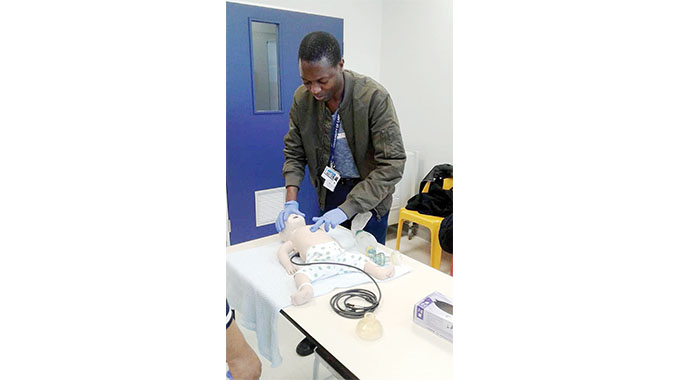
Kamangeni Phiri
After several years of playing with orphans at his parents’ homestead, Mr Precious Madzimbe finally turned his hobby into a career.
From the various games he engaged in with the kids, a desire to save and improve young lives was born.
“I am going to undertake a medical course,” recalls Mr Madzimbe telling his parents. “I told my parents I want a life that allows me to spend as much time as possible with patients, especially children”.
Today, Mr Madzimbe (35), is living his dream practising as a paediatric physiotherapist at the United Bulawayo Hospitals (UBH).
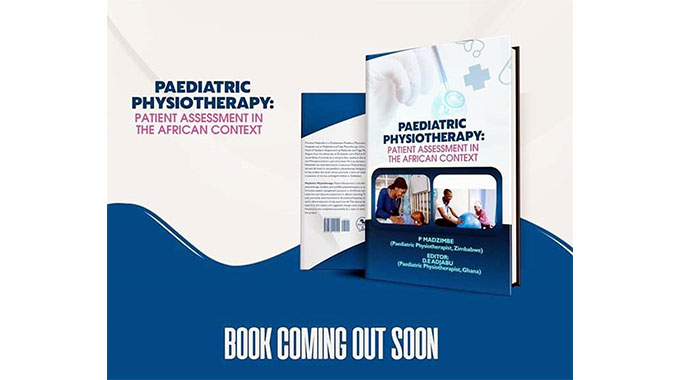
The physiotherapist from Biriiri village in Chimanimani, now into his ninth year of practice, has used his experience to pen a textbook that unpacks paediatric physiotherapy from an African perspective.
Mr Madzimbe’s book, Paediatric Physiotherapy: Patient Assessment in the African Context, encourages medical professionals to consider local settings and cultural norms when prescribing solutions for patients.
“Patient management is a broad subject with lots of family issues and psycho-social issues involved. Cultural beliefs and traditions are critical in the healing process of a patient,” he says.
Mr Madzimbe posits that extended family members have the capacity to actually block a parent from engaging the services of a physiotherapist, if they happen to be people who believe in witchcraft.
“This is why the book puts into context our local setting so that it prepares practitioners to execute their duties with ease,” he says.
Mr Madzimbe’s book is the result of three years of hard work involving extensive research and consultations.
A physiotherapist is a health professional who can treat conditions or injuries that affect the way a person moves and does his or her daily activities. Some of the diseases that can be treated by a physiotherapist include neurological disorders like cerebral palsy, migraine headaches, genetic disorders like down’s syndrome, musculoskeletal disorders like muscle strains and low back injuries, as well as sports injuries or even common issues like dizziness.
The paediatric population’s age ranges from birth to 21 years, according to the American Academy of Pediatrics.
Mr Madzimbe credits his mother, Mrs Beauty Madzimbe, for helping him become a physiotherapist. Mrs Madzimbe used to take care of orphans left behind by their deceased relatives.
“I settled for physiotherapy because it allows one to spend more time with a patient. We spend about 30 minutes with them,” he says.
Physiotherapy allows a practitioner to have the best relationship with his or her patients. It gives one the opportunity to know more about the patient, says Mr Madzimbe.
“As physiotherapy practitioners, we go beyond what the patient presents to us. For example, if one has a neck or shoulder pain, we focus on that person’s social and work life as we investigate the source of the problem,” he says.
Physiotherapists work in conjunction with other medical professionals at rehabilitation centers, hospitals as well as sports and fitness centers.
Mr Madzimbe feels physiotherapy is still under appreciated by local communities. He says cases like developmental disorders are at times dismissed as the work of witchcraft.
“At times children born with cerebral palsy or down’s syndrome fail to get timely assistance from health professionals because relatives delay to seek assistance choosing instead to attribute the condition to witchcraft. In such cases the relatives end up consulting an inyanga instead of a physiotherapist. In Europe, they readily appreciate physiotherapy as a solution to neurodevelopmental disorders,” he says.
Physiotherapists continue to push for enhanced visibility in a field dominated by medical doctors and dental surgeons. They have started promoting home based care managed by caregivers.
“We have basic programmes that we roll out that even members of extended families can afford. This makes our services more affordable. Most African families cannot afford daily visits to clinics for physiotherapy unlike in Europe,” Mr Madzimbe says.
The inspiration to write the book came in 2017 while he was pursuing further studies, a Post Graduate Diploma in Paediatrics Physiotherapy, at the University of Cape Town in South Africa.
After completing his studies in Cape Town, Mr Madzimbe realised that back home there were no locally written books, especially in the profession of pediatric physiotherapy.
“I took it upon myself to fill the gap and wrote this book,” says Madzimbe.
The book, published in January, will be officially launched this month. It is not yet available on the local market but it’s being sold internationally on Amazon.
“It’s available in soft and hard copies. We decided to first market it online to guard against piracy. This book is mainly helpful to physiotherapist students and also qualified physiotherapists who are interested in the management of pediatric patients. It can also be useful to other medical professionals like doctors, dentists, nurses and radiographers among others,” Mr Madzimbe says.
In between writing the book, the young physiotherapist had to balance between attending to patients at UBH and his ever-busy private clinic which he opened in 2017. His clinic, which he co-owns, is in Bulawayo’s city centre.
Being the only paediatric physiotherapist in the region, Mr Madzimbe had to look for outside help in reviewing and editing the book.
The book has illustrations, diagrams and tables that make it easy even for a layman to understand its contents. It was reviewed by Professor Brenda Morrow, a paediatric physiotherapist and professor at the University of Cape Town, and edited by Dorothy Adjabu, another paediatric physiotherapist from Ghana.
Mr Madzimbe says Africans need to engage the services of physiotherapists more to lessen the burden faced by children born with cerebral palsy, downs’ syndrome and clubfoot, when growing.
A physiotherapist based in Masvingo, Mr Tatenda Mutyiri, believes the new physiotherapy textbook could help curb brain drain and mould patriotic professionals.
He hopes to see more tertiary level texts with local content on the market to help revamp the curriculum.
“Our curriculum focuses on training people who are going to work in the UK or US because the textbooks have many case studies of patients who are from developed countries. Zimbabwe does not have some of the equipment and resources used by practitioners in Europe,” said Mr Mutyiri.
He says the curriculum does little to adequately prepare a physiotherapist of life in the field.
“What I like about Madzimbe’s book is that it’s something that is coming from our own patients, our own problems, our own setting so it’s actually more applicable to us than most of the texts that you can borrow from other places. It’s very important that this book start being used from the level of the student because they will understand things better,” said Mr Mutyiri.
Dr Felix Chari, an author and lecturer at Bindura University of Science Education, applauded Mr Madzimbe for writing the book that will help shape future physiotherapy professionals.
“It’s a good move. The Ministry of Higher and Tertiary Education recommends that all books be written by locals and be published locally,” he says.
Dr Chari said Mr Madzimbe’s efforts should, however, be complemented by journal articles from other professionals.
“Journals are published more frequently compared to textbooks,” he says.
Dr Chari has co-authored textbooks, Focus on Commerce series for Form one, two, three and four. The books are published by the local College Press.
Mr Madzimbe acknowledges the pitfalls of selling his book on the international market alone.
“Not many people will benefit from this book work unless they have access to it. We are working on having more copies of his book printed and sold locally,” he says.
Royalties from the book sales will help meet the medical bills for underprivileged children and set up a scholarship fund.
“The scholarship will help physiotherapy students further their studies at the University of Cape Town,” says Mr Madzimbe.
Away from his busy schedule as a paediatric physiotherapist, Mr Madzimbe finds time to engage in philanthropic work.
He is working on setting up income generating projects for parents and guardians of children living with physical challenges.
Mr Madzimbe identified and approached medical organisations made up of paediatrics in the USA to help fund the projects.
“The parents of the children will take ownership of these projects. Whatever they get will be theirs. They will use the profits to sustain the project as well as meet their kids’ medical bills,” says Mr Madzimbe.


 Online Reporter