Online Reporter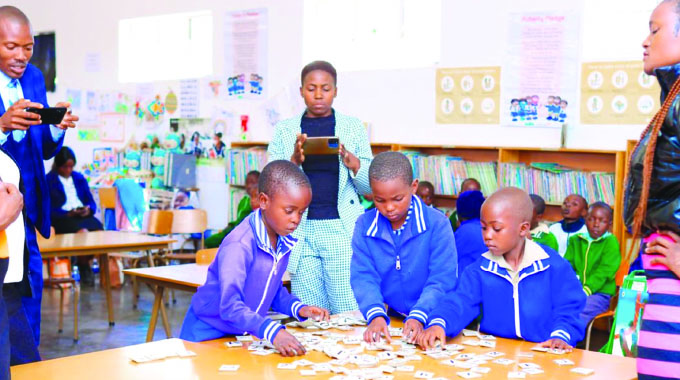
Sukulwenkosi Dube-Matutu, [email protected]
WHEN the Books to Go programme was introduced at Bethel Primary School in Gwanda District, it gave learners a fair shot at acquiring reading skills as early as infant level.
Under the programme, a library has been established at the school. The same project has been implemented at Selonga and Matshetsheni Primary Schools by the Edward Ndlovu Memorial Trust working in partnership with Book Aid International.
Each school received over 2 000 reading books and cabinets to set up libraries. Teachers were also trained on how to manage the libraries. Learners can either read the books at school or borrow them to read from home.
This is not the only programme that has been introduced in rural schools to improve literacy levels.
The Books to Go programme has helped to ensure that learners at both primary and secondary level have access to reading material. As a follow up to the
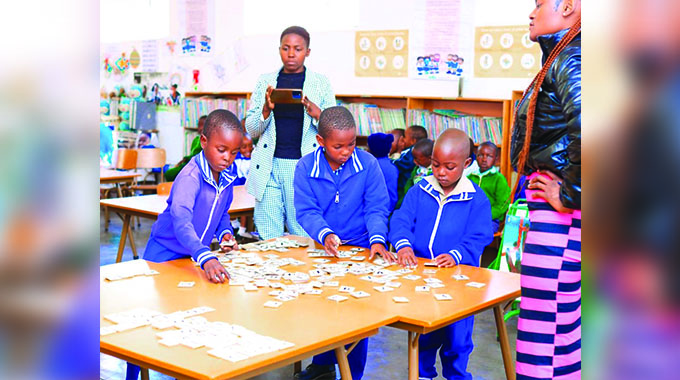
programme, an annual reading competition has been introduced to promote a reading culture among learners. The competitions are held at primary level. At infant level, learners compete in picture word matching, word building while at junior level pupils compete in spelling relay and puzzle solving. At senior level, pupils compete in spelling and reading.
Rural schools continue to be affected by shortage of teaching material, functioning libraries and adequate literacy resources.
A parent with a child at Bethel Primary School Mr Thabani Khumalo said he has seen an improvement in the performance and academic ability of his child since the establishment of the library.
“We are grateful for the books which were donated to the school and the library that was established. These books have helped to open the minds of our children and to ensure that our children develop intellectually. When my child got his first book, he was so excited and eager to know what the book contained.
“We have always been concerned that our children have been lagging behind in education because of limited resources but the establishment of the library has helped to cover the gap. While our children are still lagging behind when compared to their counterparts in urban schools, developments like this library help to cover the gap,” said Mr Khumalo.
Another parent, Ms Sheila Moyo said having access to the library books has been an eye opener to learners on things that exist in the world. She said children learn about different things which they have never seen due to resource constraints.
Ms Moyo said the books are not just a reading aid but also a learning tool for the pupils. She said having reading competitions further enhances the children’s knowledge.
“My child is in Grade Two and accessing reading books has been really helpful. Her mind has been opened and she now understands the concepts better. She now appreciates the English language which will help her as she continues with her studies.
“In the rural areas we have children that can’t read even at secondary level because of lack of exposure. It’s important for children to have this foundation at primary school. Having reading competitions is a bonus as it will encourage learners to read,” she said.
Edward Ndlovu Memorial Trust director, Mr Michael Moyo said they have come in to complement Government efforts in developing the education sector. He said this intervention reinforces the broader national goal of ensuring inclusive and equitable quality education, in line with Sustainable Development Goal 4. He said it is crucial to develop reading skills among learners as early as ECD level.
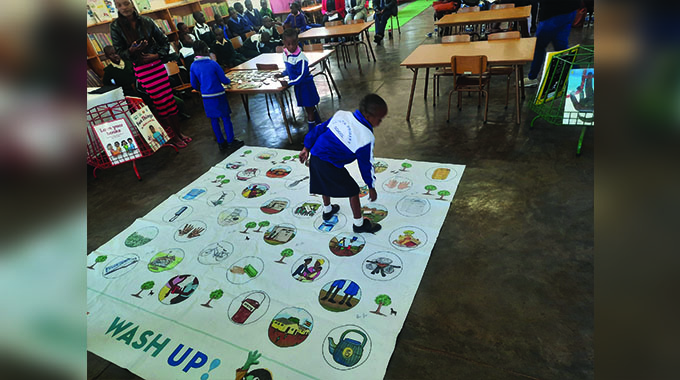
Mr Moyo said the target is to eradicate zero percent literacy levels which were being reported in some schools in the rural areas. He said covering the gap is crucial in ensuring that rural learners have equal opportunities.
“As ENMT we have come in to assist in developing the education sector through establishing libraries and supplying books in order to ensure sustenance of the libraries. These interventions breathe life into school environments and reintroduce reading as a joyful, daily activity for children,” he said.
Mr Moyo said the Books to Go programme has seen the establishment of a well-stocked book resource in both English and local languages, introduction of scheduled library lessons to promote regular reading and setting up of an effective book-lending system to enable learners to borrow and read at home.
“The impact has been significant as schools now report improved reading habits among learners, greater engagement in lessons and increased teacher confidence in managing library resources. By encouraging literacy and a love for reading from an early age, the programme is not only bridging the education divide but also nurturing a generation of curious, confident learners,” he said.
Mr Moyo said the competitions are held at various levels which are infant for ECD A up to Grade Two, junior for Grade Three and Four and senior for Grade Five to Seven. He said learners at each level have reading activities where they can have fun and learn at the same time.
Social scientist Reverend Muiti Sibanda said promoting reading in primary school learners is vital as it boosts cognitive development, strengthens language and communication skills, enhances critical thinking and creativity, improves concentration and memory, and cultivates empathy and a lifelong love for learning.
He said strong reading skills are foundational for academic success across all subjects and contribute to overall mental well-being of learners.
“By encouraging literacy and a love for reading from an early age, learners become curious and confident, which helps to develop them holistically. Reading has many benefits and helps in development of learners.
“Reading exposes children to diverse words and sentence structures, significantly expanding their vocabulary and improving their ability to communicate effectively, both in writing and speech. It stimulates the brain, improving memory, fostering critical thinking and analytical skills, and supporting overall brain activity and connections,” he said.
Rev Sibanda said reading also helps children develop the ability to concentrate for longer periods, a crucial skill for academic success and focus in other areas of life.
He said books also equip learners with imaginative and creative skills thereby encouraging them to think creatively and develop their own ideas.
Rev Sibanda said reading is also fundamental for all subjects, providing a solid basis for a child’s overall academic achievements. — @DubeMatutu