Online Reporter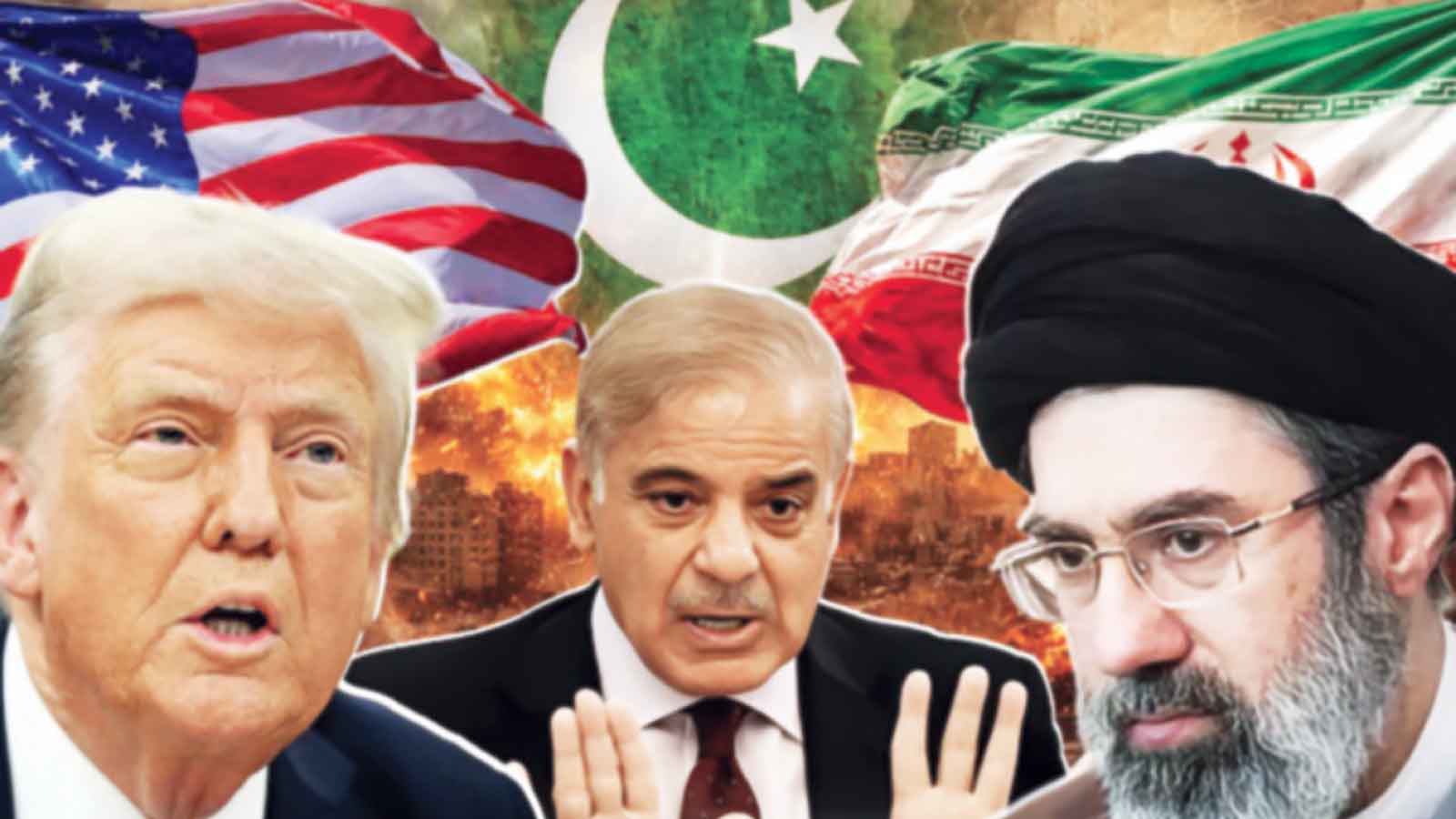
Gibson Nyikadzino
Zimpapers Politics Hub
When the United States wants to reach out to a formidable opponent in Asia and South West Asia regions, Pakistan has always been the go-to country.
It has been at the service of the United States and a call-away for the Washington establishment.
In 1971, when the United States wanted to neutralise Russia (then the Union of Soviet Socialist Republics, USSR) at the height of the Cold War, Pakistan was at its service. It played a vital role as mediator to facilitate the rapprochement between the United States under the Richard Nixon administration and China, led by Chairman Mao Zedong.
This mediation role led to a meeting between President Nixon and Chairman Mao on February 21, 1972. This breakthrough broke 22 years of frozen Sino-US relations.
Besides reaching out to China to neutralise Russia and gain geopolitical leverage, the US was also trying to find a secure a way out of the Vietnam War which it ultimately lost in 1975. This is also the same country in which Al-Qaeda founder Osama bin Laden was killed in May 2011.
Some security analysts have also hinted that 2016 Pakistan’s mediation efforts for the normalisation of relations between Iran and Saudi Arabia were happening at the instigation of the United States.
This however, does not take into consideration that at the cornerstone of Pakistan’s foreign policy is building and maintaining close friendly relations with other Muslim states. In its foreign policy doctrine, Pakistan has considered ending the conflict between Saudi Arabia and Iran a “sacred mission” and has always been proud to take up that role.
Additionally, Pakistan served as a conduit for United States aid to Afghanistan resistance forces during the Soviet invasion of the latter in 1979, and participating deeply in the United Nations led Geneva negotiations.
In 2020 at the signing of the Doha Agreement between the United States and the Afghan Taliban, behind the scenes Pakistan played a critical facilitator’s role that was widely recognised by the international community.
Currently, Pakistan has been at the centre of mediating a ceasefire agreement between the United States and Iran, following the former’s February 28 aggression on the latter.
The mediator role Pakistan has played over the years does not make it an extended instrument of United States foreign policy, however, this happens because Pakistan has enjoyed cordial relationship with China, Iran, Saudi Arabia and the United States, hence it being perceived as a neutral party by each of these countries.
Broadly, Pakistan’s renewed visibility in Washington’s strategic calculus makes it a beneficiary of the United States’ geopolitical interests, but also independent enough to know that China, as Pakistan’s most significant economic and military partner, has a vested interest in preventing instability in the Persian Gulf. This is a region critical to its energy supply chains and global trade routes.
Strategic intermediary
At the centre of trying to balance its interests, Pakistan also intends to balance the interests of its traditional allies China, Iran, and the United States. It is a country with relations that are shaped by Western influences, Asiatic connections and a Muslim foundation. It is within this framework that Pakistan, as it continues to function as a strategic intermediary or a buffer that can be used to engage with all parties, it is also important to shield China from any kind of direct exposure.
Pakistan’s strength is thus rooted in its access, strategic insight, and capacity to convey difficult truths to all parties rather than in coercive power. As a mediator, the warring parties are finding Pakistan as a reliable partner with deep knowledge of the geopolitics of the Asia region, and ultimately, standing to benefit from its efforts.
Economically, in the assumption that the United States lifts economic sanctions against Iran, Pakistan will benefit primarily through accessing cheap oil and gas, despite getting some from Saudi Arabia, already, where it received US$2 billion last month as support to its foreign exchange reserves.
There is nothing that can be discounted when one thinks the Saudi Arabia support is part of an incentive for mediating the ceasefire as the Gulf countries need relief. At the same time, Pakistan is an equally candid speaker when it engages actors in the Gulf capitals.
To understand the strategic role of Pakistan as a mediator in the US–Iran ceasefire process, one should be able to pick that this is not happening because Pakistan has made a breakthrough in independent diplomacy alone, but this happening because of embedded larger geopolitical currents.
It should continue the course of a balanced policy towards two major Middle Eastern powers, and continue to demonstrate moral high ground by pursuing diplomacy for mediation and conciliation.
Strategic limitations
That the United States sought Pakistan’s mediation reveals a significant failure in its strategy of unilateral military pressure on Iran, highlighting the limitations of its approach and the waning dominance of its hegemony.
The current situation on the proposed ceasefire highlights the shortcomings of United States style military deterrence, signalling a waning effectiveness of unilateral force-driven diplomacy and the ongoing decline of American unipolar dominance.
It was not ideal and will never be ideal for the United States to establish dominance in the Middle East through military pressure on Iran. Attempting to do so made the United States end up in a deadlock that escalated a conflict it engaged without mobilising adequate support of allies, hence leading it to seek third-party mediation to mitigate its losses.