


 Online Reporter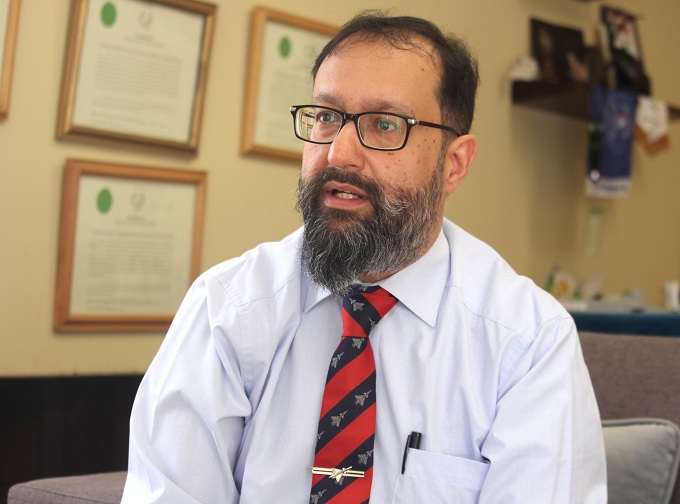
Sunday Mail Reporter
PAKISTAN and India should open official channels of communication to promote peace and stability between the two countries, a diplomat has said.
In an interview with The Sunday Mail, the Ambassador of the Islamic Republic of Pakistan to Zimbabwe, Mr Murad Baseer, also called for Track II diplomacy — informal discussions involving academics, former officials and civil society actors — as a potential avenue to break the diplomatic stalemate and create space for formal negotiations.
Tensions escalated after the Indian military carried out airstrikes in Pakistan on May 7, following an April 22 attack in Pahalgam in Indian-administered Kashmir, where gunmen killed 26 civilians. India accused Pakistan of involvement, a claim Islamabad denies.
The two countries stopped exchanging fire on May 10, with Western nations urging peace talks.
Ambassador Baseer emphasised that war is not a solution, as it only exacerbates existing problems.
“Diplomats from both sides need to initiate talks,” he said.
“Track II diplomacy should also commence so that both sides can address their bilateral concerns.
“War does not bring lasting solutions; it only deepens the complex challenges faced by Pakistan and India. If the Taliban and the United States could engage in protracted negotiations for over a decade, why can’t Pakistan and India do the same?”
Ambassador Baseer stressed the need for mutual goodwill and trust between nations, underlining the potential catastrophic impact of a full-blown conflict.
“This conflict is a grim reminder of the dangers lurking for regional peace and stability in South Asia as the latest conflict was held in the conventional realm under the nuclear threshold,” he said.
“Breaking this threshold can result in catastrophic consequences for both India and Pakistan and can lead to a doomsday scenario for millions of people in South Asia. Sanity and cool heads have to prevail and diplomats from both sides need to initiate talks.”
Bilateral ties
Amb Baseer also condemned US sanctions on Zimbabwe, stating they hinder the country’s economic progress. “Pakistan believes state relations should be based on mutual goodwill, trust and equality,” he added.
“The unilateral actions against Zimbabwe and its leadership are unjust and have significantly impeded the nation’s development.”
He reaffirmed Pakistan’s commitment to strengthening bilateral ties with Zimbabwe, particularly in agriculture and trade.
“The Embassy of Pakistan participated in the 114th Zimbabwe Agricultural Show from August 26 to 31, 2024,” he noted.
“This was the first major trade event featuring 18 Pakistani companies showcasing products such as two- and three-wheelers, tractors, agricultural tools, sanitaryware, kitchenware, paints, chemicals, textiles, sports goods, automotive parts, bore pumps, footwear, leather jackets, and mobile phones and accessories.
“The event was highly successful, with Pakistani representatives impressed by Zimbabwe’s market potential and the opportunities for Pakistani exports.”
Pakistan supported Zimbabwe’s liberation struggle through training freedom fighters. After independence, Pakistani doctors, engineers, teachers and defence forces personnel moved to Zimbabwe in the 1980s and helped in the nation-building process.
Defence cooperation has been one of the pivots of bilateral relations between Harare and Islamabad.
“Today, I can say with confidence that bilateral relations between Pakistan and Zimbabwe have been revived with the establishment of the Embassy of the Republic of Zimbabwe in 2023,” he said.
“Both embassies in Islamabad and Harare are working together for enhancing cooperation in varied fields, especially in the realm of trade and commerce. I am very happy to tell you that we have achieved a number of things that will have an impact on the bilateral relations between Pakistan and Zimbabwe in the years to come. Defence, as I said, is one such realm.”
Amb Baseer said he was actively canvassing for Pakistani businesses to invest in Zimbabwe.
“In June 2025, both our ministries of Foreign Affairs are going to sign a memorandum of understanding (MoU) on bilateral political consultations. The MoU will be held periodically to calibrate our bilateral relations, along with the emerging events unfolding in the regional and international realm,” he said.


 Bongani Ndlovu