admin
admin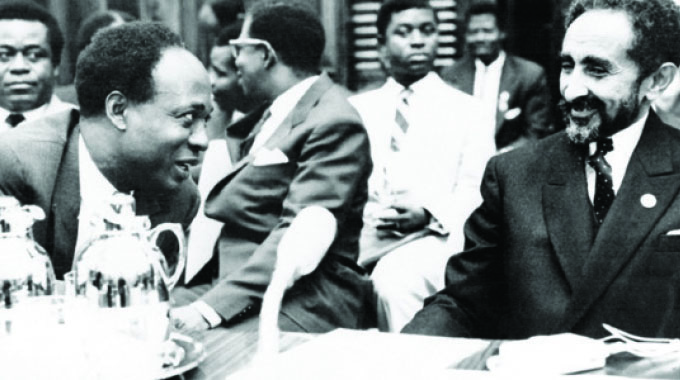
Pan-Africanist-movement
The movement for cultural consciousness and identity hinged on African unity are traceable in the ideas of Pan-Africanism. Pan-Africanism was seen as the necessary philosophy around which all people of African descent should unite to develop strategies against racial injustice, inequality and ending colonialism in Africa.
The ideals of Pan-Africanism came to the fore in 1900, when the Trinidadian barrister Henry Sylvester Williams organised the First Pan-African Conference, held at Westminster Town Hall in London and thereafter the African American activist William Edward Burghardt (WEB) Du Bois organised a series of Pan-African Congresses to keep the movement alive during the intervening periods of the two world wars.
The Pan-Africanism movement gained wider public recognition through the defining session held in October 1945, when people of African descent from the continent and in the diaspora came from all corners of the world to take part in the Fifth Pan-African Congress which was held in Manchester, United Kingdom.
The congress was a culmination of the numerous attempts that had been made to establish collective action to achieve the desire of Africa and people of Africa’s descent to achieve freedom, justice, and recognition of their human rights that had been infringed on through imperialist structures, colonialism, apartheid and other systems of racial injustice and inequality.
The fifth Pan African Congress attended by future African presidents including Kwame Nkrumah of Ghana, Jomo Kenyatta of Kenya, Hastings Banda of Malawi and Nnamdi Azikiwe of Nigeria.
The Declaration of the Fifth Pan-African Congress urged colonial and subject peoples of the world to unite and assert their rights to reject those seeking to control their destinies with participants encouraging colonised Africans to elect their own governments as with political power African countries would to gain complete social, economic, and political emancipation.
The Journey to the formation of the OAU
In 1958 at the all-African people`s conference in, Accra-Ghana, all the speakers at the conference from the West African nations unanimously spoke against the prevailing racism and colonialism that was happening in Africa at the time and called on Africans to unite in their fight for liberation from colonialism.
The Pan-African Freedom Movement of East and Central Africa (PAFMECA) was formed in 1958 to campaign for the independence of the countries of East and Central Africa from colonial and white minority rule, although this movement was short-lived.
The Casablanca group (January 7, 1961), composed of Ghana, Guinea, Mali, Morocco and the Algerian Provisional Government, felt that political unity and continental integration for the African people was required among the independent African countries.
The Monrovia group (8th -12th May 1961) was composed of Liberia, Ivory Coast (now Côte d’Ivoire), Cameroon, Senegal, Malagasy Republic (now Madagascar), Togo, Dahomey (now Benin), Chad, Niger Upper Volta (now Burkina Faso), Congo Brazzaville, Central Africa Republic, Gabon, Ethiopia and Libya called for a market-driven development economy.
To a stunned world that had dismissed the possibility of African Unity, all these regional groupings came together to uphold the dignity of Africa and form a united front to fight for the complete independence of Africa’s peoples.
In May 1963, Kwame Nkrumah of Ghana, Emperor Haile Selassie of Ethiopia, and Gamal Abdel Nasser of Egypt convened a meeting of 32 newly independent African countries in Addis Ababa, Ethiopia which culminated in the formation of the Organisation of African Unity (OAU) which was a manifestation of the Pan-African vision for an Africa that was united, free and in control of its own destiny and this was solemnised on May 25 (Africa Day) 1963, in the OAU Charter which spelled out the purpose of the Organisation namely:
To promote the unity and solidarity of the African States
To co-ordinate and intensify their co-operation and efforts to achieve a better life for the peoples of Africa
To defend their sovereignty, their territorial integrity and independence
To eradicate all forms of colonialism from Africa
To promote international co-operation, having due regard to the Charter of the United Nations and the Universal Declaration of Human Rights.
To achieve these goals, Member States pledged to harmonise their policies in the fields of political and diplomatic co-operation; economic co-operation, including transport and communication; educational and cultural co-operation; health, sanitation and nutritional co-operation; scientific and technical co-operation; co-operation for defence and security.
Attainment of these objectives was predicated on the following seven fundamental principles:
The sovereign equality of all Member States;
Non-interference in the internal affairs of the state
Respect for sovereignty and territorial integrity of each and its inalienable right to independent existence
Peaceful settlement of disputes by negotiation, mediation, conciliation and arbitration
Unreserved condemnation in all forms of political assassination as well as of subversive activities on the part of neighbouring States or any other State
Absolute dedication to the total emancipation of the African territories, which are still dependent
Affirmation of a policy of non-alignment of all blocs.
The headquarters of the OAU General Secretariat was located at the Africa Unity House in Addis Ababa, Ethiopia and was headed by an administrative secretary-general, assisted by five assistant secretary generals all of whom were appointed by the heads of State and Government. Following the transformation of OAU to the African Union (AU), Addis Ababa remains the headquarters of the AU with the AU Commission leadership consisting elected officials – chairperson, deputy chairperson and six commissioners and a fully functional secretariat composed of staff from the 55 member states. — African Union



 Online Reporter