

 Online Reporter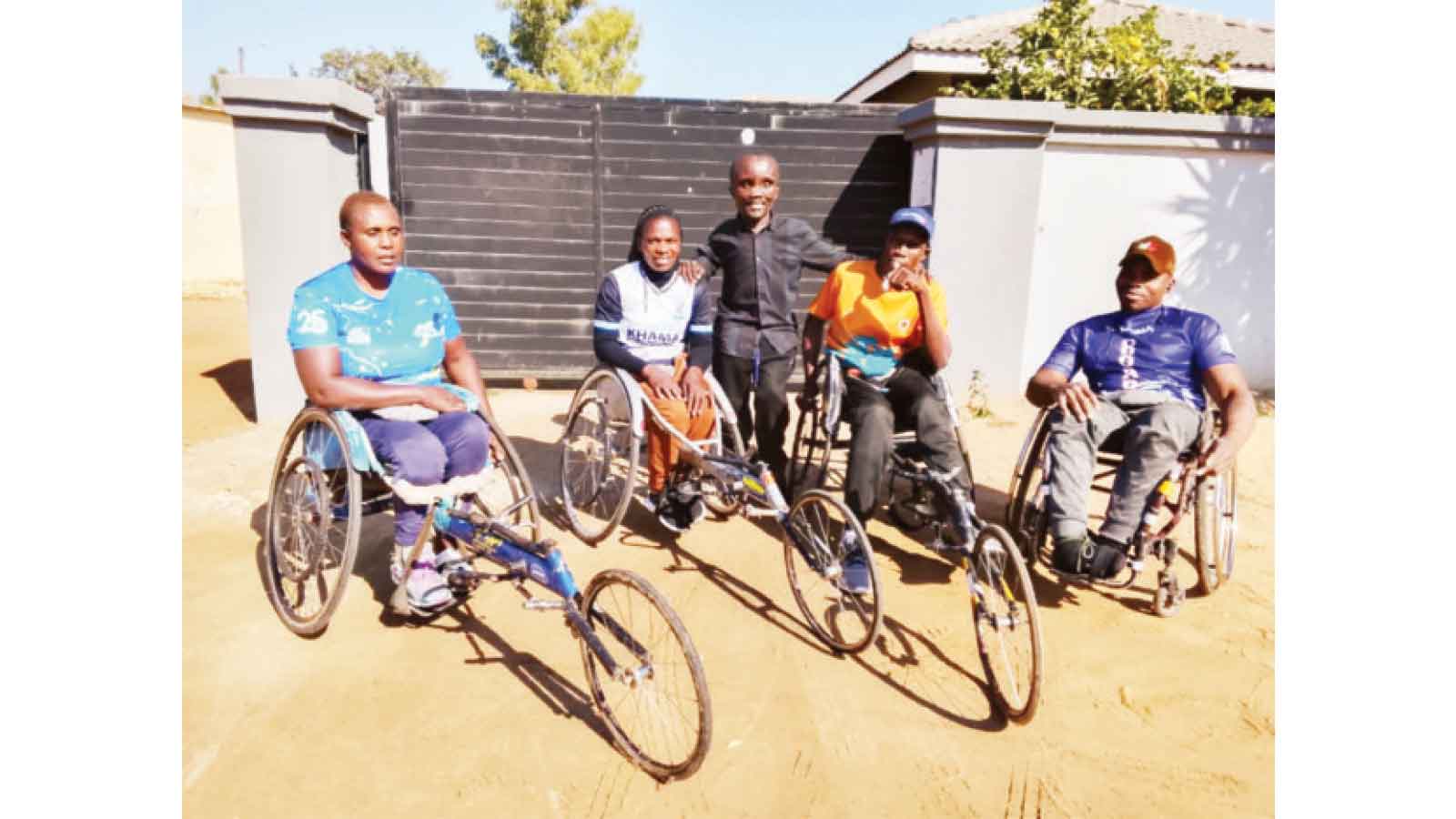
Fatima Bulla-Musakwa-Features Writer
AS thousands of runners streamed through the streets of Gaborone for the Botswana Life Classic Run Marathon last Sunday, four Zimbabwean athletes were racing for something far greater than medals.
For Moleen Majoni, Thandiwe Ndlovu, Samson Muroyiwa and Godknows Dziripi, every kilometre covered was a statement against prejudice, every finish line crossed a victory over stereotypes, and every medal won was a powerful reminder that disability should never be mistaken for inability.
Representing Zimbabwe in the disability category, the quartet travelled to Botswana determined to compete among Africa’s finest para-athletes. While Majoni, Ndlovu and Muroyiwa contested the 21-kilometre race, Dziripi lined up for the 10-kilometre event.
They returned home with three gold medals and one silver, earning qualification for the prestigious EDP Lisbon Marathon in Portugal scheduled for October 10 and 11.
Yet behind their remarkable achievement lies a story that extends beyond sporting excellence.
It is a story of resilience in the face of adversity, of athletes refusing to be defined by physical limitations, and of a nation still striving to fully embrace the principles of inclusion for persons with disabilities.
Ironically, the Zimbabwean athletes’ toughest opponents were not always on the race course. They competed using ageing, worn-out wheelchairs that are no longer suitable for elite competition.
While the Ministry of Sport, Recreation, Arts and Culture recently released close to US$4 000 towards the purchase of a new racing wheelchair for Majoni, procurement processes were not completed before the Botswana competition, forcing the athlete to compete using an old one.
For para-athletes, specialised racing wheelchairs are not a luxury, but an essential piece of sporting equipment.
Built from lightweight materials and engineered for speed, stability and efficiency, they can significantly improve performance and reduce physical strain over long-distance races.
Competing with outmoded equipment against athletes using up-to-date wheelchairs is comparable to asking an Olympic sprinter to race barefoot against opponents wearing world-class spikes.
Yet the Zimbabwean athletes refused to be discouraged.
“I have a challenge with my wheelchair, which is worn out. I am appealing for support from Zimbabwe so that I can purchase a good wheelchair and be able to compete in Portugal.
“There, we have to participate using wheelchairs that meet the required international standards,” Muroyiwa said after the race.
His appeal reflects the daily reality faced by many para-athletes across Zimbabwe, where talent often outpaces available resources. Majoni echoed similar sentiments after fighting through the limitations of her equipment to secure a silver medal.
“Despite the challenges of a wheelchair, which is very old and slow, I came second. When I receive my new wheelchair, I believe I will compete and win gold medals both locally, regionally and internationally,” she said.
Their achievements reinforce an important truth that disability rights advocates have championed for decades: disability does not diminish potential. Rather, it is often inaccessible environments, inadequate resources and societal attitudes that limit opportunities.
For Dziripi, sport has become a platform to inspire others with disabilities.
“I want to encourage my colleagues in Zimbabwe with disabilities that disability does not mean inability. You can flourish and earn a living while also keeping physically fit,” he said.
His words capture the broader significance of para-sport. Beyond competition, sport provides opportunities for employment, social inclusion, rehabilitation, improved health, confidence building and national representation. It enables persons with disabilities to challenge long-held misconceptions that they are dependent or incapable of contributing meaningfully to society.
Team manager and disability rights advocate Nyasha Nhau believes the Botswana competition demonstrated both the immense potential of Zimbabwe’s para-athletes and the urgent need for greater investment.
The Disability Ambassador to the African Union argues that accessible infrastructure, modern equipment and deliberate resource allocation can unlock the abilities of thousands of persons with disabilities across the country.
“When the country is supporting women and youth initiatives through empowerment programmes, implementers should remember that persons with disabilities are also part of those communities, including in sport,” Nhau said.
His call resonates strongly with Zimbabwe’s National Development Strategy 1 (NDS1), which is anchored in the principle of “leaving no one and no place behind.”
That philosophy aligns with the country’s National Disability Policy, adopted in 2021, which seeks to mainstream disability across all sectors of national development.
The policy recognises persons with disabilities as equal citizens entitled to opportunities in education, employment, health, recreation, culture and sport.
It also promotes universal accessibility, equal participation and the removal of barriers that prevent people with disabilities from fully contributing to national life.
Zimbabwe has further demonstrated its commitment to disability inclusion by ratifying the United Nations Convention on the Rights of Persons with Disabilities (UNCRPD), an international treaty that obliges signatory countries to guarantee equal enjoyment of all human rights and fundamental freedoms by persons with disabilities.
Article 30 of the Convention specifically recognises the right of persons with disabilities to participate in recreational, leisure and sporting activities on an equal basis with others.
Domestically, Zimbabwe’s Persons with Disabilities Act similarly requires the Government to facilitate the participation of persons with disabilities in mainstream sporting activities by ensuring access to appropriate instruction, training, facilities and resources.
While these legislative and policy frameworks provide a strong foundation, translating them into practical support remains a pipe-dream, because for many athletes, access to specialised sporting equipment remains prohibitively expensive.
Training facilities designed with accessibility in mind remain limited, while opportunities for international exposure are often constrained by funding shortages.
Despite these obstacles, Zimbabwe’s para-athletes have consistently demonstrated extraordinary ability on the international stage.
The country’s sporting history includes Paralympic legend Elliot Mujaji, who etched his name into history by winning Zimbabwe’s first Paralympic gold medal in the men’s 100 metres at the Sydney Games in 2000 before successfully defending his title at Athens in 2004.
Wheelchair tennis player Nyasha Mharakurwa also proudly represented Zimbabwe at the London 2012 Paralympic Games, becoming another symbol of excellence in disability sport.
Their successes inspired a new generation of athletes, including those who recently excelled in Botswana. Yet one recurring challenge continues to unite generations of Zimbabwean para-athletes: limited financial support.
Whether preparing for local competitions or representing the nation internationally, athletes frequently struggle to secure sponsorship for equipment, travel, accommodation and specialised coaching.
Without sustained investment, many promising careers risk ending before reaching their full potential.
Ironically, these athletes continue to produce outstanding performances despite operating under conditions that would discourage many able-bodied competitors.
Therefore, their medals are not merely sporting achievements. They represent triumphs over structural barriers, financial hardship and outdated perceptions surrounding disability.
The Botswana Life Classic Run Marathon also served an important technical purpose. Regional competitions allow athletes to be graded, improve international rankings and record qualifying performances required for global competitions such as the Lisbon Marathon and, ultimately, the Paralympic Games.
Thus, every race becomes another stepping stone towards international recognition.
As preparations begin for Portugal, Zimbabwe’s latest para-athletes carry more than the nation’s hopes. They carry the aspirations of thousands of Zimbabweans with disabilities who continue to seek equal opportunities in education, employment, entrepreneurship, politics, arts and sport.
Their journey offers an important lesson for society; inclusion is not charity but an investment.
Providing accessible infrastructure, specialised equipment and equal opportunities does not simply benefit persons with disabilities. It enriches society by allowing talent to flourish regardless of physical circumstances.
Zimbabwe’s para-athletes have already demonstrated that they possess the courage, discipline and determination to compete against the world’s best. What they now require is a sporting ecosystem capable of matching their ambition.
As Zimbabwe continues to champion inclusive national development, the country’s para-athletes have already shown the way. Their victories in Botswana prove that disability is not inability.
Given the right support, equal opportunities and the necessary investment, they are not merely capable of competing with the best in the world, but they are capable of beating them too.


 Bongani Ndlovu