Online Reporter
Nqobile Bhebhe, Zimpapers Business Hub
ZIMBABWE’S agricultural transformation, guided by the National Development Strategy 2 (NDS2) and the Agriculture and Food Systems Reform and Transformation Strategy 2 (AFSRTS2), prioritises State-Owned Enterprises (SOEs) and parastatals in implementation and delivery, as the country advances toward Vision 2030.
AFSRTS2 aims to realign parastatals and SOEs to enhance their outputs and boost the developmental impact of their activities.
Under NDS2, these institutions are transitioning from peripheral support agencies to commercially viable, development-focused entities that drive productivity, value addition, market access, financing, infrastructure development and food security.
Central to agricultural financing is the Agricultural Finance Corporation (AFC), which has been realigned to address significant post-reform financing gaps.

“The Agricultural Finance Corporation was resuscitated in 2021 to fill a perceived financing gap in the post-reform era. With a land and development bank, a commercial bank and leasing and insurance units, the AFC is adequately structured to play an increasingly important role in financing land reform beneficiaries, alongside other established, willing banks,” reads part of AFSRTS2.
The Government is targeting a US$15,8 billion agriculture industry by 2030, buoyed by great strides the industry has made in the last six years under the transformative policies of the Second Republic.
The introduction of transferable and bankable land tenure instruments is expected to significantly accelerate agricultural lending.
“This financing should be accelerated in the title deed era, with the introduction of collateral-based lending,” reads the AFSRTS2 document.
“The Government is providing facilitatory guarantees for the AFC and other banks for lending mechanisation equipment, for irrigation development by A1 and A2 farmers, and is establishing a crop purchase buffer fund.”
Now operating under the Mutapa Investment Fund, the AFC’s mandate is expanding beyond traditional banking.
“The AFC should expand the above services so that it can be the bank of choice for farmers,” the AFSRTS2 document reads.
“Additionally, the AFC should play an increasing role in the distribution of inputs under various Presidential Schemes to enhance efficiency, while ensuring inclusive banking for over three million rural beneficiaries of Presidential Schemes.”
The AFC is also emerging as a key player in urban and peri-urban land development to unlock capital for agriculture.
“The AFC is the urban land developer for the Government under the new policy introduced in 2022,” reads the AFSRTS2 document.
“With an initial tranche of 11 000ha, the AFC should be able to raise some US$500 million to fund both working and capital outlay, tobacco localisation of financing and the establishment of the crop purchase buffer fund.”
With the Second Republic’s land tenure reforms, further balance sheet expansion is expected.
“The Second Republic’s revolutionary title deeds programme announced in October 2024, should unlock further financing for agricultural transformation,” reads the document.
“The AFC balance sheet will grow from US$238 million in 2025 to US$617 million by 2030.”
On the regulatory and market development front, the Agricultural Marketing Authority (AMA) is being transformed into a growth-oriented institution.
“The Agricultural Marketing Authority (AMA) will regulate for growth, facilitate the establishment of provincial agro-processing hubs, support new urban agricultural markets and seek financing for production and marketing, while availing timely agricultural statistics and ensuring compliance with standards for sustained growth,” reads AFSRTS2.
“The AMA’s grassroots presence is central to Rural Development 8.0. The new AMA will be ubiquitous in villages to drive RD8.0.
“Furthermore, the AMA will be an invaluable link for ZimTrade outbound mission-scoping activities. Working with the CSC, the AMA will establish fully functional livestock rural marketing points at Ward Drought Mitigation Centres.”
AMA’s balance sheet is projected to grow from US$101,9 million in 2025 to US$122,3 million in 2030.
Food security and rural industrialisation are anchored by the Agricultural and Rural Development Authority (Arda).
“The Agricultural and Rural Development Authority (Arda), as the designated food, feed, oils and seed security agent for the nation, will produce 850 000 MT of cereals annually,” reads the AFSTRS2 document.
Irrigation expansion is a cornerstone of this vision, whereby Arda will increase the area under irrigation at its estates from the current 2 500ha to 25 000ha by 2030.
Arda will establish rural development nodes to act as rural development magnets along three primary value chains: maize, wheat and soybean/sunflower.
Research and innovation are being consolidated under the Agricultural Research Council (ARC), which will strive to be the lead facilitator, chief coordinator, public affairs champion and indisputable leader in the agricultural research, development, innovation and technology transfer continuum.
Livestock value chains are being revitalised through entities such as the Cold Storage Company (CSC) and Cottco, both now under the Mutapa Investment Fund.
“Through its grazier scheme, a network of rural sales points and being an off-taker of last resort in drought years, the CSC used to be the ‘smoothing link’ for sustained livestock growth,” reads the AFSTRS2 document.
“Now under the Mutapa Investment Fund, a working Cottco will ensure the transformative role of cotton in the rural economy. Cooking oil and feed from cotton must be produced in villages, causing urban-to-rural migration.”
Cottco’s balance sheet is projected to grow to US$199 million by 2030.
The Grain Marketing Board (GMB) is evolving into a national grain supply chain manager.
“The Grain Marketing Board (GMB) is morphing into the grain supply chain manager for the nation, stabilising food prices through appropriate market intervention,” said the document.
Its commercialisation drive aims to wean it off fiscus funding by 2027.
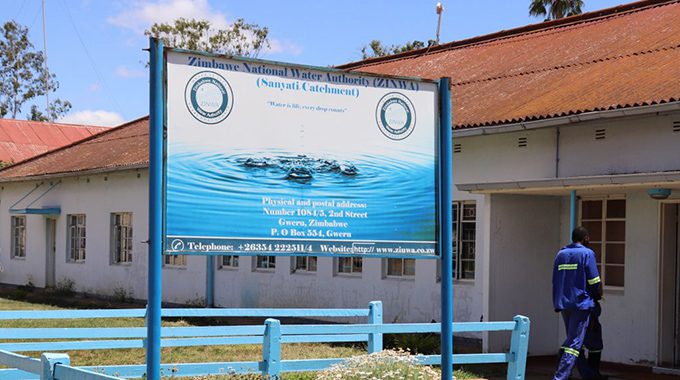
Other specialised institutions, including the Pig Industry Board (PIB), Tobacco Industry and Marketing Board (TIMB), Tobacco Research Board (TRB), Silo Food Industries, Zimbabwe National Water Authority, Zimbabwe Commodity Exchange (ZMX), Farmers Development Trust (FDT) and the Zimbabwe Land Commission (ZLC), are each being repositioned with clear balance sheet growth targets and transformation mandates aligned with AFSRTS2 and NDS2.
Collectively, these SOEs and parastatals form the institutional backbone for agriculture-led growth.
By combining commercial discipline with developmental objectives, they are expected to drive productivity, industrialisation, inclusive financing and market access, ensuring agriculture remains a key pillar in Zimbabwe’s march towards an upper middle-income economy by 2030.
Agricultural experts have underscored that the success of NDS2, AFSRTS2 and the broader Vision 2030 agenda hinges on the effective repositioning and performance of parastatals and SOEs as implementation engines rather than peripheral institutions.
Agricultural economist Dr Mandla Nkomo said Zimbabwe’s agricultural transformation agenda required strong, well-capitalised public institutions to de-risk production and crowd in private capital.
“Parastatals and SOEs are the missing middle between policy and the farmer,” he said.
“When institutions such as the AFC, Arda, AMA and GMB are commercially viable and development-focused, they unlock financing, stabilise markets, and absorb shocks that the private sector alone cannot manage,” said Dr Nkomo.
He noted that the alignment of SOEs with AFSRTS2 marked a decisive shift.
“The reorientation of parastatals under NDS2 ensures that land reform, irrigation expansion, mechanisation, value addition and market access move together. That systems approach is exactly what is required for agriculture to drive Vision 2030.”
Business strategist with ConsultWorld Enterprise, Mr Busani Malaba, said the Government’s thrust to place parastatals and SOEs at the centre of agricultural transformation was both timely and economically sound.
He noted that the strategy reflected a clear appreciation of agriculture as an integrated business ecosystem rather than a standalone production activity.
“The Government has correctly identified that without strong, commercially run public institutions, agriculture cannot scale, industrialise or attract long-term capital. The repositioning of entities such as the AFC, Arda, and AMA under NDS2 and AFSRTS2 creates the institutional certainty required to crowd in private investment,” he said.
He added that the balance sheet growth targets set for parastatals demonstrated policy seriousness and fiscal discipline.
“These projections are not just numbers; they signal confidence, accountability and a shift towards performance-based governance. If implementation remains consistent, agriculture will anchor inclusive growth, rural industrialisation and the attainment of Vision 2030,” said Mr Malaba.