


 Online Reporter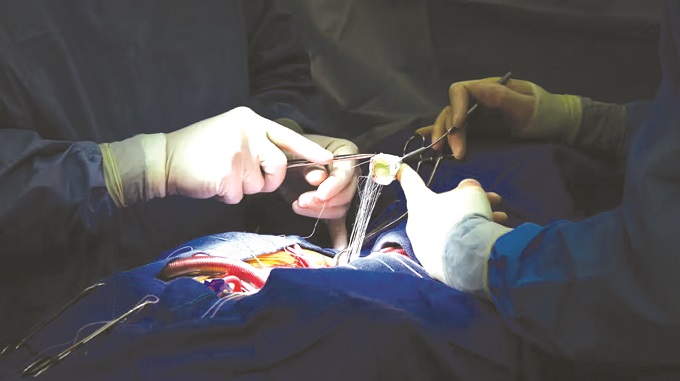
Sunday Mail Reporter
THE Parirenyatwa Group of Hospitals, the country’s major health referral centre, has conducted 62 open-heart surgeries to date, as public hospitals expand specialist services, with Chitungwiza Central and Gweru Provincial hospitals now offering total hip and knee replacements, it has been learnt.
This marks a major step in expanding access to advanced specialist care within Zimbabwe’s public health sector.
Until recently, such procedures, which involve surgically replacing damaged joints with artificial implants, were only available at select public health institutions, expensive private facilities or through costly medical trips abroad, making them unaffordable for the majority of Zimbabweans.
The rollout of these advanced services at public health institutions has brought high-end procedures closer to communities, aligning with Government efforts to make specialist care more accessible and affordable.
In an interview with The Sunday Mail, Permanent Secretary in the Ministry of Health and Child Care Dr Aspect Maunganidze said: “Quaternary or specialist services have been expanded and brought closer to the people.
“This has seen Chitungwiza and Gweru hospitals offering advanced surgeries such as total hip and knee replacement.”
Total hip and knee replacements are complex procedures that involve replacing damaged joints with artificial implants to restore mobility and relieve chronic pain caused by arthritis, injury or degenerative diseases.
“Open-heart surgeries at Parirenyatwa Group of Hospitals managed to go beyond the milestone of 50 operations,” said Dr Maunganidze.
“Open-heart surgery is a critical indicator of Zimbabwe’s healthcare capabilities. The successful launch of the programme in June 2023 has seen 62 patients being operated on to date.”
Open-heart surgeries are intricate procedures that involve repairing or replacing damaged heart valves, correcting congenital heart defects or bypassing blocked arteries to restore proper blood flow — critical interventions that require highly trained specialists and sophisticated equipment.
“Clearly, this presents an opportunity to grow the specialised workforce and places Zimbabwe among its peers,” added Dr Maunganidze.
“The combination of different specialists and specialised equipment will propel the country into the future.
“This service has a huge potential of reversing outward medical tourism and making Zimbabwe a regional hub or centre of excellence.”
The Government, Dr Maunganidze said, has also embarked on a wide-scale digitisation programme to modernise healthcare delivery, with over 1 300 of the country’s 2 000 public health facilities having been equipped with electronic data systems.
This has resulted in the improvement of patient record-keeping, logistics management and service coordination.
The authorities have also rolled out integrated platforms, such as the Laboratory Information Management System (LIMS) and automated pharmacy systems, which have streamlined diagnostics and medicine supply.
“As part of efforts to achieve universal health coverage, Zimbabwe’s digital health superhighway now covers over 65 percent (1 300 of 2 000) health facilities with electronic-first data capture via patient record and logistics management systems,” he said.
“Laboratory and pharmacy functions are fully integrated through the Laboratory Information Management System, with 116 of 127 laboratories live and automated pharmacy workflows ensuring reliable medication supply.
“Additionally, eLearning platforms have helped deliver continuous professional development and help mitigate workforce attrition.”
The authorities have also introduced Starlink satellite internet connectivity at health centres in remote and underserved areas.
To date, over 100 facilities now have high-speed internet access and telemedicine capabilities.
“More than 100 facilities are connected via Starlink, with plans for nationwide scale-up; all 29 sites in Gokwe North district — including Kwekwe General, Gweru Provincial and Mpilo hospitals — now feature Starlink connectivity and telemedicine infrastructure.
“The Gokwe North pilot project demonstrated technical feasibility and high user satisfaction, and a national telemedicine rollout is underway to extend remote diagnostics and specialist consultations to every district.”
Through the Solar for Health initiative, he added, more than 1 000 facilities have been equipped with solar power systems, ensuring uninterrupted operation of vital services such as vaccine refrigeration and emergency care.
In addition, over 400 solar-powered boreholes have been drilled at health centres across the country, providing clean water for sanitation, infection control and maternal health services.
Stocks of antiretroviral (ARV), anti-tuberculosis (TB) and anti-malarial drugs are adequate through the end of 2025, offering stability for patients on long-term treatment, he said.
“The Government is putting in place efforts to make sure hospitals have adequate supplies of medicines and medical commodities,” Dr Maunganidze said.
“Treasury allocated a budget of US$44 million for medicines in 2025.
“We have ongoing supply contracts with Intrapharma and Clean Planet to enhance the supplies.
“Treasury is mobilising additional resources to mitigate donor funding reductions.
“This is done through various mitigating measures such as sin taxes and ring-fencing of funds for health.
“The supplies of antiretroviral, anti-TB and anti-malarial drugs are adequate for the rest of 2025, and we want to reassure the nation that we are ready for 2026.”



 Online Reporter