Chronicle Editor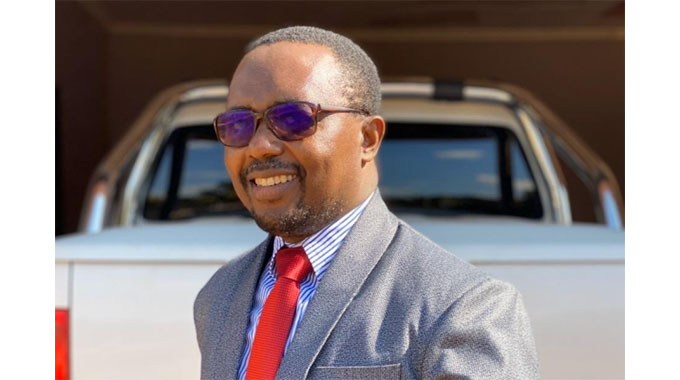
Oliver Kazunga, Senior Reporter
A REPORT on allegations of rampant corruption at the Gweru provincial mining office is now ready for presentation in Parliament so that the Government takes appropriate action.
The chairperson of the Portfolio Committee on Mines and Mining Development and Zanu-PF legislator for Shurugwi South, Edmond Mkaratigwa, said this during a virtual executive dialogue on corruption in Zimbabwe’s mining sector held on Thursday while responding to allegations that the Gweru provincial mining office was the most corrupt of all the mining regions in the country.
“Our committee invited the Minister of Mines and Mining Development (Winston Chitando) and his team has noted the above and we have a report ready for presentation in Parliament for Government’s action,” he said.
“So, watch out for the committee’s involvement and advocacy and recommendations to make sure we nip the problem (alleged corruption) in the bud.”
Of late, several officials in the mines and mining development sector including some in the Parliamentary Portfolio Committee have been implicated in corruption involving claims and mines.
Inefficiencies and lack of resources in the Ministry of Mines and Mining Development have been singled out as the root cause of corruption in the mining industry.
“Many reports have been received in that regard and among the reasons are that some provinces have more minerals and as a result they receive more applications yet having the same number of resources like personnel and vehicles like any other provinces.
“However, whatsoever the case may be, corruption is not acceptable in any civilised society,” said Mr Mkaratigwa.
To curb corruption in Government, he said it was imperative to improve efficiencies by capacitating the Ministry of Mines and Mining Development with adequate resources such as vehicles and laptops.
It is hoped that the implementation of the Cadastre system within the mining sector should help address issues of corruption by speeding up registration of mining titles and minimising disputes through correctly positioning mining titles.
“Implementation of the Cadestre system should not be delayed anymore. We must speed it up in order to come up with finalisation of applications. For mining, titles are impeded by the existing chaos in as far as maps-related conflicts that are emanating,” said Mr Mkaratigwa.
The mining cadastre system is a computer-based and up-to-date land information system containing a record of interests in land such as owners’ rights, restrictions and responsibilities.
Meanwhile, the Zimbabwe Miners Federation, which is the mother body of artisanal and small-scale mining industry in the country has announced that it was targeting to formalise 500 000 miners this year.


 Online Reporter