admin
admin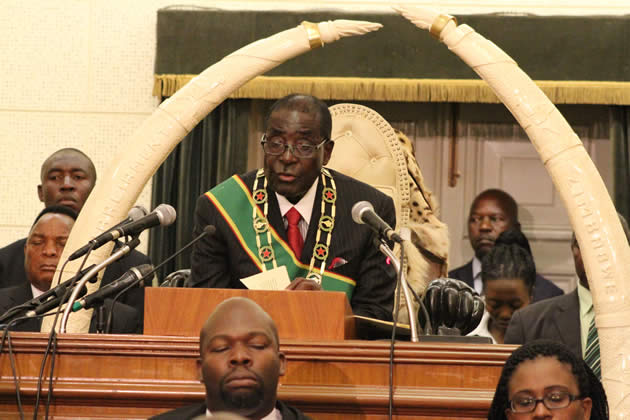
Kurai Prosper Masenyama
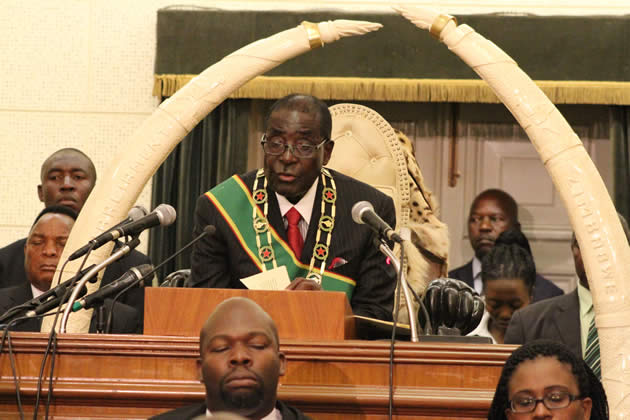
THE inauguration of Zimbabwe’s Eighth Parliament on Tuesday last week was historic. For the first time since 2000, Zanu-PF carries an overwhelming majority having thoroughly clobbered MDC-T in the harmonised elections. Thus, progressive Zimbabweans expect a smooth sailing of the legislative agenda as clearly articulated by His Excellency President Mugabe in his Opening Address to Parliament.
This expectation is heightened by the huge reduction in the numbers of MDC howlers and grumblers who slowed the passage of progressive laws during the lives of the past three Parliaments.
Among some of the most prominent issues highlighted by the President in his inauguration speech is the issue of indigenisation and economic empowerment with His Excellency clearly spelling out that “the implementation of indigenisation and empowerment laws is to be pursued with renewed vigour”.
This statement put to rest detractors’ arguments that the indigenisation and economic empowerment programme was a mere campaign tool meant to deliver votes to Zanu-PF which had no intention of implementing it.
It also dampens the misplaced hopes of people who expected Zanu-PF to adopt a softer stance or even use the Eighth Parliament to reverse the indigenisation and empowerment laws.
The President went on to lay out the indigenisation and economic empowerment legislative agenda for the new Parliament.
I unpack this agenda and give a broader understanding on what needs to be done by the August House and how it will benefit the broad majority of Zimbabwean citizens.
Firstly, the President noted that the Eighth Parliament will “review and strengthen” indigenisation and economic empowerment laws.
Thus, the August House has an obligation to strengthen and ring fence the Indigenisation and Economic Empowerment Act (Chapter 14:33) so that it should be beyond any reasonable doubt that it is the country’s guiding law as far as investment, trade and economic affairs are concerned.
Thus, besides strengthening the Act other pieces of legislation that contradict the Indigenisation and Economic Empowerment Act should be amended so that they can speak to the guiding Act.
A close analysis of the country’s laws reveals that at least 144 pieces of legislation are in disharmony with the indigenisation Act.
Thus, it is imperative that the starting point for Parliament would be to identify these laws and remove or amend sections that contradict the indigenisation laws.
Some of the laws that definitely need tweeking include the Zimbabwe Investment Act and acts to do with mining licensing, trade and retail licensing and private property ownership.
Secondly, the President indicated that the Government “should mainstream indigenisation and economic programmes”.
Thus, the indigenisation programme ceases to be a one-ministry project as happened when the MDC used to control other economic ministries in the now-defunct inclusive Government.
Each and every ministry in the economic sector should have a clear programme of action as far as the indigenisation of the sector is concerned.
For example, the Ministry of Energy should take the lead in identifying companies eligible for indigenisation in the sector and ensure their compliance in conjunction with the parent Ministry of Youth Development, Indigenisation and Empowerment.
Ministries of Tourism and Hospitality, Environment, Water and Climate, Agriculture, Mechanisation and Irrigation, Mines and Mining Development, Finance and so forth should follow suit.
And, here Parliament has to play a strict monitoring role to ensure various arms of Government facilitate the indigenisation of companies in their respective sectors and concurrently roll out economic empowerment programmes across portfolios.
Thirdly, His Excellency highlighted that the Eighth Parliament will legislate the set up of vehicles to capitalise and finance indigenisation and economic empowerment programmes.
This will be done through debate and consideration of Public Private Partnership and the Sovereign Wealth Fund Bills in the august house.
The long awaited National Indigenisation and Economic Empowerment Fund (NIEEF) “will be capitalised to give impetus to the implementation process”.
This move is very critical and decisive because the indigenisation of the country’s natural assets will only make sense to the common man and woman if some of the assets are converted into cash for the immediate benefit of Zimbabweans in terms of business project financing, agriculture financing and infrastructural development.
This is well articulated in the winning Zanu-PF Election manifesto which details the value of assets to be liquidated to fund key programmes such as small business development, agriculture development, infrastructural development and social service provision.
The President also used the address to allay civil servants fears that they might not benefit from indigenisation by announcing the establishment of the Zimbabwe Public Service Investment Trust which is “the primary vehicle by which members of the Public Service will collectively participate in the Government’s indigenisation and economic empowerment programme”.
The President further directed that “a monitoring and evaluation mechanism be put in place to ensure the proper management of Community Share Ownership Trusts (CSOTs)”.
With 59 CSOTs having been established and close to 10 having been officially launched by the President, receiving huge sums of money for development projects in the process, there is clear need for transparency in the activities of these trusts.
Thus, Parliament should play an effective oversight role in monitoring and evaluating the activities of the trusts in close collaboration with the Ministry of Youth Development, Indigenisation and Empowerment and the National Indigenisation and Economic Empowerment Board (NIEEB).
Complying companies should also be followed up on to ensure that they release funds to the CSOTs as per their original pledges.
The President hinted that “efforts to promote both domestic and foreign investment will be enhanced within the context of the country’s indigenisation and empowerment laws”.
Thus, our parliamentarians have another mandatory obligation to spread this message whenever they represent the country in representative institutions abroad. Hence, Zimbabweans will not expect the Indigenisation and Economic Empowerment Programme to be mauled during the Sadc parliamentary forum, in the African Union parliament or anywhere else where our representatives or ambassadors are present.
In the final analysis, the people of Zimbabwe have exercised their right to elect representatives of their choice into Parliament while the President has set a clear legislative agenda with indigenisation and empowerment aspects featuring prominently.
The ball is now in the court of the Eighth Parliament to deliver to a nation that is heavily pregnant with the empowerment expectation.
Kurai Prosper Masenyama is the Zanu-PF Director of Indigenisation and Economic Empowerment.


 Online Reporter