

 onlinemedia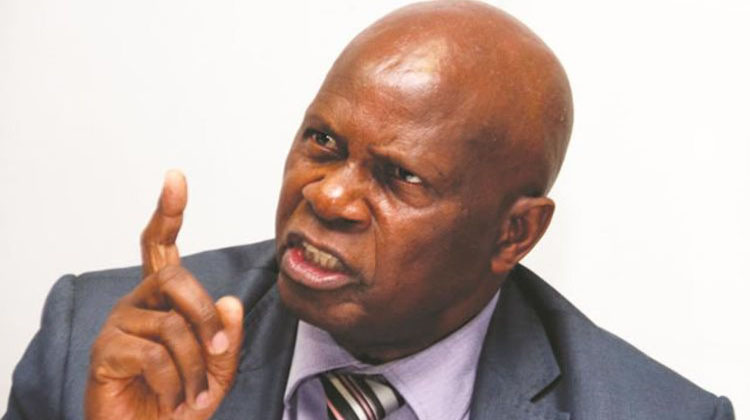
Joseph Madzimure
Zimpapers Politics Hub
ZANU-PF party organs are required to develop a strong culture of monitoring the implementation of resolutions passed at congresses or annual conferences to ensure people-centred policies are enacted, party treasurer-general Cde Patrick Chinamasa has said.
In an interview recently, Cde Chinamasa said this practice would allow the party to differentiate between performing and non-performing departments or ministries.
“This way, the party will be able to differentiate between performing and non-performing party departments or ministries and thus be in a position to hold to account non-performing Government departments or Ministries,” said Cde Chinamasa.
Cde Chinamasa said the party introduced a new format for drafting and presenting congress and conference resolutions, which was approved by the Politburo.
“The new format for the presentation and drafting of congress and conference resolutions requires party structures to track the implementation of congress resolutions and to report, in written form, the implementation status of such resolutions at each annual conference, to report, in written form, at congress the implementation status of preceding congress resolutions, to report at each annual conference the implementation status of the resolutions passed at the preceding conference,” Cde Chinamasa said.
He said for the above-stated reasons, Zanu-PF has every reason to boast that it is a people-centred organisation.
“Resolutions emanate and originate from the grassroots, bottom-up, making the leadership prisoners of the people in terms of the direction or decisions taken, once the people have pronounced themselves on a matter of importance,” he stated.
He clarified that resolution number 1 passed at the 21st annual national people’s conference held in Bulawayo is one such resolution that must receive the much needed attention and implementation.
“Resolution number 1 of the 22nd annual national people’s conference held in Mutare is requiring the secretary for legal affairs, who is also the Minister of Justice, Legal and Parliamentary Affairs, Cde Ziyambi (Ziyambi) through Cabinet and Parliament to implement the resolution by the time of the next conference to be held in October 2026 in Matabeleland South Province,” he said.
Under the Zanu-PF party Constitution (2022), it is obligatory for the party to hold national conferences annually and congresses every five years.
Resolutions passed at party conferences and congresses invariably, and as a matter of course, originate from the grassroots structures of the party, with the District Coordination Committees (DCCs) coordinating the process.
The grassroots structures of Zanu-PF involved in the formulation of resolutions include cells, branches, districts, and provinces, in that hierarchical order.
The department of legal affairs collates the resolutions as submitted by the provincial councils.
These are then distributed to relevant thematic committees of the annual conference or congress, as the case may be, for debate and approval.
At the 22nd annual people’s conference held in Mutare (October 13th-18th, 2025), a number of thematic committees were set up, among them- state of the party, state of the economy, provincial economies, environment and tourism; drug and substance abuse awareness, women’s affairs, youth affairs, empowerment and sports, war veterans, ex-political prisoners, detainees and restrictees affairs; and religion and culture.
The conference broke up into these thematic committees to discuss the resolutions collated by the national secretary for legal affairs.
The deliberations of the Thematic Committees are thereafter transmitted to an ad-hoc committee of conference chaired by the party’s national secretary for legal affairs, who then proceeds to read and present them to the plenary session of the conference for adoption.
Cde Chinamasa said resolutions typically fall into two categories for implementation; those concerning the party (to be implemented by the party) and those of a socio-economic and political nature (to be implemented by the Government).



 Online Reporter