Chronicle Editor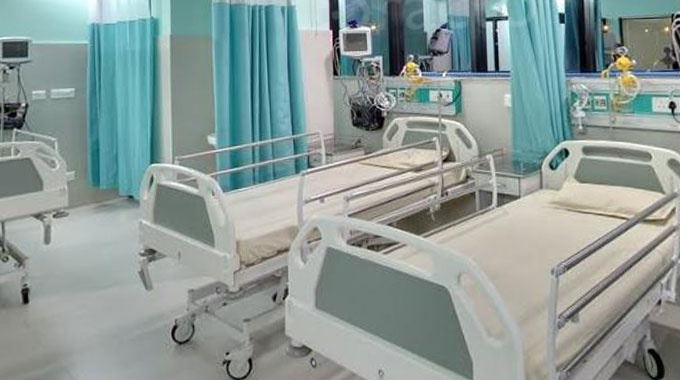
Andile Tshuma
Being sick can be a nightmare, and a hospital stay may leave you feeling better or could depress you and worsen your condition.
Before any medication is administered, the hospital or any other healthcare facility environment should kick start the healing process.
A hospital must be a place of hope, it should be clean and have cheerful health staff.
Some of our public hospitals and clinics have for years been known to offer less than quality care for patients, some patients have told of hospital ordeals that sound like scripts from horror movies.
When a healthcare facility becomes a place of doom and gloom, the recovery journey of a patient is not very promising.
I have heard of many horror stories from people who received nightmarish treatment from our public hospitals here in Bulawayo and around the country. Private hospitals are found at fault too, sometimes, but I am more concerned about the public hospitals where the majority of Zimbabweans seek health services.
It is sad that some of the horror stories I have heard ended up in death. Imagine a family losing a loved one because someone did a shoddy job of their work. It’s not fair at all.
It is however also equally important that medical staff are happy at their work stations, are well remunerated and the working environment enables them to give good service.
I remember in 2017 when First Lady Amai Auxilia Mnangagwa paid surprise visits to Mpilo Central Hospital and United Bulawayo Hospitals (UBH) to assess how the personnel at the health institutions relate with patients, the maintenance of the hospitals as well as the challenges they were facing.
This publication covered the visit and the First Lady’s findings showed that there was a lot that both hospitals were doing wrong and had to improve in terms of relations with patients, among other areas.
Nurses at the two hospitals were caught unawares making it easy for the First Lady to experience what the patients go through when seeking treatment at the health institutions.
At one of the hospitals, the nurses attending to her told her that there were no cards at the hospital and wrote her details on a piece of paper and asked her in a rude manner if she had the money to pay for the services.
The First Lady called for change and improvement in the attitude and treatment given to patients.
Healthcare institutions in the country should effectively monitor patient experiences in order to evaluate and improve the quality of care.
Because nurses spend a lot of time with patients, they have a major impact on patient experiences. To improve patient experiences of the quality of care, nurses need to know what factors within the nursing work environment are of influence to the patient.
In many countries throughout the world, patient experiences are being monitored in order to obtain information about the delivery and quality of healthcare, which helps improve service delivery.
Patient experiences of what actually happened during the care process can provide information about the performance of healthcare workers.
Governments must implement a national performance framework for comparing the quality of healthcare.
Because nurses spend a lot of time with patients, they affect patient experiences of care.
Health care facilities should also present conducive environments for health staff and in our Zimbabwean context, patients have suffered due to industrial action by health staff, stemming from unfavourable work conditions.
A healthy work environment fosters a climate in which nurses and doctors are challenged to use their expertise, skills and clinical knowledge. Furthermore, medical staff who work in such an environment are encouraged to provide patients with excellent health care.
Social skills are also an important competency to create a trustful care relationship.
Correct behaviour and attitude, composure, making time for patients, listening and having empathy are some of the essential competencies required from health care givers. Nurses must have the ability to develop and maintain good relationships with patients.
For instance, nurses must be able to deal with elderly patients and be able to speak a number of local languages. Imagine the communication breakdown at a district hospital in Lupane or elsewhere, and the only common language is English, which the patient cannot understand. Both the patient and the caregiver will be frustrated at the end of the day.
For patients, nursing care is about being heard and seen. Knowing that you’re in safe hands. You allay their fear and uncertainty. You give patients confidence and hope in return. You offer them several options from which they can choose.
Prioritisation of the patient is very important. Patients sometimes have to wait for help. If health care givers are in a hasty mood, they can transmit that feeling to patients. It shows immediately and the restlessness affects the other patients.
The number of nurses available influences how patients experience the quality of care. Hospital wards should be adequately staffed so that patients do not have to wait long for attention, and also so that hospital staff are not overwhelmed with work to a point that they are not able to deliver the best in terms of quality of service to the patient.
Our government through the Ministry of Health and Child Care is trying, but more can be done to ensure that patients are comfortable, and there are enough doctors and nurses in hospital. The management at our hospitals must work to make sure that their institutions are always clean to create a conducive environment for patients and visitors.
Public health institutions should improve their relations with members of the public and treat patients with dignity as that is part of their mandate, because the road to healing begins with the attitude of staff and the general hospital environment.
What has been your experience at local hospitals or clinics? Share your thoughts on [email protected] or via Twitter @andile_tshuma or WhatsApp 0778 502 449.



 Online Reporter