

 Online Reporter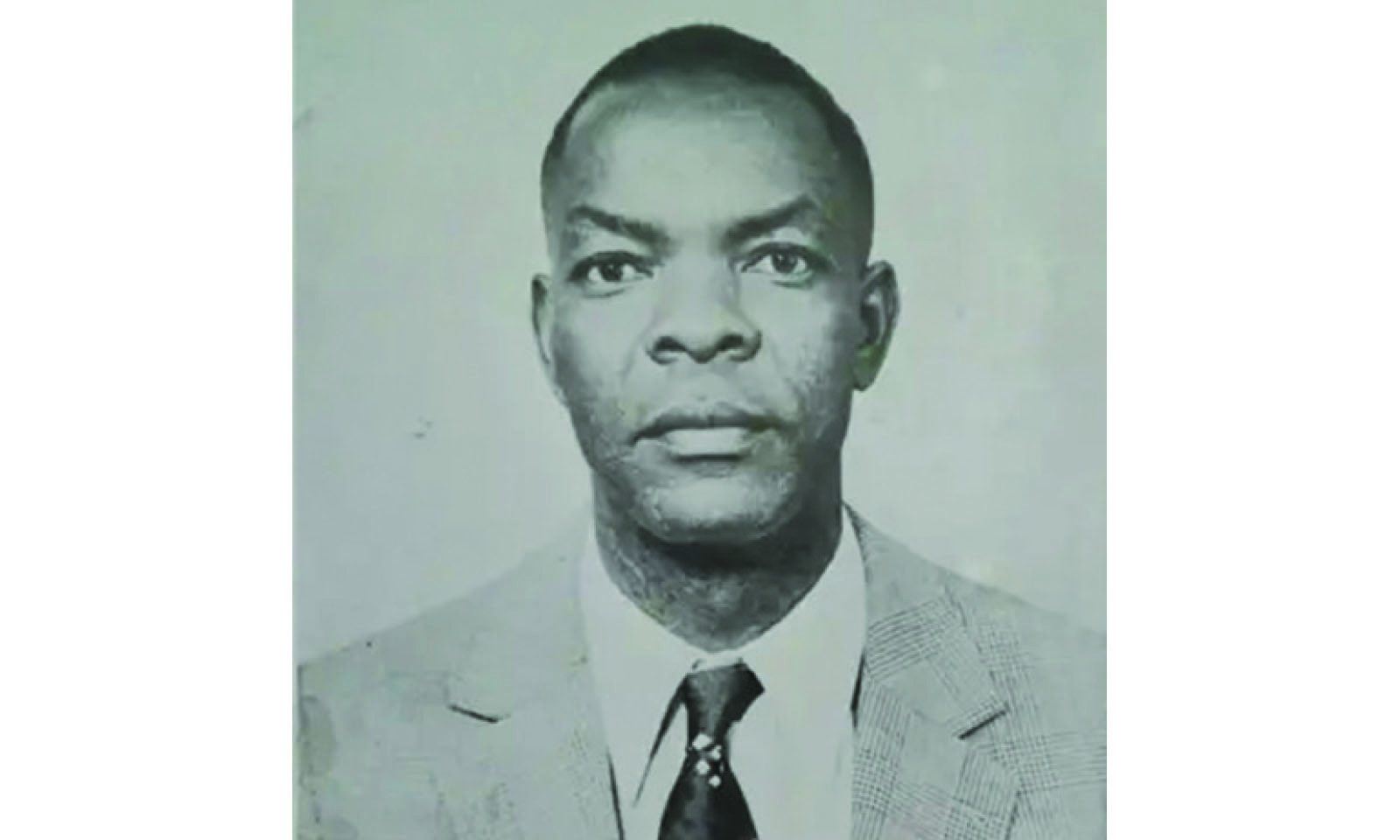
Aaron Chiundura Moyo
I WORKED with the late Dr Paul Chidyausiku, who died on May 9, aged 98, on a number of projects, and he edited my second novel “Ziva Kwawakabva” in 1976.
I had failed to meet him in person the first time I visited Mambo Press in Senga, Gweru while attending Mambo Primary School in 1970.
I had gone there as an aspiring writer, with the rejection report of my first manuscript titled “Sarayi Mugarike” in hand. That year, our schoolteacher, Mr Lovemore Dangare, had read to us Paul Chidyausiku’s latest publication, a novel titled “Karumekangu”, which was hot in Gweru those days.
My intention was to see him as the Chief Editor, so that he could explain why he rejected my book, which all teachers and learners at my school, who had listened to Mbambi reading a chapter or two from, rated it one of the best!
Yes, I was holding the report in my shivering hand, but I did not understand what it all meant. All I expected then was an acceptance report.
At the reception, I told them the reasons why I wanted to see VaChidyausiku, while handing one of them the poor report.
One guy took it and silently scanned the signature of the person who had assessed the manuscript, and then disappeared. Later, he led me into an office I thought was Paul Chidyausiku’s, and left me standing near a chair not far from the desk behind which a smiling gentleman buried himself in.
That was not Paul Chidyausiku as I had anticipated. I was now sitting face-to-face with the great poet and novelist, whose new novel “Maidei”, was about to come out that year— Mordekai Hamutyinei.
This is how I was denied the opportunity of seeing Paul Chidyausiku in person for the first time.
Frankly speaking, it was not my idea to approach Mambo Press, especially, Chidyausiku, the Chief Editor.
There was this Ascot Secondary School pupil, who always accompanied his visually-impaired father whenever he was not at school, who advised me to go there after reading the rejection report.
This guy had much interest in my writings, and had introduced himself to me, letting me know how he came to know me then. If he is still alive, may God bless him, for I have just remembered him while writing this article.
I finally met and sat face-to-face with the great writer, Paul Chidyausiku, at the Rhodesia Literature Bureau in 1976.
I had gone there to collect drama scripts for the educational programme, “Kudzidza Hakuperi” for recording at the AVS Studios, where some of the technical producers were the likes of M Skhosana, Jane Easua, and Rebecca Chisamba.
As I was seated on the bench in the reception room, this tall, handsome, well-built, and meek gentleman approached me, and invited me into his office. He offered me a seat and we sat facing each other.
Little did I know that the dream lost in Gweru at Mambo Press was now coming to pass. And, I am realising it now as I type.
The softspoken and quiet gentleman introduced himself as Paul Chidyausiku.
I do not remember how I reacted. All I still know is that he pulled a hard-covered exercise book, which he put not far from the typed manuscript he was working on, though there was no typewriter on his desk.
I stealthily peeped into the hard-covered exercise book and noticed that it was my “Ziva Kwawakabva” manuscript I had entered for the 1976 Rhodesia Literature Bureau competition and won first prize.
Now, what was this all about!
Had these people made a mistake and awarded me a prize meant for a different author? Are they going to demand back the prize money, half of which I had put pamupinyi (squandered), by now! I just wondered, and felt pain in my heart.
I breathed a sigh of relief after Chidyausiku calmly remarked, “Aaron, Makorokoto, you are a good writer. I am editing your book “Ziva Kwawakabva” as we speak. “There are a few errors you make as writers, which we correct as editors as is the norm. Come closer, so that I read for you an unedited passage for you to understand.” I drew closer, and he read a paragraph, before saying, “Zvawakanyora kubvira apa kusvika apa, zvose zvakanakisa.
“Asi mitsetse iyi miviri inegudzaromo sezvo kusina munhu anoita zvakadai mukurarama. Hazvidi panyaya iri serious seyako iyi, nekuti nyaya yose inozoita kunge yedambe. Saka ndinozvikanzura zvose kubvira apa, kusvika apa.”
I learnt my lesson well from the great writer and editor. Up to this day, I use exaggerations where they are due in my works, and avoid them where they are not needed by the plot.
In the mid-80s, I met him again when he was now working for Zimpapers. He asked me to accompany him to his office because he was now editing a newspaper published in Shona, which he named Kwayedza.
He asked me to contribute some stories.
I chickened out. But he gave me some hints, and I ended up contributing for cash. I kept on doing this, and stopped after joining ZBC Radio 2, where him and O Chiromo, a guru in Shona literature, were now resource persons for a poetry programme, produced by others, and not me then.
This is how we kept in touch.
Later on, when I took over traditional programmes, like Kuyaruka and Tsika Dzedu, when Dr Paul Chidyausiku had retired, and was staying at his plot in Seke next to the late Chiromo’s, it was now my duty to invite him, not because I knew him, but that he was best suited for such a big task. In all my life, I am yet to come across a man of high status as humble as Dr Paul Chidyausiku was. I am happy that he left us at the age of 98. I am also glad that he left behind many books for readers to keep on negotiating meanings as they discuss with him through his works of art.



