malvernmugadzikwa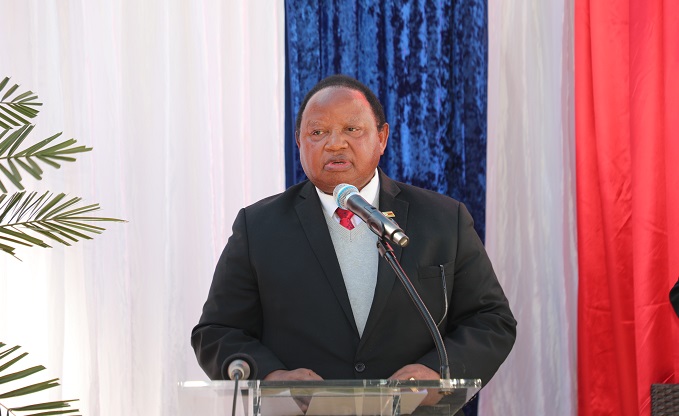
HOSTING the 44th SADC Heads of State and Government, and assuming the chairmanship of the regional bloc in August will mark a significant milestone in the country’s engagement and re-engagement drive. The Sunday Mail’s DEBRA MATABVU recently spoke to Foreign Affairs and International Trade Minister AMBASSADOR FREDERICK SHAVA, who shared insights on Zimbabwe’s strategic priorities, significance of this leadership position, as well as the country’s ongoing charm offensive. This week we publish the first part of the wide-ranging interview.
************
Q: The past six years have seen the Second Republic aggressively pursue the engagement and re-engagement agenda. What is your assessment of the efficacy of this drive in pursuit of Zimbabwe’s national interest?
A: During his inaugural address, President Emmerson Dambudzo Mnangagwa highlighted the following as constituent elements of Zimbabwe’s diplomatic pursuits:
That Zimbabwe would be a friend to all and an enemy to none; and
That Zimbabwe would pursue a policy of reaffirmation, engagement and re-engagement.
This meant reaffirming and further strengthening already long-standing relationships with “all-weather” friends.
Rebuilding relationships with all Western countries and institutions that wish to re-engage with Zimbabwe; and actively seeking engagement with countries with which Zimbabwe has previously had little or no engagement. Above all, that Zimbabwe is open for business. It would have, therefore, been remiss of me to deal with just the two elements you highlighted in your question and not contextualise where our engagement and re-engagement thrust is situated.
The engagement and re-engagement agenda by the Second Republic has yielded positive results in helping the country to rightfully reclaim its position in the community of nations, as well as playing a crucial role in advancing economic diplomacy.
The engagement and re-engagement drive has resulted in the thawing of strained relations. When the Second Republic took office in 2017, Zimbabwe was still reeling from the effects of decades-long sanctions imposed by Western countries.
These sanctions had affected the economy, costing the country over US$42 billion in lost revenue. However, through rigorous diplomatic efforts, we have been able to secure the partial lifting of these sanctions by the European Union (EU).
This has opened the door for Zimbabwe to re-engage with traditional partners while engaging in new partnerships, thereby enabling some access, though limited, to the much-needed development assistance and investment. The nomination of Zimbabwe to host the Nordic-Africa Foreign Ministers Meeting in 2025 is testimony that Zimbabwe has been successfully readmitted into the community of nations.
The invitation extended to Zimbabwe to participate in the 2022 US-Africa Leaders’ Summit was a significant milestone, signalling the thawing of relations with the United States.
Similarly, the ongoing political dialogue with the EU, under Article 8 of the Cotonou Partnership Agreement, has been a step forward. These developments demonstrate the success of our re-engagement strategy and the international community’s growing recognition of Zimbabwe’s positive role.
The Second Republic has also witnessed the strengthening of regional and global partnerships. In similar efforts to mend ties with the West, the Second Republic has worked tirelessly to strengthen Zimbabwe’s relationships with regional and global partners.
Our “Look East” policy has deepened cooperation with countries like China and Russia, which have provided essential economic and political support. At the same time, we have actively participated in regional bodies such as the Southern African Development Community (SADC) and the African Union (AU), advocating a “regional renaissance” and promoting the “Zimbabwe brand”.
Zimbabwe will host the SADC Summit in August this year. As the incoming chair of SADC, Zimbabwe reaffirms its pivotal role in fostering economic growth, good governance and the promotion of peace within the regional community and in furthering the bloc’s regional integration goal, in line with Agenda 2063 of the African Union.
The appointment of former Mozambican President, Joaquim Chissano, to lead a group working to end Zimbabwe’s protracted standoff with its creditors is a testament to our commitment to resolving longstanding economic challenges through dialogue and cooperation.
This initiative, coupled with our efforts to improve export performance and implement domestic reforms, is laying the groundwork for sustainable economic growth and development.
Q: Clearly, this drive has seen Zimbabwe reposition itself in the global community of nations. How has this helped prop up Zimbabwe’s global standing?
A: As I have pointed out earlier, Zimbabwe’s engagement and re-engagement drive under the leadership of His Excellency, President Mnangagwa, has had a significant positive impact on the country’s global standing.
Here are some of the key ways this has been achieved:
Increased international presence and partnerships
Zimbabwe’s re-engagement drive has resulted in the country’s increased participation and presence at major international events such as trade fairs and investment conferences. There has been a growing number of delegations visiting Zimbabwe from across the world, exploring new economic partnerships.
This has helped showcase Zimbabwe’s economic potential and the positive changes taking place under the Second Republic.
Progress towards rejoining the Commonwealth
We have made significant progress in our efforts to rejoin the Commonwealth.
Through sustained diplomatic engagement, there has been some positive disposition from the Commonwealth, with several member states now openly supporting Zimbabwe’s reintegration and the positive role it can play therein. You will recall that we had an assessment mission that visited the country in November 2022.
Dialogue on rejoining the Commonwealth continues and we are optimistic of a major diplomatic victory, which will open up new frontiers for cooperation.
Partial removal of sanctions
After constructive dialogue and noting progress on political and economic reforms, the EU lifted sanctions on several Zimbabwean entities and individuals. We, however, continue to push for the total and unconditional removal of the remaining sanctions on the Zimbabwe Defence Industries, as we have done in the past, and we commend the support we have received from the region and beyond towards that end.
As we continue on this path of engagement and re-engagement, we are forging ahead with our diplomatic efforts to strengthen Zimbabwe’s position on the global stage in order to realise our vision of becoming an upper middle-income society by 2030.
Q: Zimbabwe will be taking over as SADC chair later this year. Of what significance is this development regarding the country’s foreign policy?
A: The assumption of the SADC chairmanship by Zimbabwe, under the leadership of His Excellency, President Mnangagwa, provides the country with a unique opportunity to lead the ongoing efforts to deepen regional cooperation and integration.
The election of Zimbabwe as chair of SADC is also testimony of the region’s confidence in the country owing to the reaffirmation and engagement initiatives by the Second Republic. The assumption of the SADC chairmanship by Zimbabwe is of significance as it provides the greatest opportunity for championing the country’s foreign policy and, indeed, that of the SADC region as well.
The fundamental principles of preserving the legacy of the region’s forebearers; self-determination; adherence to the principle of national sovereignty; respect for territorial integrity of all countries; belief in non-interference in the internal affairs of other states and the ideals of sustainable economic development form the bedrock of Zimbabwe’s national interests and its foreign policy priorities, which shape its association with the SADC region and beyond.
Q: Which specific areas of the SADC agenda will Zimbabwe prioritise when the country takes over the chairmanship of the regional body?
A: Zimbabwe is a country that strongly believes in the power of regional integration as a driving force for sustainable socio-economic development. Chairing the regional bloc is an important duty which the Government of Zimbabwe is committed to discharge with diligence.
Zimbabwe’s priorities
As incoming chair, Zimbabwe’s priorities for the regional agenda are premised on the region’s various policies, strategies and development plans, including the SADC Declaration Treaty and the SADC Regional Indicative Strategic Development Plan 2020-2030.
The country is also guided by its foreign policy objectives laid out in the Constitution of Zimbabwe and its development blueprint — Vision 2030. The overarching foreign policy objectives of Zimbabwe in the Second Republic are reaffirmation, engagement and re-engagement with the international community.
Zimbabwe’s priorities are summarised below:
- Promotion of peace, security and good governance. Central to Zimbabwe’s foreign policy as both a sovereign nation and member state of the SADC regional grouping is its commitment to contribute to the maintenance of sustainable peace, security and democratic governance in the region. Zimbabwe believes that peace, security and political stability are essential ingredients for socio-economic development. The country has played a pivotal role in SADC’s regional efforts towards resolving the security challenges in the eastern parts of the DRC and in Mozambique. During our tenure as SADC chair, the maintenance of peace and stability in the region will be our top priority and, of course, we will work very closely with the chairperson of the SADC Organ on Politics, Defence and Security, who, at that time, will be the President of the United Republic of Tanzania.
- The country will also actively participate in regional efforts aimed at entrenching the ethos of democracy and good governance in the region. In that regard, the country always deploys personnel to SADC Election Observation Missions to ensure that elections are held as required by the SADC guidelines on the holding of polls. This year, it is expected that observers would be dispatched for the elections in Botswana, Namibia, Mozambique and Madagascar.
- Championing economic integration is also one of Zimbabwe’s top priorities as both a member state and incoming chair of SADC. The regional industrialisation agenda will be one of the important documents that will guide Zimbabwe throughout the tenure of its chairmanship. This is reflected in the theme that Zimbabwe has adopted for the summit: “Promoting Innovation to Unlock Opportunities for Sustained Economic Growth and Development Towards an Industrialised SADC”.
- In line with the mantra “Zimbabwe is Open for Business”, the Government of Zimbabwe is determined to partner all its regional counterparts in enhancing cross-border trade and investment within the SADC region, as well as taking advantage of the African Continental Free Trade Area (AfCFTA) agreement. The hallmark of this whole process is to eradicate poverty and improve the quality of life of the Zimbabwean people and the entire population of Southern Africa.
- As chair, Zimbabwe will promote the growth of an inclusive private sector in the region and also stimulate robust strategies and business environments that attract more investments into the region.
Building upon the efforts made by the region over the past years, Zimbabwe will continue to encourage innovation, promote connectivity and enhance sustainable development and equitable and inclusive growth so that no one and no place is left behind.
To be continued next week


 Online Reporter