Online Reporter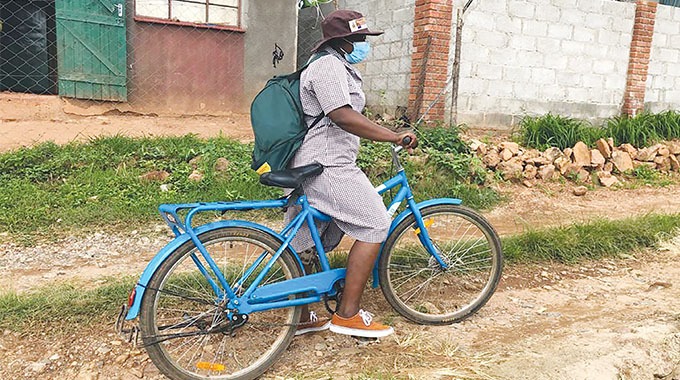
Lungelo Ndhlovu, [email protected]
IN Zimbabwe’s dry Hwange District of Matabeleland North province, where water scarcity is a regular occurrence, a local hero is changing lives one bicycle at a time.
Mr Edward Ndlovu, a trained borehole minder, ensures that his community in Hwange has access to clean, potable water. His job, however, involves covering vast distances, sometimes travelling up to 20 kilometres a day to repair broken-down boreholes scattered across the area.
“I receive calls from the community about borehole problems,” said Mr Ndlovu as he recalled the challenges he once encountered. “Before, I couldn’t attend to all the reported cases in a single day due to the vast distances. The difficulty was made worse by the absence of a US$1 kombi fare,” he said.
However, Mr Ndlovu’s situation changed when he received a Buffalo bicycle through the Mobilised Communities programme. The Buffalo bicycle, purpose-built by World Bicycle Relief (WBR), is robust enough to handle Africa’s difficult terrain, ensuring that individuals like Mr Ndlovu can move swiftly and efficiently. It features a comfortable seat, a heavy-duty chain guard, and a steel frame that can endure the rugged roads of rural communities.
“Now, I can move quickly between sites, respond faster to repair needs, and still have time to support my family at home,” Mr Ndlovu explained.
“For the community, it means more boreholes will be operational, and I can oversee and assist teams more efficiently.”
The impact of a simple bicycle on Mr Ndlovu’s ability to do his work highlights the profound effect that mobility can have on productivity and service delivery, especially in rural Africa where distances and lack of infrastructure are major barriers to development.
Mr Ndlovu’s work is crucial because access to water is fundamental to health and well-being. With his Buffalo bicycle, the speed and efficiency with which he can address community water needs have drastically improved, ensuring that many more families have a reliable source of water.
Buffalo bicycles, distributed through World Bicycle Relief’s programmes, are making a similar impact across the continent, helping communities overcome the barriers of mobility poverty. These bikes are not just tools for transportation, they are symbols of empowerment and opportunity.
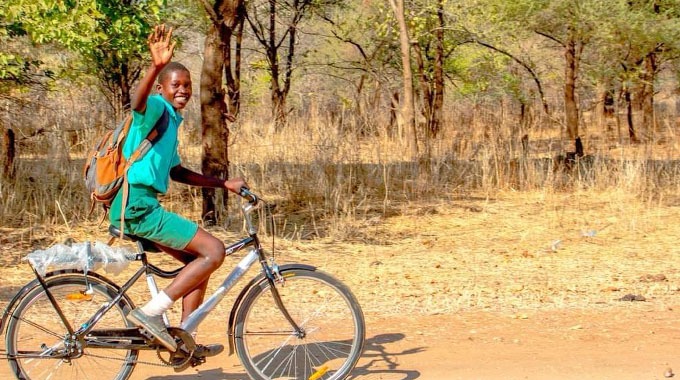
Smile, a 14-year-old student from Sizinda Secondary School in Bulawayo, is another beneficiary whose life has been positively impacted by the bicycle. Before she received her Buffalo bicycle, Smile walked four kilometres each day to get to school, often arriving exhausted. This left her with little energy to focus on her studies, and sometimes, she would arrive late.
“The bicycle has helped me get to school faster and on time. When I received it, I was so excited. Now, I can reach school before lessons start. I dream that other children can also get bicycles so they, too, can overcome the challenge of distance and attend school every day,” she said.
Smile’s story is another example of how something as simple as a bicycle can have a serious impact on educational outcomes. With her bicycle, Smile is now able to attend school more consistently, enabling her to focus on her studies without the physical strain and time loss associated with walking long distances. The bicycle has not only improved her quality of life but has also instilled in her a sense of hope for the future.
Nomsa, a student from Chivi District, Masvingo province, shares a similar sentiment. Before receiving his Buffalo bicycle through the Bicycle for Education Empowerment Programme (BEEP) supported by World Bicycle Relief, Nomsa struggled to keep up with his studies due to the long distances he had to walk to school. The bicycle has allowed him to attend school more regularly, making him more motivated to succeed in his education.
“The bicycle helps me get to school faster every day. I am not as tired as I used to be when I was at primary school. With the support I get from BEEP, I want to be a doctor,” he said.
Nomsa’s story highlights the ripple effect of providing a means of transportation. For children like Smile and Nomsa, access to a bicycle doesn’t just mean faster transportation, it represents an opportunity for a brighter future, where education can be accessed without the daily challenge of long, exhausting walks.
Ms Maureen Kolenyo, World Bicycle Relief’s regional director for East Africa, explains that mobility poverty is a growing issue in rural Africa, where inadequate transportation infrastructure often prevents people from accessing essential services such as education, healthcare, and markets. This lack of mobility is especially burdensome for women and girls, who often face societal and cultural barriers that restrict their ability to travel.
“As World Bicycle Relief, we are a non-profit social enterprise that provides purpose-built bicycles in rural and underserved communities to tackle this issue head-on,” said Ms Kolenyo in an interview.
World Bicycle Relief has partnered with organisations such as Unicef, USAID, and Amref to distribute customised Buffalo bicycles across 21 African countries, including Kenya, Malawi, Uganda, Zambia, Zimbabwe, and Tanzania. Through these partnerships, WBR has provided over 875 000 bicycles, directly mobilising an estimated 4,25 million people. The bikes are designed to handle difficult terrain, carry heavy loads, and last for many years, making them ideal for rural communities in Africa.
Ms Kolenyo said the majority of bicycles (70 percent) are provided to women and girls, helping to reduce the gender gap in mobility. These bicycles, designed to carry loads of up to 100 kilogrammes, have been specially crafted to meet the needs of rural communities, where resources are often scarce. For women, bicycles are not only a means of transportation but also tools of empowerment that allow them to access markets, healthcare, and education, critical services that are often located far from their homes.
“The bicycle is a game-changer for women and girls. It helps them overcome traditional mobility barriers, giving them the freedom to engage in economic activities, improve their health, and access educational opportunities,” Ms Kolenyo added.
Over the last 18 years, World Bicycle Relief has refined the design of the buffalo bicycle based on feedback from the communities it serves. The result is a sturdy, reliable bike that meets the specific needs of rural Africans. The large frame accommodates both men and women, and the bikes are equipped to carry heavy loads. This design flexibility allows schoolchildren to carry siblings on the bike’s rear rack, ensuring that families can travel together when necessary.
“The Buffalo bicycle is designed to be suitable for purpose. It can cater to all three platforms we care about: mobility, productivity, and empowerment. Whether you are carrying water, going to school, or delivering healthcare, the bike is built to endure.”
For many Africans living in rural communities, a bicycle isn’t just a mode of transport, it’s a lifeline.
Whether it’s helping Mr Ndlovu repair vital water sources, allowing Smile to attend school without exhaustion, or enabling Nomsa to fulfil his dreams of becoming a doctor, the Buffalo bicycle is transforming lives and building more resilient communities.
As World Bicycle Relief continues to distribute bicycles and train local mechanics, the impact of the Buffalo bicycle will continue to be felt across Africa. In the words of Ms Kolenyo, “A bicycle is not just a mode of transport, it’s a pathway to a brighter future, one pedal at a time.”