Online Reporter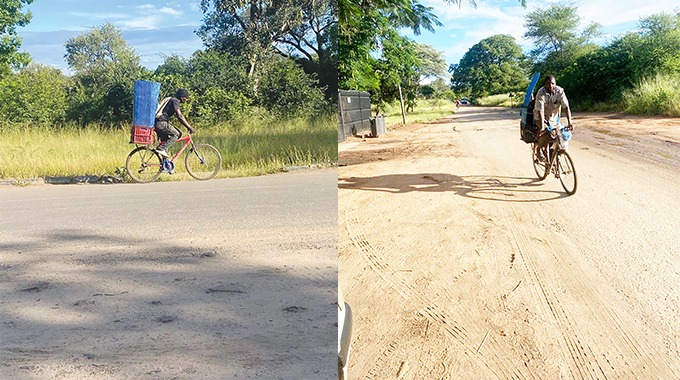
Rutendo Nyeve, [email protected]
IT is a common sight that competes with the spray of the mighty Victoria Falls itself.
As tourists tilt their heads to admire the rising mist of the majestic Victoria Falls, or pause to frame the colonial elegance of the Victoria Falls Hotel against the gorge, another spectacle labours quietly down the hill towards the rainforest entrance.
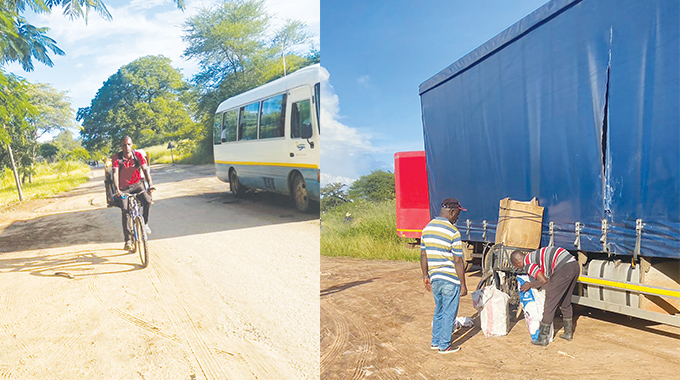
Bent low over handlebars, bicycles groan under towering loads of cargo — 50kg bags of sugar, cartons of cooking oil, crates of soft drinks and bundles of second-hand clothes stacked so high the rider is almost swallowed by the merchandise.
Locals and visitors instinctively step aside on the narrow roads, offering smiles and nods to the men pedalling against gravity.
“Muzanga! Muzanga, wakadini? (Friend, how are you?),” they call out cheerfully.
These are the cross-border bicycle traders of Livingstone, Zambia, affectionately known in Zimbabwe as Muzanga — a Zambian word for “friend” that has become both their trademark greeting and their business philosophy.
For these small-scale traders navigating the 15 kilometres between Livingstone and Victoria Falls, the word is more than a sales pitch. It is a declaration of kinship in a region where borders are lines on paper, but relationships run deeper than the gorge carved by the Zambezi.
Before dawn breaks and before the mist lifts from the Zambezi River, the Muzangas leave their homes in Ngwenya, Maramba, Libuyu and the sprawling Dambwa suburbs.
Armed with special border passes that allow them swift movement through the Victoria Falls Border Post, they begin a daily journey that defies physics and fuels two local economies.
Zimpapers caught up with Paul Fred as he loaded his wares at Comesa Market.
“This bicycle is our office,” he said, patting a steel frame burdened with nearly 300 kilogrammes of goods.
“We carry between 250kg and 300kg. From Zambia, we usually bring drinks, biscuits, sweets, groundnuts and fresh vegetables into Zimbabwe.”
The bicycles, reinforced with welded carriers and thick spokes, are engineered for endurance. The traders pedal in disciplined silence uphill, often walking beside their bikes on steeper slopes. What appears impossible becomes routine.
But like the river that powers the Falls, the currents of commerce are constantly shifting.
Recent fluctuations between the Zambian Kwacha and the United States Dollar have altered the arithmetic of survival. Morris Kaniki, another trader, explained the delicate balance.
“At the moment, the Kwacha has gained against the US dollar. The rate was US$1 to 23 Kwacha, now it is US$1 to 18,” he said.
Such changes may seem abstract to economists, but to the Muzangas they determine what goes onto the bicycle each morning.
“What is profitable for us now is to buy soup, sugar and cooking oil here in Zimbabwe and sell in Zambia,” said Kaniki.
The direction of trade has reversed. Bicycles that once carried Zambian goods south now strain under Zimbabwean basics heading north. Profit margins are slim and every exchange rate fluctuation matters. The Muzangas calculate as carefully as they pedal.
To the casual observer, the border between Zimbabwe and Zambia may appear as a formal checkpoint along the Zambezi. To the Muzangas, it is little more than a pause in a continuous community.
The people of Victoria Falls and Livingstone share more than proximity. Tonga, Nambya, Chichewa, Nyanja and English flow seamlessly across market stalls. Families stretch across both towns. Weddings, funerals and festivals ignore the river’s divide. The thunder of the Falls is a shared soundtrack.
The recent introduction of a 24-hour border post has further eased their hustle.
“We don’t have to rush for closure anymore. If we are late, we are late. The border is open. We can rest and cycle safely,” said Fred.
For traders who once raced against sunset to avoid being stranded, the change is transformative. It means fewer accidents, more flexibility and the ability to plan their day without panic.
Tourists may remember the spray of the Falls, the wildlife crossings or the grandeur of historic hotels. But for residents, the Muzangas are just as iconic.
They are the quiet engine of informal trade, supplying affordable goods, stabilising shortages and cushioning households against economic turbulence.