Online Reporter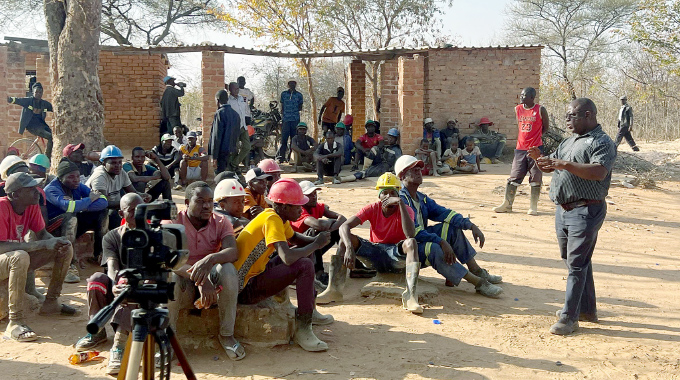
Sukulwenkosi Dube-Matutu, [email protected]
MALE engagement and peer education programmes introduced by the National Aids Council (NAC) are producing encouraging results in the Midlands Province, with small-scale miners increasingly accessing HIV and Aids-related services.
The interventions involve training peer educators to mentor fellow artisanal miners, promoting responsible behaviour, HIV testing and adherence to treatment. Given that mining areas are HIV hotspots and attract large numbers of sex workers, NAC’s initiatives are regarded as vital in reducing new infections.
At Amo Mine in Gokwe South, peer educator Mr Edmore Mutamba leads weekly sessions with around 60 miners.
“We are like a family here. When some of our peers come into money, they may be tempted to engage in risky behaviour, so we encourage them to act responsibly and use protection,” he said.
Mr Mutamba noted that while condoms are distributed at the mine, there is an urgent need for more HIV testing kits to improve access to services.
“Our peers are eager to know their status, but testing kits are not always available. We also emphasise the importance of seeking medical assistance and adhering to ARV treatment,” he said.
Another peer educator, Mr Alexander Dube, said their sessions also address non-communicable diseases, reflecting the broader health risks faced by miners.
A miner, Mr Munyaradzi Mashava, shared how attitudes have shifted.
“Unlike before, I’m no longer afraid to get tested. Knowing your status helps you live a healthier lifestyle,” he said.
NAC Midlands Provincial Manager, Mr Mambewu Shumba, said peer education and male engagement are helping to promote safer practices among miners.
“We have 275 health facilities in the province, and they all offer HIV-related services. As a province, we continue to implement initiatives targeted at HIV prevention, among them male engagement and peer education.
“These platforms, which focus on miners, aim to promote responsible behaviours among artisanal miners,” he said.
Gokwe South District Aids Co-ordinator, Mr Isaki Chiwara, said STI infections remain high in mining areas, with some local health facilities struggling to manage the number of new cases.
The district has nine peer educators working in mining communities, and the engagement platforms also address related issues such as gender-based violence.
According to NAC, HIV prevalence in Midlands Province stands at 7,5 percent across all age groups, but rises to 10,9 percent among adults aged 15-49.
Districts such as Zvishavane (16.3 percent), Shurugwi (14,6 percent), and Mberengwa (13 percent) have some of the highest prevalence rates, while Gokwe North (5,8 percent) has the lowest.
Overall ART coverage in the province is approximately 90 percent, although children lag behind at 61 percent compared to 91 percent among adults. — @DubeMatutu