Chronicle Editor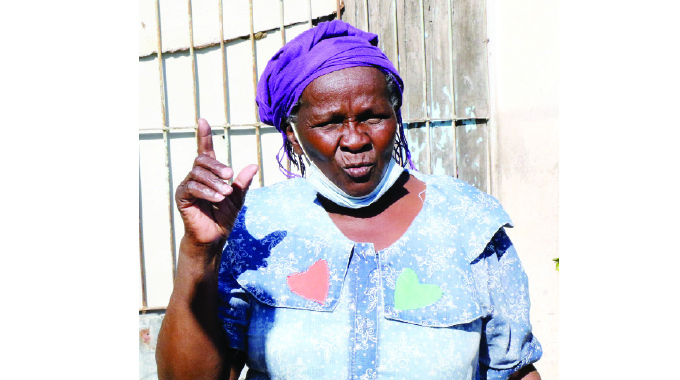
Nqobile Tshili, Chronicle Reporter
EVEN in her youth Ms Peddiah Sibindi (75) from Pelandaba suburb was not mistaken about the influence that Father Zimbabwe, late national hero and Vice President, Dr Joshua Nkomo (pictured), had in liberating the country.
Ms Sibindi who resides just two houses away from Dr Nkomo’s in Pelandaba, which has since been turned into a National Museum, recounts the several times when Father Zimbabwe was at home.
A Chronicle news crew yesterday caught up with Ms Sibindi and her younger sister Ms Penninah Sibindi (72), who are some of the remaining close neighbours of the late liberation icon.
She said whenever the iconic figure was home revolutionary songs would be sung while Father Zimbabwe would sometimes land a helicopter at Induba Primary School.
The school is adjacent to Dr Nkomo’s house in Pelandaba suburb.
“The first time I got to know about Dr Nkomo was in the 1960s and I was still young then.
He was not always home but whenever he was home everything would change within the community.
Liberation songs would be sung while scores of people would gather at his home.
Some people would be wearing traditional gear and singing the song OkaMqabuko Sikhomandele (Lead us Mqabuko) while others would sing Zii,” recounted Ms Sibindi.
She said Dr Nkomo would wave at the crowds before going into his home where he would meet with various groups.
Ms Sibindi said even children were given an opportunity to greet the charismatic liberation icon, who would shake hands with anyone who would have visited him.
“But my fondest memory is when he would visit my father who was a carpenter.
He was so humble and he would assign my father to fix some of his broken chairs.
One of our neighbours was a builder so whenever there were any renovations he needed to be done, he would invite that builder to do the work.
Adjacent to us was a cobbler who used to attend to his shoes whenever they needed to be fixed.
He was a very simple man despite the significant role he played in the liberation of the country,” said Ms Sibindi.
She said Father Zimbabwe also shared with families in the neighbourhood whenever he brought food from his rural areas.
Ms Sibindi however said not all was always rosy as being a neighbour of the most sought nationalist in both pre-independence and even during the Gukurahundi days, came with consequences.
“The only time when we would experience difficulties is when searches were being conducted.
We were once made to dig up our gardens as it was believed that there were weapons buried there, but nothing was found.
I remember even my father was interrogated especially during Gukurahundi days as some of the people were just being difficult accusing my father of being Dr Nkomo,” said Ms Sibindi.
Ms Penninah Sibindi said Father Zimbabwe had opened backyard gates connecting his home to his neighbours.
“He was never seen walking in the streets, especially when he wanted to visit his neighbours.
We have a backyard which connects us to two other houses and Dr Nkomo’s home.
We were blessed to have Dr Nkomo as a neighbour.
“These were the gates he would use whenever he wanted to visit our home,” said Ms Penninah Sibindi.
She said the outstanding memory they have of Father Zimbabwe is that he was a kind man who united people.
The elderly sisters said some of the senior neighbours who could have knowledge on Dr Nkomo’s relationship with his immediate neighbours have since died and houses are now occupied by tenants.
According to a banner that has been erected at Dr Nkomo’s Pelandaba house, he bought the stand in 1955 from the proceeds of the sale of a herd of cattle that were an inheritance from his father Nyongolo Nkomo.
The banner further reads that Dr Nkomo’s house was pivotal in co-ordinating anti-colonial resistance.
“He later bought the adjacent stand when he came from Gonakudzingwa incarceration from John Mtungwazi and extended the house.
The house was the epicentre of the armed struggle’s command and it was from here that he met and influenced many to join Zapu and later Zipra.
The house stood as a bastion of resistance against racial segregation and was an influence for the suburbs of Pelandaba and Mpopoma.
It was the nerve centre of spirited resistance of Africans,” reads the banner.
“Up to this day Pelandaba suburb remains a memorable cradle of many liberation icons to whom it was home.
One of the urban guerilla attacks was executed at the nearby Ikhwezi Bar lounge in 1978.”
Dr Nkomo moved from Pelandaba to Matsheumhlope in 1988 and gave the house to his son Mr Sibangilizwe Michael Nkomo as a wedding gift.
— @nqotshili


 Online Reporter