admin
admin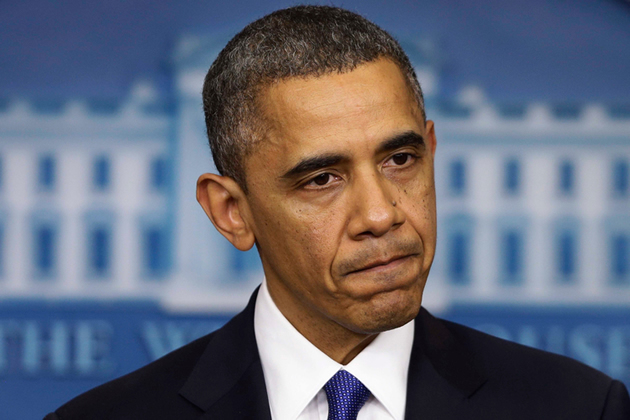
Stephen Gowans Correspondent
US surveillance aircraft have been searching for ISIS leaders inside Syria, “collecting intelligence on Islamic State operations inside Syria that could be potential targets”
INDICATIONS of a new phase in Washington’s long-standing policy of regime change in Syria are emerging in US planning to expand its campaign against ISIS.
The Pentagon envisions a multi-year campaign of air strikes inside Syria and assistance to anti-Assad fighters to destroy the Islamic State.
But given US policy to topple the government in Damascus, it seems unlikely that the planned campaign will restrict itself to ISIS targets alone.
What’s more, Washington has recently accused Syria of hiding chemical weapons, possibly signalling its intention to use concealed WMD—and the threat of chemical weapons falling into the hands of ISIS—as a pretext to expand its target list from ISIS to Syrian forces.
For weeks, Western leaders have delivered two messages about ISIS, one loudly, and the other, not so loudly.
The louder message is that ISIS is an unprecedented threat.
US defence secretary Chuck Hagel called the Islamist group “an imminent threat to every interest we have” and “beyond anything that we’ve seen.” Quietly, however, US officials have said the very opposite.
On August 22, the Pentagon press secretary, Rear Admiral John Kirby, admitted that ISIS does not have “the capability right now to conduct a major attack on the US homeland.”
The same day, the FBI and Homeland Security Department announced that there are “no specific or credible terror threats to the US homeland from the Islamic State militant group.”
Similar assurances were provided recently by US president Barack Obama, who acknowledged that “he hasn’t seen any ‘immediate intelligence’ to suggest Islamic State could carry out a terrorist attack on US soil.”
Still, the mass media have emphasised statements that draw attention to ISIS as a medieval menace (Obama) worse than al-Qaeda (Hagel) that must be destroyed (US secretary of state John Kerry).
Washington insists that destroying the Islamic State means US air strikes against ISIS-strongholds in Syria—and violation of Syrian borders.
Obama, and the United States’ top soldier, Martin Dempsey, have warned that ISIS cannot be defeated without military action against Islamic State targets in Syria.
For weeks, US surveillance aircraft have been searching for ISIS leaders inside Syria, “developing intelligence on the group’s strongholds” and “collecting intelligence on Islamic State operations inside Syria that could be potential targets.”
Now, it appears that Washington is on the cusp of pressing ahead with its planned campaign of military action.
The New York Times has reported that “Pentagon planners envision a military campaign” to destroy ISIS “in its sanctuary inside Syria” that could last “at least 36 months.”
According to The Wall Street Journal, air-strikes would support anti-Assad fighters unaligned with ISIS, who would be bankrolled by $500 million in US funding, and backed by a global coalition, including the UK and Australia, that would “provide a range of assistance, including humanitarian aid and weapons.”
These countries could also join the United States in an air-war over Syria.
There are reasons to suspect that a US-led military intervention in Syria would not stop at ISIS targets.
First, regime change in Damascus is a long-standing US policy, antedating the Arab Spring.
Cables released by WikiLeaks showed that US funding to the Syrian opposition began flowing under the Bush administration in 2005, if not before, long before uprisings erupted against the Assad government.
Largely forgotten is that the Bush administration dubbed Syria a member of a “junior varsity axis of evil,” and toyed with the idea of making Assad’s Syria the next target of a US military intervention after Iraq.
The idea that Washington seeks Assad’s ouster as part of a program of democracy-promotion cannot be seriously accepted, especially not in light of unwavering US support for crowned dictatorships in Bahrain and Saudi Arabia which brutally suppressed Arab Spring uprisings there.
Washington’s steadfast support of Egypt’s military dictatorship, which crushed peaceful protests against a military coup that ousted the elected president, also reveals that Washington’s publicly stated reason for seeking regime change in Syria — that Assad is a dictator who violently suppressed peaceful protesters and who must therefore be removed in an act of solidarity with the plural-democracy-loving Syrian people—is a complete sham.
Stephen Gowans is a Canadian writer and political activist resident in Ottawa. This article is reproduced from http://gowans.wordpress.org



 Online Reporter