admin
admin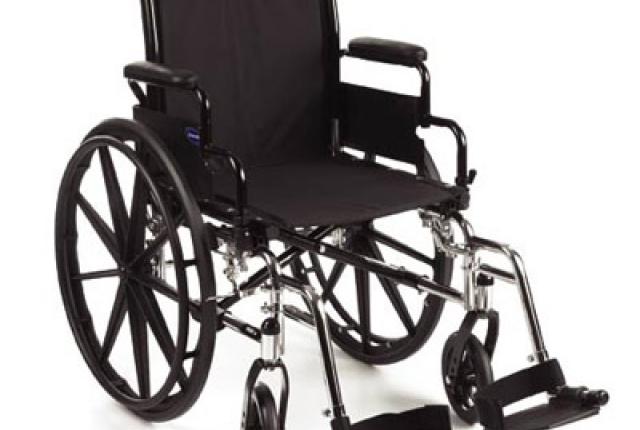
Gibson Mhaka
THE mere mention of the word a�?a�?disabilitya��a�� no doubt widely conjures images of suffering, neglect; stereotyping, superstition and discrimination leading people with disabilities (PWDs) to be rendered a�?unintentionally invisiblea�?.
This, however, led to about 1,4 million people with disabilities in Zimbabwe, thus according to the National Disability Survey 2015 to be sidelined or overlooked in mainstream global and national programmes like the HIV and Aids prevention strategies.
This is because the prevailing view in society is that PWDs are not sexually active and do not warrant inclusion in HIV and Aids interventions.
a�?There is an erroneous assumption in society that people with disabilities are not sexually active. On the contrary, people with disabilities are just as sexually active as the rest of the society and the lack of provision of HIV and Aids information in disability-friendly formats makes them even more vulnerable to the pandemic.
a�?It is unfortunate that they continue to be systematically excluded in national HIV and Aids interventions,a�? observed executive director of the National Association of Societies for the Care of the Handicapped, (Nascoh), Farai Mukuta.
In that quote Mukuta was speaking after PWDs were sidelined in the Global Fund 2014-2016 round to combat HIV and Aids, tuberculosis and malaria.
This is despite the fact that most people with disabilities are vulnerable to sexual abuse which makes it even more critical for them to be part of national health strategies focusing on HIV prevention.
There is, however, a need to address the issue of HIV and Aids among people with disabilities and to incorporate them within the rubric of the national response.
According to a recent baseline study by the United Nations, HIV and Aids and disability is an emerging issue and cause for concern as people living with disabilities are at a higher risk of exposure to HIV infection due to social exclusion and rejection.
The report noted that apart from being excluded from national HIV and Aids programmes, PWDs also often face lack of confidentiality at voluntary counselling and testing centres due to the presence of an interpreter.
Addressing journalists recently in Bulawayo during a workshop organised by Community Working Group on Health to review progress on the work done by Civil Society Organisations (CSOs) on monitoring and tracking available HIV and Aids resources and advocating for improved health service delivery, Midlands Aids Caring Organisation (Maco) life support officer Munyaradzi Chakuinga said PWDs were being overlooked in national HIV prevention strategies because policymakers do not perceive them as sexually active.
He said his organisation was, however, working extensively to explore challenges faced by people with disabilities when accessing health, particularly HIV and Aids services.
a�?There is a need to provide reliable information on HIV for people with disabilities as they get most of their information from peers. You will be surprised that most health care centres are inaccessible to people with disabilities, leaving them at the mercy of relatives and strangers in order to access services.
a�?People with disabilities are particularly vulnerable to Aids due to their low literacy levels, little access to health care, high vulnerability to sexual abuse, lack of information on Aids especially for the visually impaired and hearing impaired, and consequent lack of inclusion in Aids intervention programmes,a�? said Chakuinga.
Community Working Group on Health (CWGH) is a network of civic/ community based organisations who work to collectively enhance community participation in health in Zimbabwe.
From Chakuingaa��s observation it is clear that stigma, fear and ignorance results in the majority of PWDs refraining from accessing available services such as antiretroviral therapy, home-based care and counselling. Such is the impact of stigma, discrimination and social exclusion among people with disabilities that those who contract HIV go to extra lengths to hide their status, for fear of compounding this stigma, discrimination and social exclusion.
Radio broadcaster, motivational speaker and disability activist Soneni Gwizi concurred with Chakuinga saying people with disabilities were more at risk of becoming HIV+ if not more than their able-bodied peers.
a�?Disability is a cross cutting issue, and by no means homogenous.A� It must therefore be recognised that whatever negative impacts on the worlda��s society, also impacts on the lives of people with disabilities. They experience the same threats like any other person in the face of HIV and Aids pandemic.
a�?The high level of discrimination towards disabled people generally, makes it also difficult for them to be included in HIV and Aids programmes as they are perceived to be asexual,a�? said Gwizi.
She added: a�?Another challenge is that availability of information and tools to suit and meet disability challenges such as condoms might be available but instructions are not in Braille or simple English especially for the speech impaired to understand. Those using wheelchairs are also having challenges going to receive services from the hospitals, clinics and pharmacies due to poor infrastructure.
a�?Failure to respond to all these challenges will reverse all the developmental gains made in the last 20 years in the integration and recognition of disabled people as equal partners in society who request only that their dignity and human rights be respected and recognised.a�?
In order to address the above challenges disability must be mainstreamed into national strategies and budgets and at the same time, people with disabilities must be allowed to join the power-brokers and decision-makers within the Aids community.
Meanwhile, the National Aids Council (Nac) said their organisation was disability-inclusive in their programmes to do with HIV and Aids.
Nac communications officer Tadiwa Nyatanga-Pfupa said their organisation understood that people with disability were normal human beings with the same sexual rights as people without disabilities hence they were not excluded in HIV and Aids interventions.
a�?Nac understands that people living with disability are normal human beings with the same sexual rights as people without disabilities. As an organisation we understand that because of these challenges we may need to dispense information differently for their benefit.
a�?We have even given out material in Braille to the visually-impaired. We also work hand in glove with Deaf Zimbabwe Trust. Nac has been consistently supporting Danhiko and in our district structures, programming for those living with disabilities has always been on the agenda,a�? said Nyatanga-Pfupa. .


 Online Reporter