admin
admin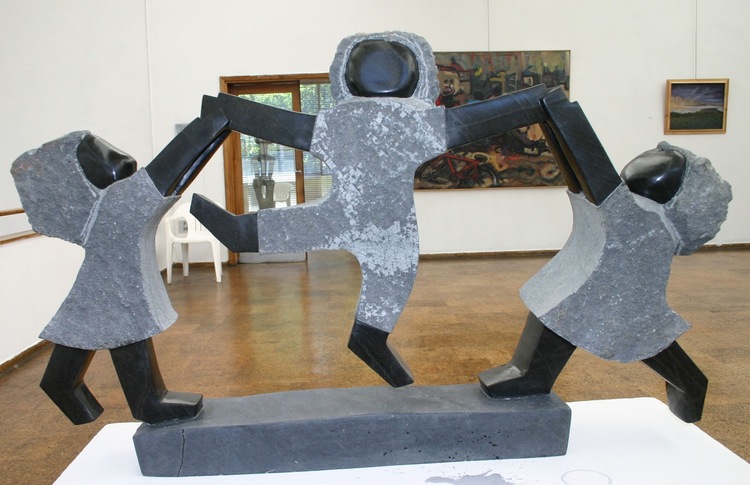
At the Gallery
Museums are the cultural institutions of a country and have long been associated with the tangible aspects of their collections. Over a period of time, cultural institution have learned to interact with societies and communities and now are actively working with both tangible and intangible heritage. In the time of urbanisation, communities are losing their intangible cultural heritage very fast. The new generation is losing the connection between their cultural heritage and beliefs followed over a long period by their elders. Cultural institutions can build this relationship and fill the gap through cultural interpretation of the artifacts and with community support. For this, cultural institutions need to focus on proper conservation and documentation of the tangible and intangible heritage.
Tangible cultural heritage means the practices, representations, expressions, knowledge, skills as well as the instruments or objects, artefacts and cultural spaces associated therewith – that communities, groups and, in some cases, individuals recognise as part of their cultural heritage
This tangible cultural heritage, transmitted from generation to generation, is constantly recreated by communities and groups in response to their environment, their interaction with nature and their history, and provides them with a sense of identity and continuity, thus promoting respect for cultural diversity and human creativity.
For purposes of this conversation, consideration will be given solely to such intangible cultural heritage as is compatible with existing international human rights instruments, as well as with the requirements of mutual respect among communities, groups and individuals, and of sustainable development.
With the advent of a new world order, encompassing urbanisation, traditional knowledge about culture is not being passed on to future generation for many reasons, such as families moving to urban areas for better employment. These community members are far from their roots, traditions and family arts and crafts. And thus newer generations of particular communities are losing their interest in their traditional art, crafts and other cultural skills
Cultural institutions can play the role of a mediator or communication bridge to fill the gaps between the generations and to share the community knowledge on a larger platform with different communities and a diverse range of visitors.
Cultural institutions can use intangible heritage to develop a better understanding of tangible heritage in communities.
With the help of tangible and intangible heritage, museums can fill the gap between culture and communities. Through their collections, cultural institutions can encourage communities, groups and individuals to preserve their tangible cultural heritage.
There is a need for museums and community groups to come together to promote and preserve tangible cultural heritage. It is better to keep your identity alive rather than adopting that of others.
The National Gallery of Zimbabwe’s permanent collection endeavours to inform the community about tangible heritage by representing significant developments in Zimbabwean art.
The works in the collection are of outstanding quality and importance defined by merit and the artist’s contribution to the history and development of Zimbabwean and international art.
The selection process is therefore based on quality, significance of the artist and their contribution to the development of Zimbabwean art, and cultural significance of the artwork/ artefact(s).
The permanent collection demonstrates and contains the very best art making traditions in Africa and within insightful, and rare pieces that are not only aesthetically beautiful but significant within the history of African art.
Through focusing on Zimbabwean and African art the National Gallery of Zimbabwe seeks to represent international modern and contemporary art in a global perceptive through its Permanent Collection Exhibition and its roots in informing the community about tangible heritage. The exhibition continues at the National Gallery of Zimbabwe.



 Online Reporter