admin
admin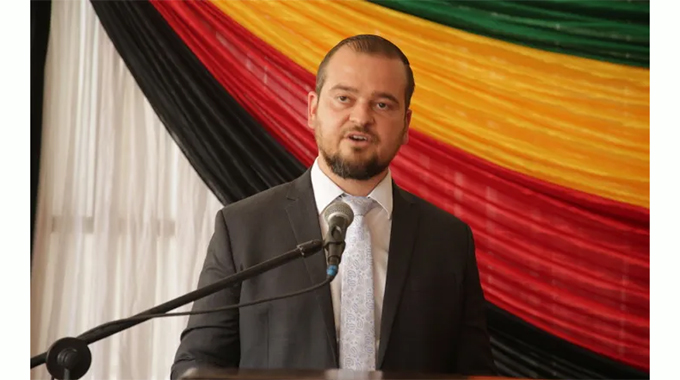
Elton Manguwo
THE Phase 2 of the Belarus Mechanisation Facility will essentially narrow the mechanisation gap in the country’s agriculture industry, as the Government moves to fully automate the sector in line with its drive to modernise agriculture and boost production.
In an interview with this publication, Lands, Agriculture, Fisheries, Water and Rural Development Deputy Minister Vangelis Haritatos said the equipment delivered under the Belarusian facility would add impetus to the Government’s mechanisation thrust.
Last week President Emmerson Mnangagwa commissioned 1 635 tractors, 16 combine harvesters and other farming equipment under the US$66million Belarus Phase 2 Mechanisation Facility.
The first phase of the facility saw the delivery of 474 tractors, 60 combine harvesters, 210 planters and five low bed trucks to farmers.
“We want to reduce the gap on the mechanisation deficit in our country, which will ensure that farmers plant, grow and harvest in time,” said Haritatos.
The Government through various programmes is working to grow mechanisation uptake in the country to ease drought power shortages in a strategic move to improve production and productivity.
“We have quite a number of proposals from several private sector led organisations amounting to US$500 million that will not be coming from the Treasury but private players, which is testimony of private sector’s commitment to complementing Government’s efforts in mechanisation development,” said Dep Min Haritatos.
The Mechanisation Development Alliance (MDA), which is an all stakeholder group of mechanisation value chain actors, manufacturers, dealers, academia and the Government will provide a platform for deliberations on policy, commercial quality, innovation, research and development.
The MDA is banking on the innovative abilities of university innovation hubs to conjure up mechanised implements that address the dictates of modern farming for smallholder farmers, as the Government pushes for rural agricultural transformation.
“The Government is supporting the national reverse engineering of agricultural implements through provision of equipment to support manufacturers by partnering with local universities, army engineers and the Institute of Agriculture Engineering (IAE),” observed the chief director for Agricultural Engineering, Mechanisation and Soil Research, Engineer Edwin Zimunga.
Meanwhile, the Pfumvudza/Intwasa programme mechanisation thrust is set to peak next year, thanks to the approved $11, 8 billion (local currency) budget for small-scale mechanisation.
“The $11, 8 billion mechanisation budget outlined in the 2023 national budget is set to accelerate the pfumvudza mechanisation drive,” said Eng Zimunga.
In addition, the Government has a US$5million facility to procure 600 two-wheel tractors and an assortment of implements for mechanising small-scale farming operations.
Addressing delegates and chief executive officers for different companies during a recent agribusiness conference, Lands, Agriculture, Fisheries, Water and Rural Development Minister Dr Anxious Masuka emphasised the need to do away with the hoe and archaic farming implements to pave way for the adoption of improved farming systems to boost production.
Mechanisation of the agriculture sector plays a pivotal role in setting the country’s agro-based economy on a positive growth and recovery path through realisation of a potential gross domestic product (GDP) of 33 percent, up from the current 20, as downstream benefits of mechanised operations.



 Online Reporter